
 My Electrical Tech
Commercial Roof Inspection Guide for Modern Facilities
Quick Answers for Property & Facility Managers
What should a commercial roof inspection include for a modern facility?
A thorough commercial roof inspection should cover membrane condition, flashings, penetrations, drainage, structural support, and impacts on interior systems. Visual review, moisture testing, and documentation of defects, active leaks, and ponding water guide repair, maintenance, or replacement decisions and protect warranties.[4][5]
How often should commercial roofs be inspected?
Industry sources recommend routine commercial roof inspection at least annually, with bi‑annual or quarterly checks for aging roofs and high‑risk facilities, plus inspections after major storms.[2][3][7] This cadence helps detect leaks early, protect electrical systems and contents, and comply with manufacturer warranty requirements.[3][5]
Why do property and facility managers need formal roof inspections?
Formal inspections document roof condition, defects, and drainage failures that can lead to leaks, electrical damage, and business interruption.[4][9] They support warranty compliance, insurance claims, capital planning, and prioritizing repair vs. replacement, giving managers defensible data for budget and risk decisions.[1][3][4]
Why commercial roof inspection is a risk management tool
For property managers, facility managers, and building owners, a proactive commercial roof inspection program is one of the most cost‑effective risk controls you can implement. Industry guidance defines inspection as a systematic evaluation of the roof membrane, flashings, drainage, penetrations, and structural support to identify defects before they become failures.[4][5]
Routine inspections extend roof life, protect warranties, and reduce unplanned capital spend by catching moisture intrusion, drainage problems, and storm damage early.[2][3][5] Critically, leaks do not stop at the roof surface: uncontrolled water can damage electrical switchgear, panelboards, lighting, data cabling, and backup power systems inside your building.[9]
For commercial portfolios, a structured inspection program provides comparable data across sites, enabling better capital planning and prioritization of repair versus replacement.
How often to schedule commercial roof inspections (and when)
Multiple sources emphasize that commercial roof inspections should be scheduled regularly throughout the roof’s life, not only when problems appear.[2][3][5][7]
- Construction and early life: Inspect during and immediately after construction to confirm installation matches design plans and manufacturer requirements.[5] This ensures penetrations, flashings, and drainage elements are correctly placed, attached, and sealed.
- Routine cycle: Some guidance recommends quarterly inspections as a strong risk‑management standard for commercial facilities, especially where weather exposure is high.[7] Others call for annual inspections once a roof is five years old, increasing to bi‑annual as the roof ages.[3]
- Storm and event‑driven: Always inspect after significant hail, high winds, tornadoes, or heavy rain events.[2][7] Storms drive tears, punctures, flashing failures, and ponding water that can progress quickly to interior damage.
- Transactional triggers: Schedule a formal commercial roof inspection before buying or selling a building, refinancing, or renegotiating major leases.[3][4] The report supports due diligence and negotiation.
For mission‑critical occupancies (healthcare, data centers, industrial production), err on the side of more frequent inspections, given the higher cost of downtime and electrical system disruption.
Step‑by‑step commercial roof inspection process
While roofing contractors and forensic engineers perform formal inspections, managers benefit from understanding the process and maintaining a simple internal checklist. Common methods include visual inspection, infrared thermography, core sampling, and drone‑assisted imaging.[1][4][5]
1. Pre‑inspection planning
- Gather documentation: Collect as‑built drawings, manufacturer warranties, prior inspection reports, leak logs, and roof access procedures.[3][4]
- Define objectives: Clarify whether the inspection is routine maintenance, storm assessment, due diligence, or pre‑replacement planning. This shapes the level of testing (visual only vs. infrared vs. core cuts).[4][5]
- Coordinate with operations: Notify tenants and internal teams of roof access, especially for facilities housing sensitive equipment or labs.
2. Visual roof inspection
Visual inspection is the foundation of any commercial roof assessment.[4][5]
- Walk the entire roof to evaluate membrane condition, seams, surface defects, and transitions.[4][5]
- Inspect penetrations (HVAC curbs, vents, skylights, pitch pockets, expansion joints) for cracking, gaps, or insufficient flashing height.[5]
- Check roof edges, base flashings, parapets, and termination bars for secure attachment and displacement.[5]
- Look for cracks, bulges, depressions, or rust and corrosion that may indicate structural movement or moisture.[5][4]
- Identify debris, vegetation, or storage that can damage the membrane or block drainage paths.[5][7]
3. Drainage and ponding assessment
Poor drainage is one of the most common findings in commercial roof inspections and a key predictor of leaks.[4][5][7]
- Confirm that drains, scuppers, and gutters are clear of leaves, trash, and sediment.[7]
- Document any ponding water that remains longer than 48 hours, which generally warrants immediate attention and repair.[2][4]
- Check slopes, crickets, and valleys for settlement or deflection that could trap water.[5]
4. Advanced moisture and leak detection
Non‑destructive testing techniques help identify moisture trapped below the membrane without cutting into the roof.[1][4]
- Infrared thermography: Thermal imaging identifies temperature anomalies associated with wet insulation or trapped water, typically performed under specific environmental conditions.[1][4]
- Capacitance or nuclear moisture surveys: These methods provide additional data on moisture content in the roof assembly.[1]
- Electronic leak detection: Used to pinpoint breaches in membranes, particularly on complex roofs.[1]
Where necessary, core sampling exposes all roofing layers and confirms insulation condition, deck type, and assembly composition.[3][4] Results guide decisions on partial vs. full replacement.
5. Interior and structural review
Effective commercial roof inspection includes the building interior and roof structure.[3][4][5]
- Survey ceilings and upper walls for staining, peeling paint, mold, or past patching near electrical rooms and mechanical spaces.[5][9]
- Inspect decking, framing, supports, fascia, and soffits for corrosion, deflection, or other structural concerns.[3][4][5]
- Note any evidence of water pathways toward electrical rooms, shafts, risers, or equipment mezzanines.[9]
6. Reporting and action planning
Quality inspection providers deliver clear, actionable reports, often with photographs, diagrams, and condition ratings.[1][3][4]
- Ensure the report documents defects, risk level, and recommended repairs or monitoring intervals.[4]
- Use findings to update maintenance schedules, warranty compliance records, and capital plans.[1][3]
- For multi‑site portfolios, standardize rating systems so roofs can be compared consistently for budgeting.
Protecting electrical and mechanical systems from roof failures
From an electrical and operational standpoint, the roof is a primary barrier protecting high‑value systems: power distribution, lighting, EV charging, backup generation, and controls.
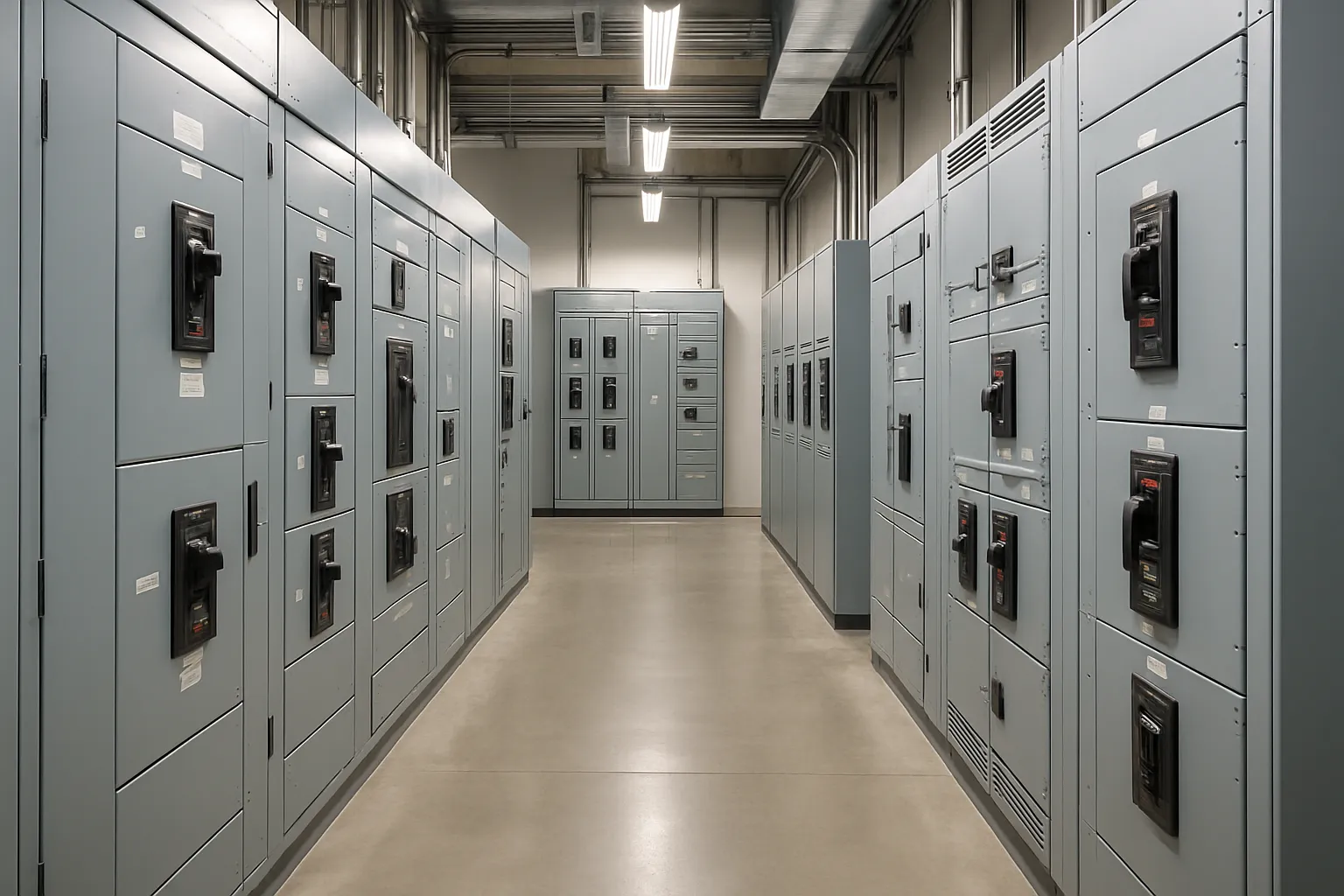
- Power distribution and switchgear: Roof leaks above electrical rooms can lead to corrosion, tracking, and insulation failure in switchgear, panelboards, and busways. Even small moisture ingress can compromise insulation, trip protective devices, and damage equipment.[9]
- Lighting systems: Water infiltration into ceiling plenums can short luminaires, damage wiring, and force emergency repairs across occupied areas. Suspended ceilings often hide developing moisture issues until fixtures fail.
- Low‑voltage and data: Roof leaks near cable trays and IDF/MDF rooms threaten fire alarm panels, network switches, and building automation controllers, multiplying the impact of a single roofing defect.
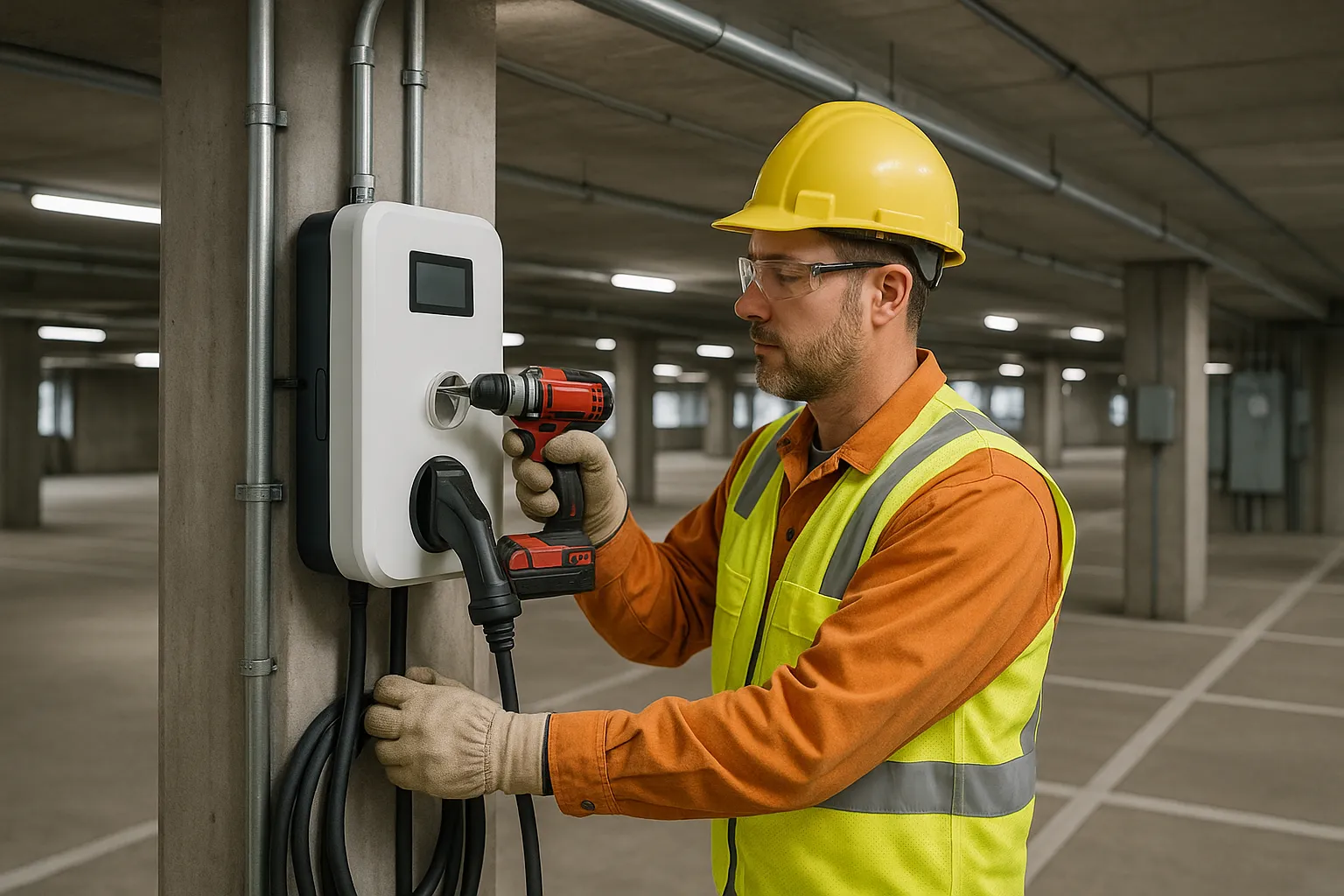
- EV charging (EVSE) and exterior equipment: For facilities with rooftop or façade‑adjacent EVSE power runs, ensuring flashings and penetrations are watertight is essential to prevent conductor damage and nuisance tripping.
- Backup generators and UPS: While many generators sit on pads at grade, transfer switches, UPS units, and critical feeders often reside on upper mechanical floors. Roof inspection findings should be cross‑checked against the locations of these assets.
Action for managers: map critical electrical spaces under or adjacent to roof sections. When a commercial roof inspection report identifies defects, prioritize corrective work above these areas to protect uptime and safety.
Repair vs. maintenance vs. full replacement: using inspection data for ROI decisions
Inspection findings support practical decisions around targeted repair, proactive maintenance, or full roof replacement. While exact costs vary by market and system type, the decision framework is consistent.
- Maintenance and minor repair: If the inspection reveals limited defects—isolated punctures, localized flashing issues, small areas of ponding—timely repairs and preventive maintenance can extend roof life and delay expensive replacement.[2][3][6] Manufacturer and insurance guidance stresses early intervention to avoid more extensive interior damage.[7][9]
- Intermediate restoration: When moisture is present but the deck and most insulation remain sound, restoration options (coatings or partial replacement) may offer favorable ROI. Moisture survey and core sampling data help determine the viable scope.[1][3][4]
- Full replacement: Extensive trapped moisture, widespread drainage failure, compromised structure, or recurring leaks despite repairs often point toward replacement.[4][6] At this point, the risk to electrical systems, tenants, and operations can outweigh incremental patching costs.
From a capital planning perspective, managers should integrate commercial roof inspection findings with:
- Remaining service life estimates and warranty status.[3][4]
- Documented interior damages (including electrical and mechanical impacts).[9]
- Business interruption risk for key occupancies (healthcare, data, industrial).[4][9]
Even without precise cost figures, the economic value is clear: early detection of deficiencies makes it possible to render cost‑effective repairs and extend roof life, whereas deferred inspections tend to convert manageable issues into major projects.[2][3][6][9]
Practical checklists for property and facility managers
Managers do not need to perform technical testing themselves, but they should maintain simple checklists to ensure each commercial roof inspection delivers usable, comparable data.
Manager pre‑inspection checklist
- Confirm roof age, system type, warranty status, and past leak history.[3][4]
- Identify critical interior spaces below the roof: electrical rooms, main switchgear, data centers, OR suites, production lines.
- Schedule inspections at recommended intervals (annual, bi‑annual, or quarterly), plus after major storms.[2][3][7]
- Verify that your provider offers visual inspection, appropriate moisture testing, and clear reporting with photos and drawings.[1][3]
Manager post‑inspection checklist
- Review all identified conditions that require immediate repair, particularly active leaks, ponding water lasting more than 48 hours, and loose or displaced flashings or structural concerns.[4]
- Cross‑reference defects with locations of electrical and mechanical rooms; escalate work above high‑risk areas.[9]
- Update asset plans to reflect roof condition ratings and projected remaining life.[4]
- Coordinate with roofing and electrical contractors as needed to mitigate damage, protect equipment, and plan capital projects.
By treating commercial roof inspection as an integrated part of facility risk management—rather than a standalone roofing task—owners and managers can better protect electrical infrastructure, maintain uptime, and make more informed, defensible budget decisions.
Frequently Asked Questions
How does commercial roof inspection impact long-term ROI for large facilities?
Routine commercial roof inspection allows owners to catch deficiencies before they escalate, extending roof life and reducing emergency repairs.[2][3][5] Early action avoids interior damage to electrical and mechanical systems, supports warranty compliance, and informs when to shift from repair to replacement, improving capital planning and lifecycle ROI.[3][4][9]
What are the highest-priority findings in a commercial roof inspection report?
Findings that typically warrant immediate attention include active leaks, ponding water that does not drain within 48 hours, loose or displaced flashings, and any structural concerns such as deck deflection or corrosion.[2][4][5] These conditions pose direct risks to building contents, electrical systems, and occupant safety.[4][9]
Do manufacturers and insurers expect regular commercial roof inspections?
Roof manufacturers often require periodic inspections—commonly bi‑annual—to keep warranties valid, and insurers promote regular inspections to manage loss exposure.[3][7][9] Documented inspection reports support claims, demonstrate due diligence, and reduce the likelihood of disputes over coverage or premature roof failure.[1][3][4]
How should managers choose a provider for commercial roof inspection?
Look for providers that combine visual assessment with appropriate non‑destructive testing, such as infrared thermography and moisture surveys, and deliver clear, actionable reporting with photos and drawings.[1][4] Strong communication, documentation, and familiarity with warranty and code requirements are critical selection criteria.[1][3]
What is the relationship between roof condition and electrical system reliability?
Roof leaks and drainage failures can damage switchgear, panelboards, lighting, fire alarm, and data systems, leading to outages and safety hazards.[9] Using commercial roof inspection reports to prioritize repairs above electrical rooms and critical equipment is an effective strategy to protect uptime and reduce major loss events.
Find a Qualified Commercial Electrical Contractor
Need help acting on this? Browse commercial electricians in your area, or explore commercial electrical services like preventative maintenance, inspections, and emergency response. Are you a contractor? List your business on My Electrical Tech to reach property and facility managers actively searching for help.