 My Electrical Tech
NEMA Guidance on Evaluating Water‑Damaged Electrical Equipment for Commercial Buildings
Quick Answers for Property & Facility Managers
After a flood, what electrical equipment in my commercial building must be replaced versus reconditioned under NEMA guidance?
Under NEMA’s Evaluating Water-Damaged Electrical Equipment guidance, most low-voltage devices like breakers, receptacles, dry-location cable, lighting controls, and transformers must be replaced after flooding, while some large gear such as switchgear, switchboards, panelboards, motors, and certain wet-location cables may be reconditioned if evaluated and restored by qualified personnel in consultation with manufacturers and the AHJ.[2][3][5][6]
How should property and facility managers use NEMA’s water-damaged equipment guide in planning post-flood repairs?
Property and facility managers should treat NEMA’s guide as a safety and scoping tool: identify all affected electrical systems, separate equipment that must be replaced from equipment that may be reconditioned, engage qualified electrical engineers and contractors, consult manufacturers, and coordinate with the Authority Having Jurisdiction to ensure NEC-compliant, inspected restoration.[2][3][4][6]
Does following NEMA’s water-damage guidance help with NEC compliance and inspections?
Yes. NEMA’s guidance is aligned with the safety intent of the NEC (NFPA 70) and is widely referenced by inspectors, utilities, and major manufacturers.[2][3][4][6][7] Using it to document replacement vs. reconditioning decisions, and involving manufacturers and the AHJ, reduces inspection risk and supports code-compliant re-energization of commercial facilities.
NEMA’s Updated Water‑Damage Guidance: Why It Matters for Commercial Facilities
The National Electrical Manufacturers Association (NEMA) has updated its guidance on Evaluating Water‑Damaged Electrical Equipment, providing facility owners and managers with clearer direction on what must be replaced and what may be reconditioned after flooding, firefighting runoff, or major water intrusion.[2][3][4] The guide covers distribution equipment such as switchgear and panelboards, transformers, wiring, and wiring devices, and is intended for use in commercial and industrial facilities, not homes.
NEMA’s position is straightforward: once electrical equipment has been submerged or significantly contaminated, it can present long-term shock, fire, and reliability risks even after it appears dry.[2][5][7] For many common low-voltage components, the only safe option is replacement, whereas some larger assemblies may be reconditioned under strict controls. For property managers and building owners, this guidance directly affects post-disaster budgeting, downtime, scope definition, and risk management.
Key Principles: Safety, Code Intent, and Manufacturer Listings
NEMA’s recommendations align with the safety objectives of the NEC (NFPA 70), NFPA 70E, OSHA electrical safety requirements, and UL listing standards.[2][3][5][7] While the NEMA guide itself is not a code, it is widely adopted as a best-practice reference by manufacturers, insurers, and Authorities Having Jurisdiction (AHJs).[4][6][8]
Several core principles matter for commercial property decision-makers:
- Listing and labeling: Most electrical equipment is UL or ETL listed for use in specific conditions. Once flooded, the original listing conditions are no longer assured, and many manufacturers explicitly require replacement of affected devices.[2][3][7]
- Hidden damage and contamination: Floodwater often carries silt, chemicals, fuel, and sewage that penetrate enclosures and insulation, leading to corrosion and tracking that can cause failure months or years later.[2][5][8]
- Worker safety: NFPA 70E and OSHA standards demand that energized work be minimized and that equipment be maintained in a condition that ensures safety. Re-energizing compromised gear can expose staff and contractors to arc flash and shock hazards.[5][7]
- Authority Having Jurisdiction: AHJs often look to NEMA’s water‑damage guide when deciding whether to permit reconditioning or to require replacement of certain systems.[4][6] Early engagement with the AHJ reduces delays in restoring power and occupancy.
- Manufacturer instructions: NEMA emphasizes that manufacturers are the final authority on whether their listed equipment can be reconditioned and under what procedures.[2][3][6][7] Deviating from these instructions can void warranties and complicate future claims.
In practice, this means managers should not rely solely on visual inspection or drying efforts. Decisions must be grounded in manufacturer and NEMA guidance, verified testing, and AHJ approval.
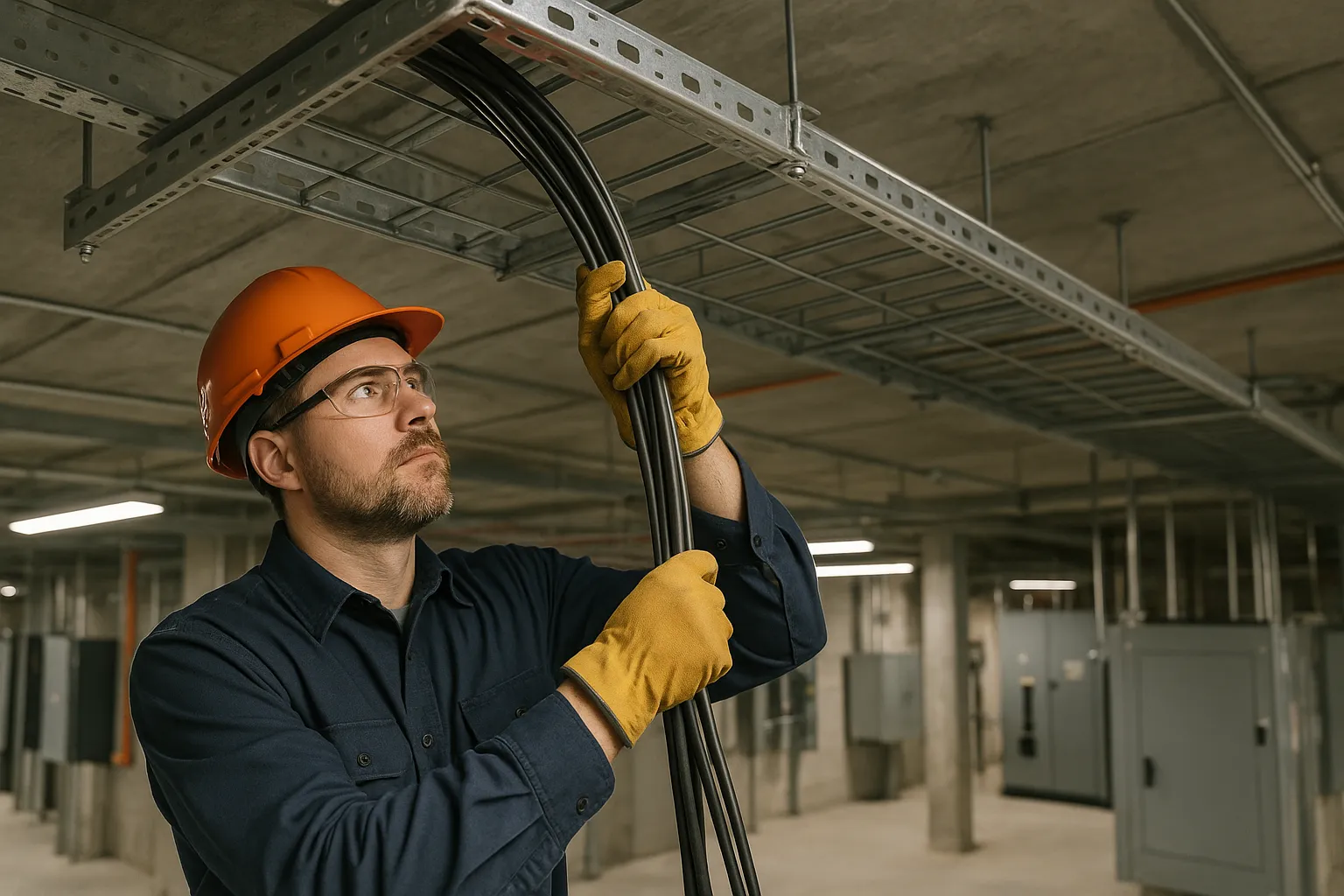
What Must Be Replaced vs. What May Be Reconditioned
NEMA and related safety organizations outline clear categories of equipment that generally must be replaced after water damage versus equipment that may be reconditioned under qualified control.[2][3][5][7]
Equipment That Typically Must Be Replaced
The following types of equipment serving commercial buildings usually require full replacement if submerged or significantly exposed to contaminated water:[2][3][5][7]
- Molded-case circuit breakers and small loadcenter breakers: Internal mechanisms and trip elements are not designed to be disassembled, cleaned, and tested to original performance.
- Arc-fault and ground-fault devices: Sensitive electronics and sensors are easily compromised by moisture and contaminants.[5][7]
- Receptacles, switches, dimmers, and wiring devices: Corrosion and contamination can impair contact integrity and introduce shock hazards.
- Dry-location wire and cable (e.g., types listed for dry use only): Once water enters insulation or fillers, long-term dielectric performance cannot be assured.[5][7]
- Lighting equipment and drivers that have been submerged: Ballasts, LED drivers, and internal wiring are not intended for immersion and can degrade over time.[5][7]
- Transformers (particularly dry-type) that have been submerged: Insulation and core materials are difficult to fully dry and decontaminate.
- Surge protective devices, control devices, and electronic relays/meters with sensitive internal electronics.[5][7]
For facility managers, this category often includes a large number of small devices scattered throughout tenant spaces and common areas. These should be treated as non-negotiable replacement items in any restoration budget.
Equipment That May Be Reconditioned
Certain larger or more robust assemblies may be eligible for reconditioning if they have not suffered catastrophic damage and if manufacturer and NEMA guidance is followed.[2][3][5][7] Common examples in commercial and industrial facilities include:
- Low- and medium-voltage switchgear and switchboards: Enclosures and bus structures may be cleaned, dried, and tested; however, electronic trip units, meters, and protective relays typically must be replaced or factory-reconditioned.[5][7]
- Panelboards: Metal enclosures and bus bars may be salvageable, but interior devices and certain insulation components may require replacement.[5]
- Low-voltage power circuit breakers: Can sometimes be disassembled, cleaned, lubricated, and fully tested by qualified shops or the OEM, whereas electronic trip units often require replacement.[5][7]
- Motors: Many motors can be reconditioned by specialized motor shops if winding insulation can be restored and verified through testing.[5]
- Wire and cable listed for wet locations where ends were not exposed and jackets remain intact may, in some cases, be tested and retained.[5][7]
NEMA stresses that any reconditioning must be performed by qualified personnel, often in cooperation with the original equipment manufacturer, and must be followed by appropriate testing before re-energization.[2][3][6]
Step-by-Step Actions for Facility and Property Managers After a Flood
While contractors and engineers handle the technical work, facility leaders are responsible for organizing a safe, compliant recovery. NEMA and industry guidance point to several key steps designed for property and facility managers:[2][3][4][6][7]
- 1. Secure the site and verify de-energization: Work with your electrical contractor and utility to ensure all affected electrical systems are safely de-energized before any cleanup or assessment, in line with OSHA and NFPA 70E requirements.[5][7]
- 2. Document affected systems: Map out flooded areas by floor, electrical room, and tenant space. Note affected switchgear, panelboards, transformers, busways, feeders, branch circuits, lighting, and controls to support insurance and scope development.
- 3. Identify water source and contamination level: NEMA emphasizes that type of water (clean, gray, or contaminated floodwater) and duration of exposure heavily influence whether equipment can be reconditioned.[2][6] Record these conditions for each affected area.
- 4. Engage qualified professionals early: Bring in a licensed electrical engineer or trusted design-build contractor to lead the technical assessment and to apply NEMA’s guide correctly.[2][3][4]
- 5. Consult manufacturers for critical gear: Provide model numbers, serial numbers, and photos to OEMs for switchgear, UPS, VFDs, and specialty systems. Many manufacturers publish specific post-flood bulletins based on NEMA’s framework.[6][7]
- 6. Coordinate with the AHJ: Work with the local building department and electrical inspector to confirm permit requirements and to validate replacement vs. reconditioning plans.[4][6] This is essential for avoiding rework or delays at re-energization.
- 7. Prioritize life safety and essential services: Elevate restoration of fire alarm, emergency lighting, life safety systems, elevators, and critical HVAC controls, recognizing that many of these components must be replaced outright after water damage.[5][7]
- 8. Establish a replacement vs. reconditioning budget: Using NEMA’s categories, segment scopes into mandatory replacements and potential reconditioning opportunities, factoring in testing, factory service, and long-term reliability.
These steps convert the NEMA guide from a technical reference into a practical recovery playbook for commercial portfolios.
Implications for Compliance, Insurance, and Long-Term Reliability
NEMA’s updated guidance has direct implications beyond the immediate repair work.
Code compliance and inspections: While the NEC does not list specific flood-repair rules by product, it requires equipment to be installed and maintained in a safe condition and used in accordance with listing and labeling. AHJs frequently rely on NEMA’s water-damage guidance in deciding what can remain in service.[2][3][4][6] Following the guide and manufacturer instructions simplifies plan review and final inspection.
OSHA and NFPA 70E obligations: Employers must provide a workplace free from recognized electrical hazards. Re-energizing equipment against NEMA and manufacturer recommendations can expose employees and contractors to unacceptable risk, potentially increasing liability.[5][7]
Insurance and claims: Because NEMA’s guidance is widely recognized, insurers often expect that water‑damaged breakers, receptacles, and other non-reconditionable devices will be replaced, not dried and reused.[4][5][7][8] Thorough documentation of adherence to NEMA recommendations can streamline claims and reduce disputes.
Long-term reliability and power quality: Corroded contacts, degraded insulation, and contaminated bus and terminations can produce nuisance tripping, overheating, and voltage disturbances down the line. Following NEMA’s conservative replacement guidance for sensitive and dry-location equipment helps avoid recurring outages and unplanned capital expenditures.[5][7]
Energy and code-driven upgrades: When lighting, controls, or distribution equipment must be replaced, it may make sense to align with energy codes such as state or local adoptions of Title 24-type requirements and to integrate modern lighting controls, submetering, and EV charging infrastructure during the rebuild. While not dictated by NEMA, leveraging mandatory replacement to improve efficiency and resilience is often attractive at the portfolio level.
Planning Ahead: Resilience Strategies for Future Water Events
For property managers and building owners, NEMA’s water-damage guidance is not only a recovery document but also a design and resilience resource. Lessons from recent disasters have led many owners to re-think equipment placement and protection.[4][8]
- Elevating critical gear: Locating switchgear, main distribution boards, and critical communication and life-safety panels above known flood elevations reduces future replacement risk.
- Segmentation of systems: Designing distribution so that lower-floor tenants or flood-prone zones are served by selectively isolated equipment can limit the extent of post-event replacement.
- Material and product selection: Where feasible, using equipment listed for damp or wet locations and avoiding dry-only cable in marginal areas can improve survivability, though NEMA still requires strict evaluation after any significant water exposure.[2][3][5]
- Documentation and pre-planning: Maintaining accurate one-line diagrams, panel schedules, and equipment inventories accelerates NEMA-based assessments after an event and reduces downtime.
Incorporating these strategies into capital plans and tenant-improvement standards can materially reduce the operational and financial impact of future flooding or major leaks.
Ultimately, NEMA’s updated guidance gives commercial building stakeholders a structured, defensible framework for making replacement and reconditioning decisions after water damage. Used in concert with NEC, NFPA 70E, OSHA rules, manufacturer instructions, and AHJ requirements, it helps protect occupants, safeguard investments, and speed a safe return to normal operations.
Frequently Asked Questions
How does NEMA’s water-damaged equipment guidance impact insurance and restoration costs for commercial buildings?
NEMA’s guidance often increases upfront replacement costs because many devices, including breakers, receptacles, and dry-location cable, must be replaced rather than dried and reused.[2][3][5][7] However, insurers and AHJs widely recognize these recommendations, reducing disputes and rework, and helping avoid costly future failures, outages, and liability arising from re-energizing compromised equipment.[4][5][8]
Can I recondition flooded switchgear and panelboards instead of replacing them entirely?
In many cases, switchgear, switchboards, and panelboard structures may be reconditioned if the manufacturer agrees and work is done by qualified specialists following NEMA’s guide.[2][3][5][7] However, electronic trip units, relays, meters, and certain internal components typically must be replaced, and the AHJ must accept the reconditioning strategy before re-energization.[6][7]
How closely do AHJs and inspectors follow NEMA’s water-damage recommendations?
While AHJs enforce the NEC rather than NEMA documents, many inspectors use NEMA’s Evaluating Water‑Damaged Electrical Equipment guide as the de facto standard for flooded equipment.[2][3][4] Presenting a remediation plan aligned with NEMA and manufacturer bulletins gives inspectors a clear basis for approving replacement versus reconditioning decisions.[4][6][8]
Does following NEMA guidance help with NFPA 70E and OSHA electrical safety compliance?
Yes. NFPA 70E and OSHA require employers to maintain equipment in a condition that does not expose workers to known hazards. NEMA identifies water-damaged devices that should never be re-energized and specifies conditions for reconditioning larger equipment.[2][3][5][7] Using this guidance supports a defensible, documented safety program for post-flood work.
How should property managers prioritize which electrical systems to restore first after a flood?
Start with life safety and critical operations: fire alarm, emergency lighting, egress systems, essential HVAC, and critical process loads.[5][7] Using NEMA’s categories, identify which components must be replaced and which can be reconditioned, coordinate with the AHJ and manufacturers, and then phase restoration of tenant and non-critical loads to minimize business interruption.[2][3][4][6]
Related Reading on My Electrical Tech
- Hydro Jetting Cost: Commercial Drain & Sewer Budgeting Guide for Property Managers
- House Passes Legislation to Strengthen Grid and Cybersecurity for Commercial Facilities
Find a Qualified Commercial Electrical Contractor
Need help acting on this? Browse commercial electricians in your area, or explore commercial electrical services like preventative maintenance, inspections, and emergency response. Are you a contractor? List your business on My Electrical Tech to reach property and facility managers actively searching for help.