 My Electrical Tech
Lark Electric and American Gridwork Partners: Strategic Commercial Electrical Growth
Quick Answers for Property & Facility Managers
How does Lark Electric’s partnership with American Gridwork Partners benefit commercial property and facility managers?
Lark Electric’s strategic partnership with American Gridwork Partners increases capacity for complex commercial and industrial electrical projects while preserving existing leadership, workforce, and customer relationships. For facility and property managers, this means greater resources, deeper bench strength, and more scalable support for major capital projects without losing a familiar, regionally trusted provider.
Will Lark Electric’s service quality or relationships change under this new partnership?
The partnership is explicitly structured to preserve Lark Electric’s operating identity, leadership team, workforce, and customer relationships. For commercial clients, this means continuity of service quality and local decision-making, with added backing and resources from American Gridwork Partners for larger and more complex electrical projects.
What types of commercial and industrial projects are likely impacted by this strategic growth deal?
This partnership primarily affects large commercial, industrial, and utility-scale electrical work—such as power distribution upgrades, switchgear replacement, high-capacity EV charging, utility interfacing, and major capital improvements. Facility and property managers can expect improved ability to staff, schedule, and deliver multi-site or large single-site projects.
Lark Electric’s strategic partnership: what commercial stakeholders need to know
Lark Electric, one of Kentucky’s longest-standing commercial and industrial electrical contracting firms, has entered a strategic growth partnership with American Gridwork Partners. According to the announcement, the deal is designed to accelerate regional growth while preserving Lark’s existing leadership, workforce, customer relationships, and operating identity. For facility managers, property managers, and commercial real estate professionals, this is not just a corporate headline—it directly affects how you plan, procure, and execute capital electrical projects.
In practical terms, the partnership means a familiar, established contractor now has greater financial backing, operational support, and access to broader resources. That can translate into more capacity for complex projects involving three-phase power distribution, switchgear and panelboard upgrades, commercial lighting retrofits, EV charging infrastructure, backup power, and low-voltage systems across office, industrial, healthcare, institutional, and multifamily assets.
Impact on large commercial and industrial electrical projects
The stated goal of the partnership is to expand Lark Electric’s capacity to serve large commercial and utility clients. For portfolios with aging electrical infrastructure or aggressive ESG and energy-efficiency targets, this has clear implications. A contractor with deeper support and capital can take on more simultaneous projects, staff larger crews, and invest in project management and engineering capabilities that align with complex construction schedules.
This is particularly relevant for projects such as:
- Main switchgear and service upgrades to support increased loads from data centers, manufacturing lines, or high-density office build-outs.
- Three-phase panelboard replacements and redistribution to modernize existing commercial buildings and improve power quality for sensitive equipment.
- Commercial lighting retrofits and controls deployments to comply with energy codes (such as Title 24 in applicable jurisdictions), reduce operating costs, and secure utility incentives.
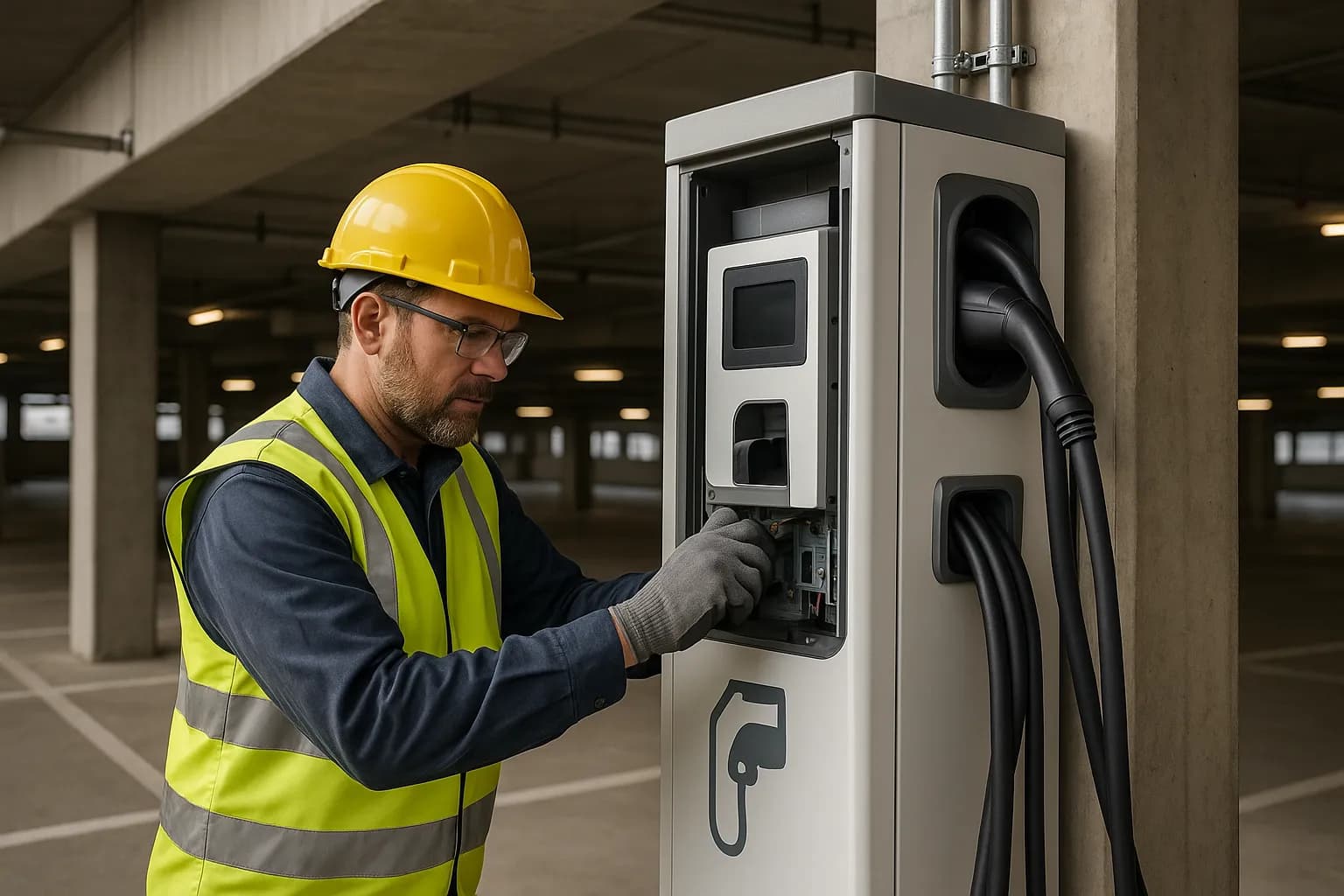
- EV charging (EVSE) builds in parking structures and campuses, including load management strategies, utility coordination, and future-ready conduit infrastructure.
- Backup generators and UPS systems for mission-critical facilities, including healthcare, data centers, and institutional campuses.
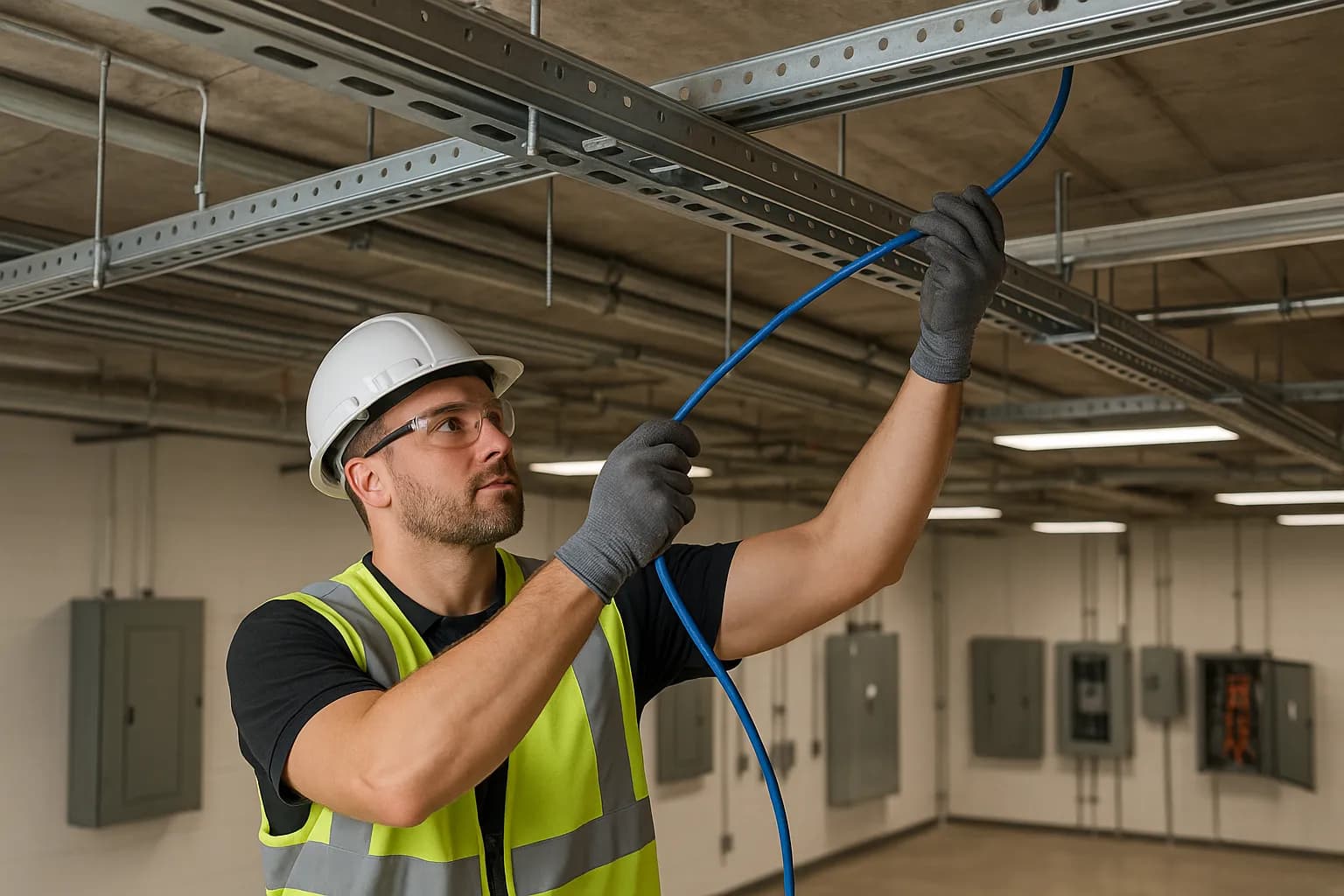
- Low-voltage, data, fire alarm, and life safety systems integration across multi-building sites.
As strategic partners, Lark Electric and American Gridwork Partners can more effectively coordinate multi-site rollouts, regional standardization, and phased implementation plans. For managers overseeing multiple properties, this can reduce risk of contractor capacity constraints and improve schedule reliability.

Continuity of leadership, workforce, and operating identity
A key detail in the announcement is that the deal is structured to preserve Lark’s leadership, workforce, existing customer relationships, and operating identity. From a buyer’s perspective, this reduces common integration concerns associated with mergers or acquisitions—such as abrupt changes in project management, field supervision, or contract terms.
The continued presence of the existing leadership team means that:
- Decision-making remains driven by people who understand local AHJ (Authority Having Jurisdiction) requirements, regional utility practices, and existing client portfolio needs.
- Historical knowledge of building systems, past phases of work, and as-built conditions is retained—critical for phased electrical upgrades and lifecycle planning.
- Established processes for working under NEC (NFPA 70), NFPA 70E electrical safety procedures, OSHA jobsite safety requirements, and UL-listed equipment standards remain grounded in proven practice rather than reworked from scratch.
Similarly, maintaining the existing workforce and identity helps ensure continuity of craftsmanship and site familiarity. For facility managers coordinating shutdowns, night work, or work in occupied spaces, having crews who know the building’s quirks and critical loads can significantly reduce operational risk during upgrades.
What this means for compliance, risk management, and long-term planning
Commercial and industrial electrical work operates inside a dense framework of codes and standards. NEC (NFPA 70) governs electrical installations, NFPA 70E guides electrical safety programs, and OSHA regulations structure worker and site safety. UL listings, manufacturer installation requirements, and local building and energy codes further shape project design and execution.
When a contractor like Lark Electric scales up through a strategic partnership, facility and property managers should assess how that new capacity supports compliance and risk management goals. Areas to consider include:
- Code-driven capital planning: Larger capacity can help you tackle NEC-driven deficiencies and deferred maintenance in a structured, multi-year plan rather than piecemeal repairs.
- Safety and NFPA 70E programs: Enhanced resources may support more formal arc flash studies, labeling updates, and documented electrical safety procedures that reduce incident risk.
- Energy and sustainability compliance: For jurisdictions with energy codes similar to California’s Title 24 or local benchmarking ordinances, a stronger contractor partner can help design and execute compliant lighting, controls, and power projects aligned with utility programs.
- Manufacturer warranties and long-term reliability: Proper installation by experienced teams is often a condition of equipment warranties for switchgear, UPS, EVSE, and controls. Preserved workforce expertise combined with added organizational strength can support warranty-compliant execution and documentation.
Strategic partnerships also tend to encourage more robust internal quality control. As organizations grow, they often formalize standards for submittals, commissioning, and close-out documentation—materials that are essential for ongoing compliance and future renovation work.

Practical actions for facility and property managers
To turn this news into actionable value for your portfolio, consider several concrete steps:
- Verify current capabilities and regional coverage: Engage Lark Electric and American Gridwork Partners to understand updated service territories, vertical specialties, and capacity for multi-site programs.
- Align upcoming capital projects: Map your next 3–5 years of electrical needs—such as service upgrades, generator replacements, EV charging, and lighting retrofits—and determine where a strengthened regional contractor can de-risk delivery.
- Review compliance gaps: Use this inflection point to revisit NEC compliance issues, power quality problems, or outdated emergency systems that have been deferred due to contractor availability constraints.
- Standardize specifications: Work with your engineering partners and the contractor to define standard equipment, controls platforms, and installation details for repeatable use across properties. This streamlines procurement and maintenance.
- Confirm documentation and owner-training expectations: Ensure that close-out packages include updated one-lines, panel schedules, coordination studies, and O&M materials. A more resourced contractor should be able to provide thorough turnover documentation and training for facilities staff.
By approaching the partnership as an opportunity to accelerate and structure your electrical capital plan, you can leverage the increased capacity to reduce long-term risk and improve building performance.
Strategic partnerships as a trend in commercial electrical contracting
Lark Electric’s alignment with American Gridwork Partners reflects a broader industry pattern: consolidations and strategic partnerships designed to scale capabilities while retaining local expertise. For commercial real estate stakeholders, this has several practical implications.
First, it is increasingly possible to work with contractors who combine local familiarity with regional or national backing. That can be valuable for portfolios spanning multiple cities or states, where standardization and scalability are critical. Second, strategic partners often invest in technology—project management platforms, BIM coordination, and building analytics—that support more predictive, data-driven planning of electrical upgrades.
However, it remains essential to validate that growth does not compromise attention to site-specific details, AHJ relationships, and responsiveness to urgent facility needs. In this case, the explicit focus on preserving leadership, workforce, customer relationships, and operating identity is meant to reassure clients that the core service experience remains intact while capacity grows.
For facility managers and property managers, monitoring these industry shifts helps inform vendor selection, contract structuring, and risk management strategies. When evaluating any contractor participating in a strategic partnership, ask targeted questions about how projects are staffed, how safety and quality programs scale, and how communication with building operations teams is maintained as the organization grows.
Ultimately, Lark Electric’s partnership with American Gridwork Partners points to greater regional capability for complex commercial and industrial electrical work—potentially making it easier for you to plan and execute the upgrades, retrofits, and resilience projects required to keep modern buildings compliant, efficient, and mission-ready.
Frequently Asked Questions
How should a national portfolio owner evaluate a commercial electrical contractor involved in a strategic partnership?
Start with demonstrated performance on similar-scale projects, depth of engineering and project management, and documented compliance with NEC, NFPA 70E, OSHA, and local AHJ requirements. Confirm financial stability, warranty support, and ability to standardize equipment and processes across multiple markets to capture lifecycle ROI and reduce operational risk.
Does partnering with a larger group typically increase project costs for commercial clients?
Partnerships do not inherently raise project pricing; costs are still driven by scope, materials, labor, and risk. Larger partners may deliver better value through scale, improved scheduling, and reduced change orders. Evaluate total cost of ownership, warranty support, and reduced downtime rather than only unit pricing when assessing ROI.
What compliance benefits can facility managers expect from a better-resourced electrical contractor?
A better-resourced contractor is more likely to support comprehensive code and safety programs, including formal arc flash studies, NEC-driven upgrades, OSHA-compliant work practices, and thorough documentation. This improves regulatory alignment, simplifies inspections, and reduces liability associated with outdated or undocumented electrical installations.
How does contractor scale affect risk for mission-critical facilities like hospitals or data centers?
Scale can reduce risk by providing deeper benches, specialized teams for critical environments, and 24/7 response capacity. It also supports robust commissioning, redundancy planning, and preventive maintenance programs for UPS, generators, and switchgear. Confirm that teams have specific mission-critical experience and written procedures for live-cutover and phased work.
What buyer criteria matter most when selecting a contractor for EV charging and power distribution upgrades?
Prioritize experience with utility coordination, load studies, and NEC compliance, plus familiarity with manufacturer requirements for EVSE and switchgear. Evaluate ability to integrate load management, protect warranties through proper installation, and phase work to minimize business disruption. For multi-site programs, ask for proven standards and repeatable designs.
How can property managers ensure a smooth transition when their existing contractor enters a strategic partnership?
Request a transition briefing covering leadership continuity, staffing plans, and communication protocols. Confirm that existing SLAs, safety standards, and documentation practices remain in place or improve. Establish clear expectations for project reporting, change management, and coordination with facilities teams to maintain service quality and schedule reliability.
Related Reading on My Electrical Tech
- Commercial LED Lighting: A Practical Upgrade Guide for Facility Managers
- Product Recall: Sammic Portable Electric Liquidiser for Commercial Kitchens
Find a Qualified Commercial Electrical Contractor
Need help acting on this? Browse commercial electricians in your area, or explore commercial electrical services like preventative maintenance, inspections, and emergency response. Are you a contractor? List your business on My Electrical Tech to reach property and facility managers actively searching for help.