 My Electrical Tech
Commercial LED Lighting: A Practical Upgrade Guide for Facility Managers
Quick Answers for Property & Facility Managers
What is the real ROI of commercial LED lighting for existing buildings?
Most commercial LED lighting retrofits cut lighting energy use by roughly 50–70% and significantly reduce maintenance costs, with typical payback in about 1–3 years when incentives and reduced HVAC loads are considered.[2][3][6][11][12][15] Over a 10-year period, lifetime ROI commonly exceeds several times the original project cost.[3][4][6][10]
How should facility managers plan a commercial LED lighting retrofit?
Start with a structured lighting and energy audit, document existing fixtures and circuits, then design new LED layouts and controls around your building’s use patterns.[5][12] Prioritize areas with long operating hours, confirm NEC-compliant power distribution, and model payback using energy, maintenance, and rebate savings before you solicit bids.[5][6][13]
Where does commercial LED lighting fit within broader electrical upgrades like EV charging and backup power?
Commercial LED lighting reduces base electrical loads, which can free capacity for EV charging, UPS, and generator-backed circuits.[12][15] During capital planning, facility managers should evaluate lighting, controls, EVSE, and backup power together so panelboards, feeders, and switchgear are sized appropriately and meet code and reliability objectives.
Why Commercial LED Lighting Is Now Core Infrastructure for Non-Residential Buildings
For offices, retail stores, warehouses, manufacturing plants, healthcare, and institutional properties, commercial LED lighting has become a baseline expectation rather than an optional upgrade. Industry data across dozens of projects shows LED retrofits typically reduce lighting energy consumption by roughly 50–70% versus fluorescent and HID systems, and in some industrial projects savings can reach 80%.[2][3][11][14][15] These reductions translate directly into lower utility bills and smaller cooling loads, while improved lighting quality supports safety, productivity, and tenant satisfaction.[2][5][12][15]
Analyses of completed commercial projects report payback periods around 1.5–3 years on energy savings alone, with lifetime returns over 300%–400% once maintenance, rebates, and HVAC impacts are included.[3][6][10][11][15] For facility managers and property teams, that means lighting is one of the rare capital projects where the financial case is often stronger than other building upgrades.
Strategically planned LED retrofits help you reduce operating expenses, support ESG targets, and free electrical capacity for new loads such as EV charging, data centers, and expanded HVAC systems.[12][15] The sections below outline a practical, step-by-step approach tailored to commercial portfolios.
Start with a Structured Commercial Lighting and Electrical Audit
A disciplined audit is the first step in any commercial LED lighting project. Guidance for commercial properties emphasizes documenting both lighting and electrical context before specifying fixtures.[5][8][12]
Audit steps for facility and property managers
- Inventory existing fixtures: Record fixture type (T8/T5 fluorescent, CFL, HID, halogen), wattage, quantity, mounting height, and location by space type (open office, corridors, dock, production, patient rooms).[5][8]
- Document circuits and panelboards: For each lighting zone, note panelboard and breaker numbers, phase configuration (single-phase vs three-phase), and spare capacity. This matters for load calculations and future controls integration.
- Measure light levels: Take lux or footcandle readings at task height in representative areas (workstations, aisles, exam rooms) and compare against local best-practice targets and internal standards.[5]
- Record hours of operation: By space type, log typical daily and weekly operating hours and occupancy patterns; long-hours areas (24/7 corridors, production lines, parking garages) usually warrant priority in phasing.[5][12][15]
- Assess existing controls: Note whether spaces use manual switches, multi-level switching, occupancy sensors, daylight sensors, or centralized BMS integration, and document control panel locations and wiring topology.[5][12]
- Capture maintenance history: Estimate annual lamp and ballast replacements, labor hours, and access challenges (high-bay lifts, infection control for healthcare) to quantify non-energy savings.[5][15]
For multi-site portfolios, use a standardized audit template and central database to compare sites, prioritize high-ROI locations, and maintain consistent specifications.[12]
Designing Commercial LED Lighting: Performance, Controls, and Electrical Coordination
Once you have baseline data, the next step is performance-focused design that aligns lighting quality, controls, and electrical infrastructure.
Key LED performance specifications
- Luminous efficacy: Commercial guidance recommends targeting at least ~130 lumens per watt for general-purpose fixtures to maximize energy savings.[5][14] High-bay and specialized fixtures may exceed that.
- Color rendering index (CRI): For general commercial interiors, CRI of 80 or higher is recommended; for retail and patient-facing areas, 90+ CRI improves visual quality and color accuracy.[5]
- Correlated color temperature (CCT): Common ranges are 3000–4000K for offices and healthcare corridors, and 4000–5000K for warehouses, parking, and industrial; select CCT by use and occupant preference.
- Driver reliability and warranty: Industry guidance suggests minimum five-year warranties on fixtures and drivers, paying attention to thermal management and ambient temperature ratings for the environment.[5]
Controls strategy integrated with electrical systems
Modern commercial LED lighting design is inseparable from controls. Properly deployed occupancy sensing, daylight harvesting, and scheduling can add another 20–30% savings on top of LED fixture savings in many facilities.[2][5][12][15]
- Zone lighting by panelboard and breaker: Align control zones with panel circuits where possible, simplifying metering and NEC-compliant wiring modifications.
- Centralized vs local controls: Determine whether your building automation system (BAS/BMS) will manage schedules and setpoints or whether stand-alone room controllers and sensor networks are more practical.
- Compatibility: Confirm that chosen LED drivers support the control protocol (0–10V, DALI, DMX for specialty spaces, or wireless controls), and verify manufacturer compatibility lists to avoid flicker and dimming issues.[5]
- Emergency and life safety integration: Document which circuits feed emergency egress lighting and how those circuits are tied to backup generators or central battery systems. Ensure any LED retrofit maintains or improves code-compliant egress illumination and transfer times.
This design phase is also your opportunity to confirm that switchgear, panelboards, and feeders can support future loads such as EV charging and new mechanical equipment. Lower lighting loads can free capacity or allow strategic reallocation without upsizing major infrastructure.[12][15]
Implementation: Coordinating Panelboards, Switchgear, and Life Safety During LED Retrofits
For most existing commercial buildings, LED upgrades are retrofit projects executed on live facilities. Good planning minimizes disruption and protects life safety.
Electrical system checks before construction
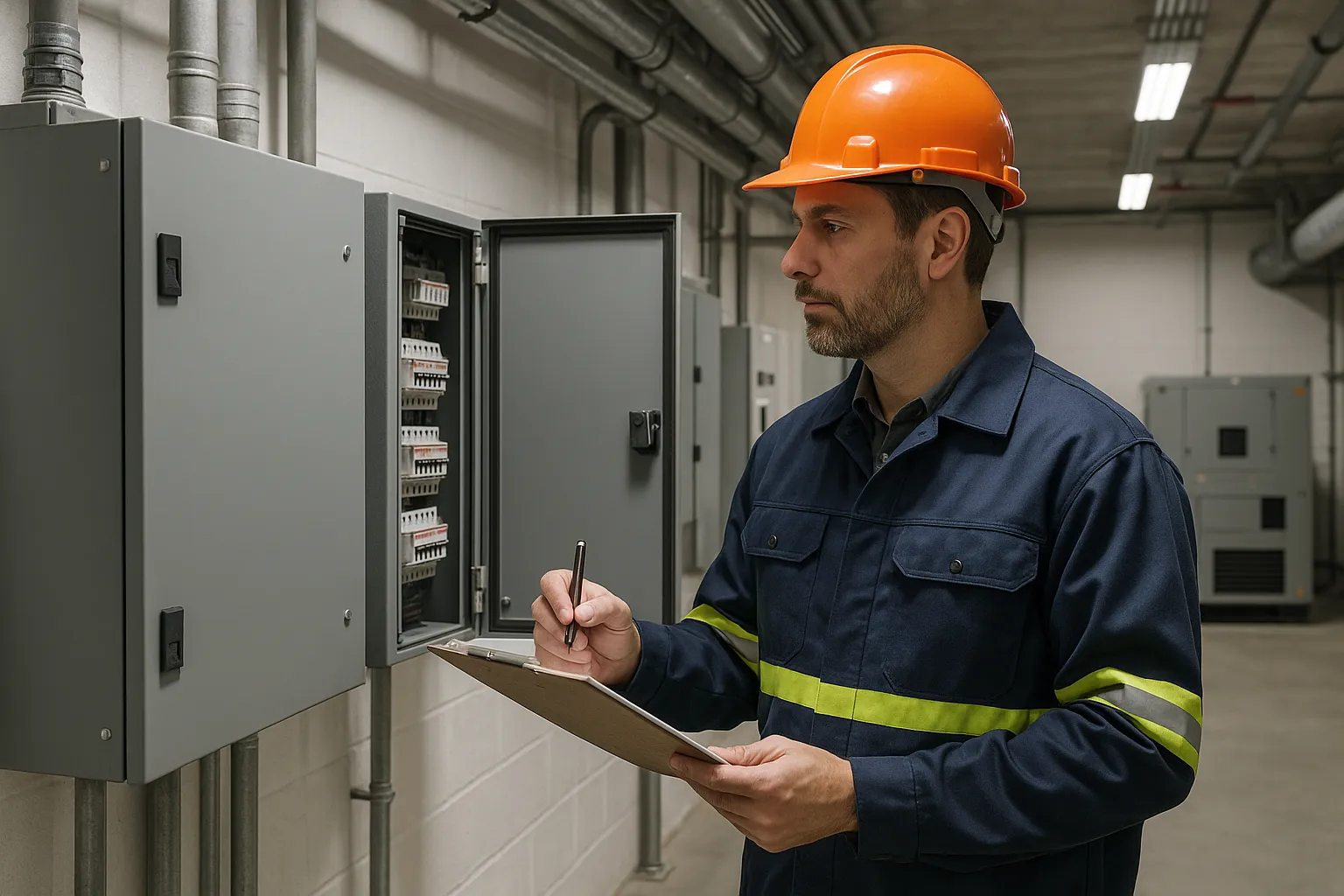
- Review panelboard schedules: Validate circuit labeling against your audit; correct discrepancies before work begins. Identify which circuits serve critical areas (OR suites, data centers, egress paths) and plan outages accordingly.
- Assess switchgear and upstream protection: Confirm that short-circuit ratings and protective device coordination remain valid with changed load profiles, especially if controls introduce inrush or harmonic effects.
- Emergency and generator-backed circuits: Map egress and life safety lighting to ATS and generator connections; confirm that new LED fixtures are compatible with emergency drivers or inverter systems and maintain required illumination levels during outages.
- Prepare method-of-procedure (MOP): For larger facilities or high-risk occupancies (healthcare, data centers), formal MOPs for panel shutdowns and switchgear operations help avoid unintended outages.
Phased installation and commissioning
- Phase by hours and value: Guidance recommends prioritizing zones with the longest operating hours and highest energy intensity—warehouses, production, parking, and common areas—to capture early savings.[5][12][15]
- Coordinate with tenants and operations: Schedule work during off-hours or weekends, and communicate clearly with property management and occupants to reduce complaints.
- Commissioning and verification: After installation, measure light levels to confirm design targets, verify control operation (occupancy, daylight, schedules), and meter or submeter circuits to validate projected energy savings.[5][12]
- Update documentation: Revise one-line diagrams, panel schedules, asset lists, and O&M manuals to reflect new fixtures, drivers, controls, and emergency systems.
Commissioning is critical for proving savings and supporting future capital requests. Metered post-retrofit data strengthens the business case for subsequent phases and related upgrades.
Cost, Incentives, and ROI Modeling for Commercial LED Lighting
From a budget standpoint, facility managers need clear payback expectations and transparent assumptions. Multiple calculators and case studies highlight common performance ranges.
Typical payback ranges and drivers
Analyses of commercial LED retrofits suggest that many projects pay back installation costs in roughly 1–3 years, with some high-hours facilities and strong rebates achieving under one year.[2][3][4][6][10][11][15] A simple example: a $3,000 net project saving about $75 per month yields around a 40-month (3.3-year) payback.[4]
To model project economics, industry calculators often use formulas like:
Annual energy savings (USD) ≈ (W existing – W LED) × hours/year × electricity rate ÷ 1,000[6][11][13]
Simple payback is then net project cost divided by annual savings, with more advanced analyses considering maintenance, HVAC, and demand-based savings.[4][6][13]
Practical ROI planning steps
- Quantify baseline energy and maintenance costs: Use your audit plus utility data to calculate lighting kWh, demand charges where applicable, and annual lamp/ballast labor and materials.[5][6][11][13]
- Model multiple scenarios: Compare a minimal retrofit (one-for-one fixture replacement) to a full redesign (layout changes plus advanced controls). Larger redesigns may have higher upfront cost but stronger ROI over 10 years.[5][12][15]
- Include incentives: Many utilities and some tax provisions (such as commercial energy-efficiency deductions) can offset 20–50% of project cost in many markets, significantly improving payback.[2][12]
- Plan multi-year phasing: For large campuses or portfolios, phasing over multiple budget cycles is common. Prioritize areas with fast payback and operational benefits, then roll savings into later phases.[5][12]
Over a 10-year horizon, case studies show total returns several times the original investment when combining energy, maintenance, and incentive benefits.[3][6][10][11][15] Use this longer time frame for strategic capital planning, not just short-term payback metrics.
Integrating Commercial LED Lighting with EV Charging, Backup Power, and Power Quality Strategy
For property and facility managers, lighting upgrades rarely happen in isolation. LED projects should be evaluated alongside EV charging (EVSE), UPS, generators, and broader power distribution planning.
Capacity and panelboard strategy
- Freeing capacity for new loads: Dropping lighting demand by roughly half or more can free panelboard and feeder capacity for EV chargers, server rooms, or HVAC electrification.[12][15] Use updated load calculations to decide whether planned EVSE can be accommodated without major service upgrades.
- Reserving critical capacity: In healthcare or mission-critical facilities, reduced lighting loads can allow more circuits to be backed up by generators or UPS without upsizing switchgear.
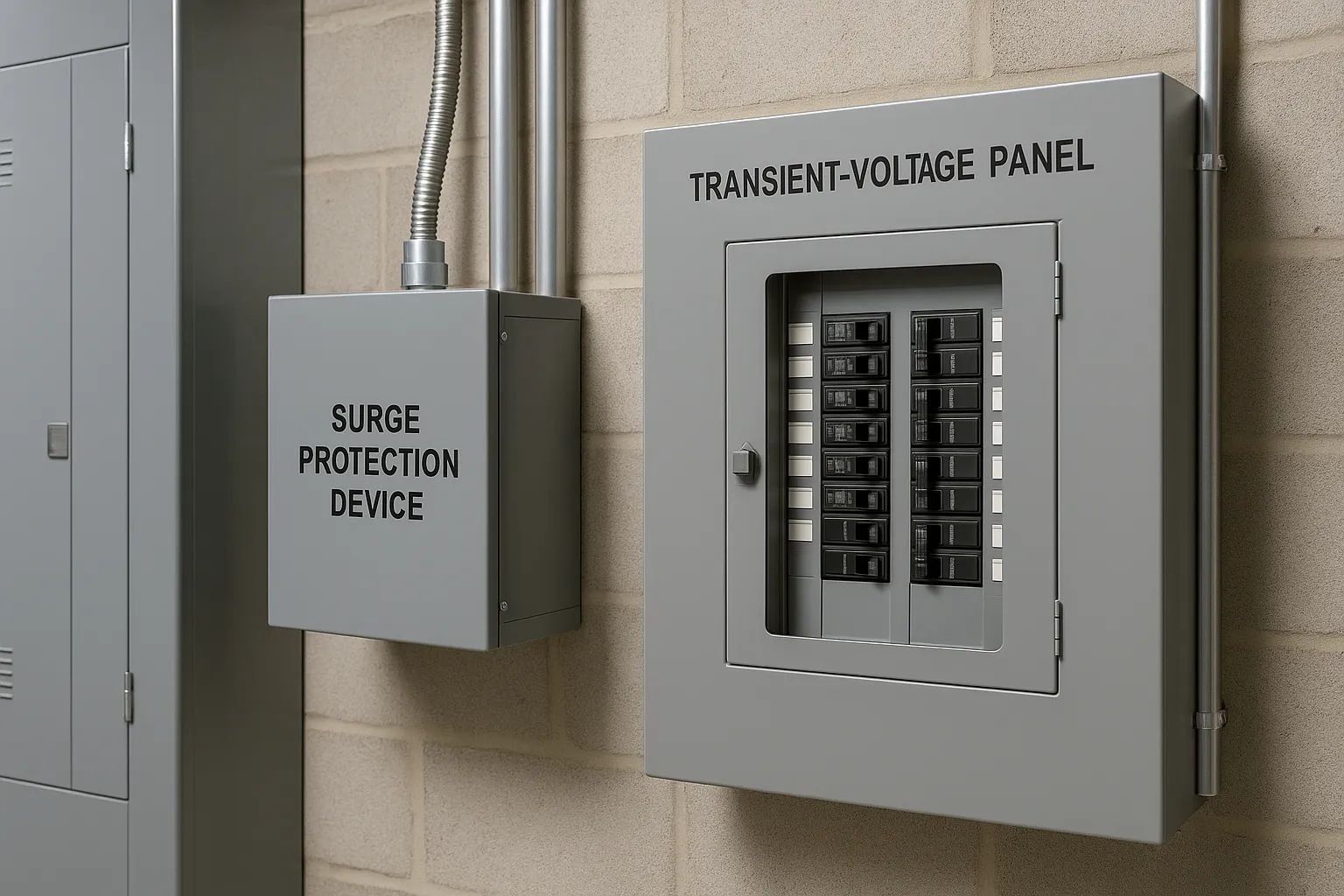
- Power quality and harmonics: LED drivers and controls can introduce harmonics; coordinate with engineering teams to verify power quality, especially where sensitive IT loads or medical equipment share distribution.
Life safety and code considerations
Upgrading to commercial LED lighting offers an opportunity to review life safety systems and NEC compliance holistically:
- Egress illumination: Confirm that LED retrofits maintain or improve minimum illumination levels on egress paths during normal and emergency operation.
- Emergency power topology: Ensure emergency fixtures, transfer devices, and wiring methods remain aligned with code and facility standards when fixtures or circuits change.
- Fire alarm and controls interfaces: Where lighting interfaces with fire alarm (e.g., stair pressurization, smoke control zones), verify that new controls sequences do not conflict with life safety logic.
Thinking about commercial LED lighting as part of an overall electrical and resilience strategy rather than a one-off upgrade will help you avoid rework and maximize long-term value.
Action Checklist for Facility and Property Managers
To move from concept to implementation, use this concise checklist tailored to commercial portfolios:
- Complete a standardized lighting and electrical audit across priority buildings, capturing fixtures, circuits, hours, and maintenance data.[5][8][12]
- Define performance requirements (efficacy, CRI, CCT) and controls strategy by space type, with attention to tenant expectations and safety.[5][12][15]
- Validate panelboard and switchgear capacity, emergency power topology, and power quality implications before finalizing design.
- Model energy, maintenance, and HVAC savings and include utility incentives to estimate payback and 10-year ROI using recognized formulas.[3][4][6][11][13]
- Phase projects starting with high-hours, high-impact zones (warehouses, garages, production, common areas).[5][12][15]
- Develop MOPs for critical facilities, coordinate outages, and communicate clearly with tenants and operations teams.
- Commission the new commercial LED lighting system, verify light levels and savings with metering, and update documentation and asset registers.[5][12]
Following this structured approach will help facility managers, property managers, and commercial real estate teams realize the full financial and operational benefits of commercial LED lighting while aligning with broader electrical infrastructure plans.
Frequently Asked Questions
How should facility managers estimate payback for commercial LED lighting upgrades?
Use building-specific data: baseline kWh and demand, fixture wattage, operating hours, and maintenance costs. Apply a simple savings formula such as (existing watts – LED watts) × hours × rate ÷ 1,000 to estimate annual savings, then divide project cost net of incentives by those savings to get payback years.[4][6][11][13]
Do commercial LED lighting projects typically justify panelboard or switchgear upgrades?
Often, no—lighting load usually decreases substantially after retrofit, which can free capacity for new loads rather than require upsizing.[12][15] However, when LED projects are combined with EV charging, major HVAC electrification, or data-center expansion, it is prudent to re-evaluate service size, feeder ratings, and protective device coordination.
What are the main risks when retrofitting commercial LED lighting in occupied facilities?
Key risks include unplanned outages due to mislabeled circuits, incompatibility between LED drivers and existing controls, and life safety issues if emergency lighting performance is not verified. Facility managers can mitigate these by thorough audits, method-of-procedure planning, commissioning, and careful vendor selection with robust warranties and support.[5][12][15]
How do utility rebates and tax incentives affect commercial LED lighting ROI?
Many commercial properties can access utility incentives and energy-efficiency tax provisions that offset 20–50% of project cost.[2][12] These incentives shorten payback and increase long-term ROI, making it easier for property teams to justify capital spending. Always verify current program rules and documentation requirements in your jurisdiction.
Where should property managers start LED retrofits in multi-building portfolios?
Guidance for multi-site facilities recommends prioritizing buildings and zones with the longest operating hours and highest lighting energy use—such as warehouses, large retail floors, garages, and production areas.[5][12][15] Start with a pilot project to validate savings, then scale using standardized specifications and asset tracking.
How does commercial LED lighting intersect with ESG and tenant retention goals?
LED retrofits cut energy use, lower emissions, and improve lighting quality—all tangible ESG and wellness indicators.[2][3][5][12][15] Documented savings and better visual environments support green certifications and can enhance tenant satisfaction, helping property owners differentiate assets and justify rent and renewal discussions.
Related Reading on My Electrical Tech
- Product Recall: Sammic Portable Electric Liquidiser for Commercial Kitchens
- Electrical Panel Replacement Cost: Commercial-Level Guide for Facility Managers
Find a Qualified Commercial Electrical Contractor
Need help acting on this? Browse commercial electricians in your area, or explore commercial electrical services like preventative maintenance, inspections, and emergency response. Are you a contractor? List your business on My Electrical Tech to reach property and facility managers actively searching for help.