 My Electrical Tech
Electrical Inspection Requirements for Commercial Buildings: NEC, OSHA, and AHJ Compliance
Quick Answers for Property & Facility Managers
What does a commercial electrical inspection cover?
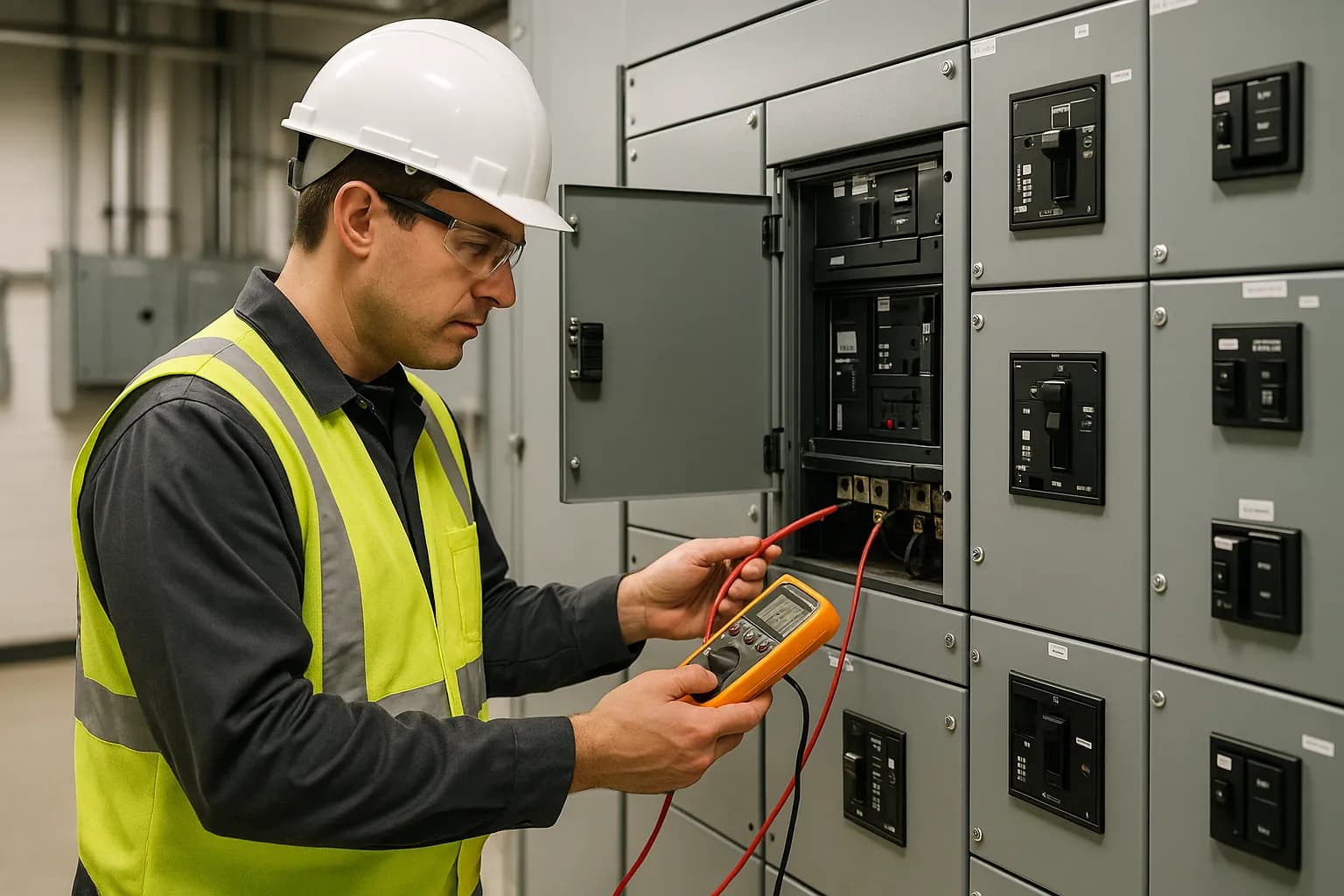
A commercial electrical inspection verifies that electrical installations comply with the locally adopted NEC, approved plans, permit conditions, and applicable building and energy codes. Inspectors may review service equipment, switchgear, panelboards, feeders, grounding and bonding, wiring methods, lighting, controls, EVSE, generators, and life-safety systems before authorization to energize or occupy.
Who is responsible for passing a commercial electrical inspection?
The permit holder, electrical contractor, and project team are generally responsible for presenting compliant work, while the building owner or property manager must ensure required permits and inspections are completed. The local authority having jurisdiction, or AHJ, conducts or oversees inspections. Responsibility and deadlines vary by state, city, project type, and permit.
Can a commercial building operate without a final electrical inspection?
Operating without required approval can expose the owner and occupants to stop-work orders, delayed occupancy, failed insurance or warranty claims, reinspection fees, correction costs, and enforcement action. A project should not be energized, occupied, or placed into normal service until the AHJ confirms the required inspections and approvals are complete.
Why Electrical Inspection Matters in Commercial Buildings
A commercial electrical inspection is an AHJ review of installed electrical work against the code edition and requirements adopted for the project location. It is not limited to checking whether equipment turns on. The inspection may address three-phase service, switchgear, transformers, panelboards, feeders, branch circuits, grounding and bonding, overcurrent protection, commercial lighting, lighting controls, EV charging equipment, generators, UPS systems, fire alarm interfaces, and low-voltage pathways.
NFPA 70, the National Electrical Code (NEC), is the benchmark for electrical design, installation, and inspection and is enforced through state or local laws. The AHJ is the final authority for permits, inspection procedures, approved alternatives, and local amendments.[5][7][10] For facility managers and commercial real estate professionals, a passed inspection supports lawful energization, occupancy, tenant turnover, insurance documentation, and reliable asset records.
Which Codes and Standards Govern an Electrical Inspection?
The applicable requirements depend on the jurisdiction, building type, scope of work, and permit date. The project team should identify the locally adopted NEC edition rather than assuming the newest edition applies. AHJs may also enforce building, fire, accessibility, energy, and equipment-specific requirements.
- NFPA 70 (NEC): Covers electrical design and installation, including wiring methods, equipment ratings, grounding, overcurrent protection, working clearances, and inspection criteria.
- NFPA 70E: Addresses electrical safety in the workplace, including shock and arc-flash risk assessment, electrically safe work practices, approach boundaries, labeling, and personal protective equipment. OSHA does not directly enforce NFPA 70E as a regulation, but employers commonly use it to support OSHA electrical-safety obligations.[1][2][7]
- OSHA: General industry requirements appear primarily in 29 CFR 1910 Subpart S, while construction requirements appear in 29 CFR 1926 Subpart K. OSHA requires employers to protect workers from recognized electrical hazards and use suitable electrical equipment.[3][4]
- UL listing and labeling: OSHA recognizes listing or labeling as evidence that equipment is suitable for an identified purpose, subject to proper installation and use.[4]
- Energy codes: State and local energy codes, including California Title 24 where applicable, can affect lighting power, automatic controls, daylight response, documentation, and commissioning.
When Commercial Electrical Inspection Is Required
Most jurisdictions require permits and inspections for new construction, tenant improvements, service upgrades, alterations, replacement of major equipment, and additions such as EVSE, emergency generators, solar interconnections, battery systems, and fire alarm infrastructure. Inspection stages commonly include a rough inspection before concealment, service or equipment inspection, and final inspection. Some projects also require special inspections, testing reports, utility approval, fire department review, or commissioning.
There is no universal national deadline for scheduling a commercial electrical inspection. The permit, AHJ, utility, adopted code, and certificate-of-occupancy process control the timing. A permit may expire if work is not started or completed within the local period, and a final approval may be required before occupancy or energization. Facility managers should obtain written requirements from the permitting authority at project kickoff and confirm whether inspections must occur during normal business hours, with equipment de-energized, or with utility coordination.
What Inspectors Review in Power Distribution and Life Safety Systems
Inspection readiness depends on project scale. A small retail alteration may focus on a panelboard, lighting circuits, and emergency egress lighting, while a warehouse, healthcare facility, or high-rise office project may involve medium-voltage service, multiple switchboards, generators, ATS equipment, UPS systems, selective coordination, fire pumps, and extensive controls.
- Service ratings, short-circuit ratings, equipment working space, and required clearances.
- Switchgear, switchboards, panelboards, disconnects, overcurrent devices, feeder identification, and torque documentation where required by the project specifications.
- Grounding electrode systems, equipment grounding conductors, bonding, and neutral isolation.
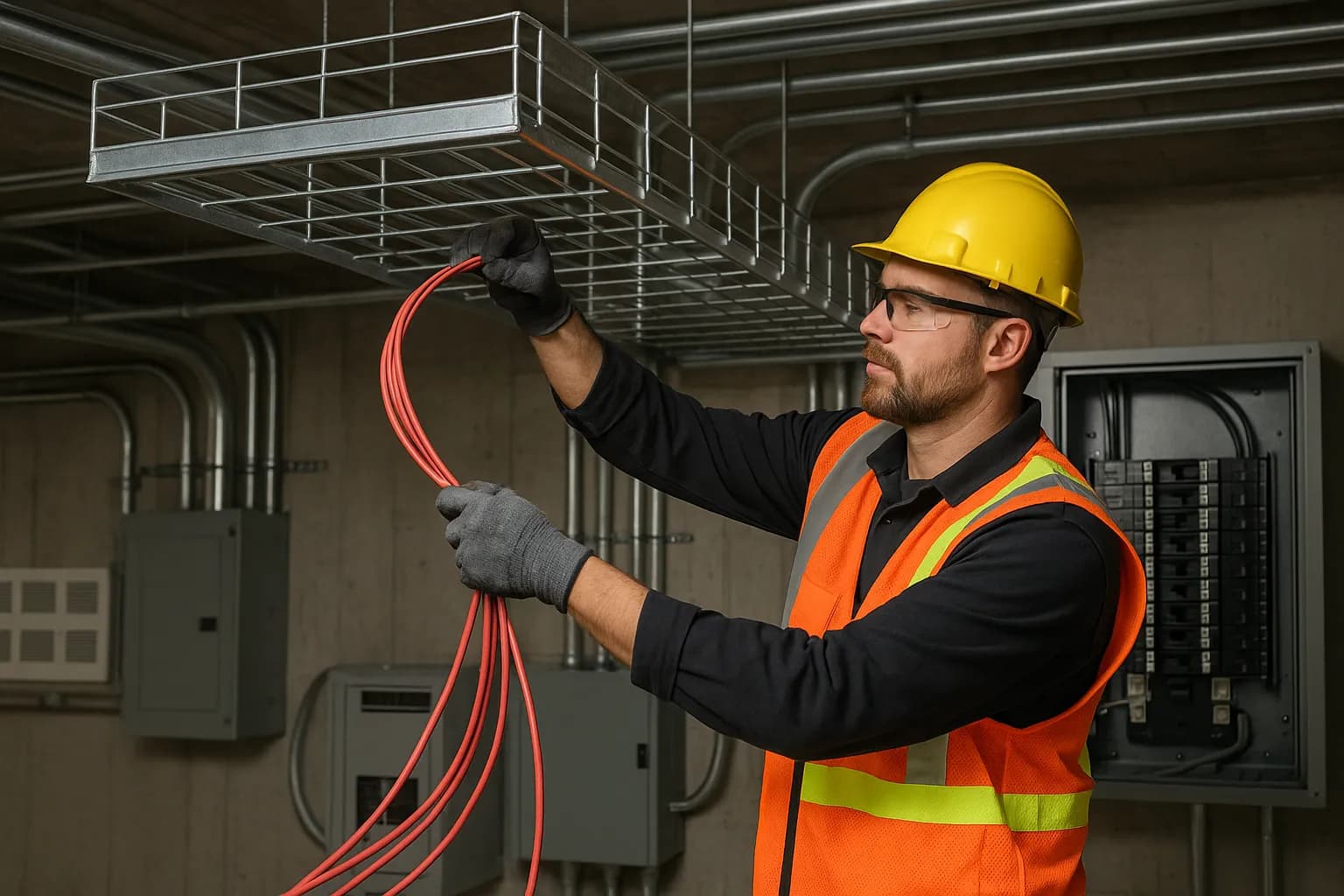
- Conductor ampacity, raceways, cable support, terminations, box fill, conductor identification, and protection from physical damage.
- Emergency systems, generators, transfer switches, UPS equipment, exit lighting, fire alarm power, and required separation or reliability features.
- Commercial lighting, occupancy sensors, daylight controls, energy-code documentation, and lighting-control operation.
- EVSE installation, disconnects, overcurrent protection, grounding, load calculations, accessibility, signage, and network or communications pathways where applicable.
- UL-listed or otherwise approved equipment, field evaluation requirements, manufacturer installation instructions, and equipment labels.
Electrical Inspection Penalties and Business Risks
Non-compliance can result in a failed inspection, correction notice, reinspection charge, stop-work order, delayed certificate of occupancy, delayed tenant opening, or an order not to energize equipment. Unpermitted work may require opening finished walls or ceilings, revised drawings, destructive verification, or removal and replacement of equipment. The AHJ determines the applicable enforcement process and penalties.
OSHA may separately inspect workplace conditions and cite employers for violations of enforceable electrical safety requirements. Electrical defects can also increase shock, arc-flash, fire, equipment-damage, downtime, and liability exposure. Owners should not treat a passed construction inspection as a substitute for ongoing maintenance, preventive testing, arc-flash program management, or periodic evaluation of aging equipment.
Warranty and insurance exposure also matter. Manufacturers commonly condition warranty support on correct installation, approved components, qualified service, documented maintenance, and compliance with installation instructions. A warranty is not a substitute for AHJ approval, and an inspection approval does not guarantee that a manufacturer will accept an installation that violates its instructions.
Step-by-Step Commercial Electrical Inspection Compliance Roadmap
- Define the scope: Identify affected services, distribution equipment, lighting, controls, EVSE, generators, UPS, data pathways, fire alarm interfaces, and tenant areas.
- Confirm the governing requirements: Ask the AHJ for the adopted NEC edition, local amendments, permit forms, inspection stages, energy-code requirements, utility rules, and occupancy prerequisites.
- Use qualified design and installation resources: Coordinate the engineer of record, licensed electrical contractor, commissioning provider, and specialty vendors for generators, fire alarm, controls, and EVSE.
- Verify equipment suitability: Confirm ratings, listings or field evaluations, environmental suitability, labeling, manufacturer clearances, and installation instructions before delivery and installation.
- Coordinate before concealment: Schedule rough inspections before ceilings, walls, trenches, or equipment enclosures hide wiring and connections. Keep approved drawings and revisions available.
- Complete testing and documentation: Assemble permits, approved plans, load calculations, equipment submittals, test reports, grounding results, generator or ATS records, control sequences, and correction closeout evidence.
- Schedule final inspection and closeout: Confirm systems are accessible, labeled, operational where required, and safe for inspection. Obtain written approval, update as-builts, and retain records in the building asset-management system.
How Facility Managers Should Maintain Inspection Readiness
After turnover, maintain a compliance file containing permits, inspection approvals, one-line diagrams, panel schedules, equipment manuals, warranty documents, test results, and as-built drawings. Track modifications so future tenant work does not overload existing distribution or bypass permit requirements. Review electrical rooms for clearances, damaged enclosures, missing labels, water intrusion, blocked access, overheating, and unauthorized alterations.
Use NFPA 70E-based safe-work practices for employees and contractors exposed to energized equipment, and coordinate preventive maintenance with qualified electrical professionals. Before buying an electrical inspection service, ask whether the provider understands commercial three-phase systems, can document deficiencies by risk and code reference, distinguishes AHJ approval from maintenance recommendations, and can coordinate corrections without disrupting critical operations.
Frequently Asked Questions
How often should a commercial building receive an electrical inspection?
The required frequency depends on the jurisdiction, permit conditions, occupancy, equipment, insurance requirements, and maintenance program. Construction inspections occur at defined project stages, while existing-building assessments may be scheduled after alterations, incidents, tenant changes, equipment replacement, or as part of preventive maintenance. Facility managers should also follow manufacturer recommendations, utility requirements, applicable fire and life-safety rules, and the owner’s risk-management policy.
What is the difference between an AHJ electrical inspection and an electrical maintenance assessment?
An AHJ inspection determines whether permitted work satisfies adopted codes and local requirements at the inspection stage. A maintenance assessment evaluates operating condition, deterioration, thermal stress, loose connections, power quality, arc-flash information, and reliability risks over the asset’s life. Passing an AHJ inspection does not eliminate the need for preventive maintenance, testing, or periodic condition assessments.
What documents should a property manager prepare for commercial electrical inspection?
Prepare the permit, approved electrical drawings, revisions, single-line diagrams, load calculations, panel schedules, equipment submittals, listing or field-evaluation information, manufacturer instructions, test reports, grounding and bonding documentation, energy-code forms, generator or UPS records, fire alarm documentation, and prior correction notices. Keep records organized by building and system so the contractor and AHJ can verify scope quickly.
How can electrical inspection reduce operating risk in a warehouse or industrial facility?
Inspection helps identify installation defects affecting high-load equipment, conveyors, motor controls, chargers, distribution panels, and emergency systems before they cause downtime or unsafe conditions. The strongest program combines AHJ-required inspections with preventive maintenance, infrared or other condition testing where appropriate, power-quality review, arc-flash documentation, and documented corrective actions prioritized by life-safety and operational impact.
What should commercial buyers look for when hiring an electrical inspection provider?
Select a provider with demonstrable commercial experience in three-phase distribution, switchgear, generators, UPS systems, lighting controls, EVSE, and life-safety interfaces. Confirm licensing or qualifications required locally, insurance, report quality, code-awareness, testing capabilities, and independence from contractors proposing unnecessary repairs. Require deficiencies to include location, observed condition, risk, recommended action, and whether AHJ approval or a permit is required.
Related Reading on My Electrical Tech
- Sonepar Acquires EOSYS: What Industrial Automation Means for Facility Managers
- Medium Voltage Switchgear: A Commercial Facility Manager’s Guide to Selection, Maintenance, and Replacement
Find a Qualified Commercial Electrical Contractor
Need help acting on this? Browse commercial electricians in your area, or explore commercial electrical services like preventative maintenance, inspections, and emergency response. Are you a contractor? List your business on My Electrical Tech to reach property and facility managers actively searching for help.