 My Electrical Tech
NFPA 79 Electrical Standard Changes Explained for Facility Managers
Quick Answers for Property & Facility Managers
What do the latest NFPA 79 changes mean for a commercial facility?
The latest NFPA 79 changes mean industrial machinery electrical systems may need updated protection, control-circuit design, and safety-related components to align with current expectations for code compliance and safe operation. For facility managers, that affects equipment specifications, inspection readiness, maintenance planning, and coordination with the AHJ during installation or retrofit work.
Why should property managers care about NFPA 79 if they do not run the machinery themselves?
Property managers should care because NFPA 79 can affect project approvals, tenant improvements, shutdown planning, and long-term liability. If machinery in a warehouse, plant, or other commercial building is not designed and maintained to current standards, the owner may face delays, failed inspections, warranty issues, or safety risks tied to electrical and control-system deficiencies.
What the NFPA 79 update means for commercial and industrial facilities
NFPA 79 is the electrical standard for industrial machinery, and recent changes place more emphasis on protection, control circuits, and safety-related components. For facility managers, property managers, and commercial real estate professionals, the practical issue is not the technical wording alone—it is whether machinery installations, retrofits, and maintenance programs still align with current safety and compliance expectations.
In commercial and industrial properties, NFPA 79 often comes into play wherever automated machinery, packaged equipment, production lines, or integrated controls are installed. These systems may also need to align with NEC (NFPA 70), NFPA 70E electrical safety practices, OSHA requirements, UL listing conditions, and local AHJ permit and inspection rules.
Why protection requirements matter in machine-room and equipment-room projects
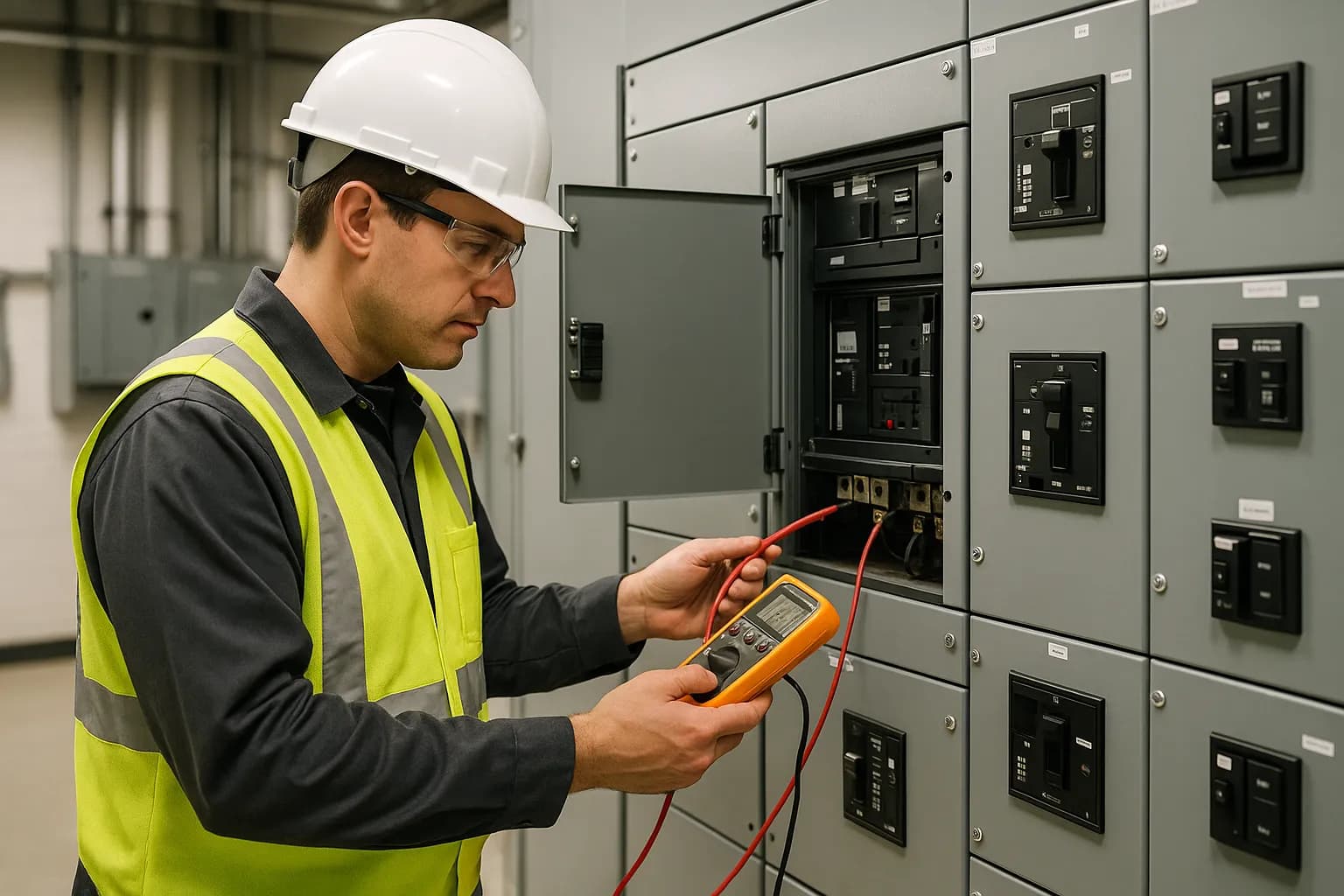
One of the most important takeaways from the standard update is the focus on protection. In practice, that means facility teams should confirm that overcurrent protection, disconnecting means, short-circuit ratings, and grounding/bonding details are matched to the actual equipment and the electrical environment.
For owners, this is especially relevant in buildings with industrial tenant spaces, packaging lines, material-handling systems, and process equipment tied into service gear, panelboards, or distribution equipment. If protection is undersized, misapplied, or not documented correctly, the result can be nuisance trips, equipment damage, unsafe fault conditions, or delays in permit approval.
- Verify that machine protection is coordinated with upstream switchgear, panelboards, and feeders.
- Confirm that the equipment nameplate data and installation documents match the as-built condition.
- Ask whether the manufacturer’s instructions and UL listing requirements were followed.
Control circuits and safety-related functions now demand tighter coordination
The update also highlights control circuits, which are often the part of a machine installation that creates the most confusion for owners and operators. Control power, interlocks, emergency stop functions, and safety-related controls must work as a system, not as disconnected components.
For facility managers, this matters because control issues can affect uptime, operator safety, and maintenance response. A control circuit that is difficult to troubleshoot or poorly documented can increase outage time and elevate the risk of unsafe restart conditions. NFPA 70E and OSHA expectations make that especially important when workers are exposed to energized equipment during diagnostics or maintenance.
- Require clear control schematics and updated field documentation from contractors and OEMs.
- Confirm that emergency stop and safety circuits are tested after installation and after major modifications.
- Build lockout/tagout procedures around the actual control architecture, not assumptions.
How the update affects maintenance planning and asset management
These changes are not only a design issue; they also affect ongoing maintenance. Facility teams that rely on preventive maintenance, condition-based maintenance, or OEM service contracts should review whether machine components, protective devices, and safety systems are still being maintained according to current requirements.
That is especially important in warehouses, distribution centers, healthcare support spaces, light manufacturing, food processing, and other commercial facilities where downtime can affect tenants, operations, or compliance obligations. Maintenance records should show inspections, functional testing, corrective actions, and parts replacement history for electrical and control components tied to the machinery.
- Update preventive maintenance checklists for machine disconnects, control devices, and safety circuits.
- Keep records that show compliance with manufacturer instructions and warranty conditions.
- Coordinate maintenance work with planned shutdowns to reduce operational disruption.
Where NEC, UL, OSHA, and the AHJ intersect with NFPA 79
NFPA 79 does not stand alone. In commercial projects, it typically works alongside NEC (NFPA 70) for installation rules, UL listing standards for the product itself, OSHA for workplace safety expectations, and local AHJ requirements for permits and inspections. If any one of those pieces is ignored, the project may still fail final acceptance even if the machine technically operates.
This is why commercial real estate teams should ask early whether the machinery is listed and labeled properly, whether the electrical installation matches the listing, and whether the jurisdiction has adopted any local amendments or additional inspection steps. In some markets, energy code requirements such as Title 24 may also influence controls, efficiency measures, or integrated building systems when the machine project overlaps with lighting, HVAC, or automation work.
- Confirm permit scope before work starts, especially on tenant improvements or equipment replacements.
- Check whether the installation is subject to local amendments beyond the base code.
- Do not assume a factory-built machine is automatically compliant once it is delivered onsite.
Project planning questions facility managers should ask before the next upgrade
For owners and operators, the best time to address NFPA 79 is before procurement, not after installation. During capital planning, tenant improvements, or equipment replacement, facility leaders should require design review from qualified electrical contractors, controls vendors, and commissioning teams so that compliance issues are resolved before they become schedule problems.
This is especially important when machinery ties into switchboards, motor control centers, VFDs, panelboards, backup power systems, or building automation networks. The more integrated the system, the more important it is to verify fault protection, control logic, documentation, and maintenance access.
- Ask for submittals that show protection, control, and safety logic before procurement approval.
- Require commissioning and functional testing for all safety-related components.
- Plan for reinspection if the installation changes after the original permit or factory acceptance test.
What this means for commercial property risk, uptime, and compliance
For facility managers, property managers, and commercial real estate professionals, the value of understanding NFPA 79 is risk reduction. The standard update signals that industrial machinery installations are being evaluated more closely for protection, control integrity, and safety performance, which affects both new construction and retrofit work.
Owners who treat machine electrical compliance as a documentation and lifecycle issue—not just a contractor issue—are better positioned to protect uptime, reduce liability exposure, and avoid surprises during inspections, maintenance audits, or tenant turnover. In practical terms, that means aligning design, installation, maintenance, and recordkeeping with the current code and safety environment from day one.
Frequently Asked Questions
How does NFPA 79 affect equipment replacement budgets and ROI?
NFPA 79 can increase upfront project scope if protection, control circuits, or safety-related components need redesign or documentation updates, but that often reduces lifecycle risk. For commercial owners, the ROI comes from fewer inspection delays, less unplanned downtime, better maintenance visibility, and lower exposure to safety-related failures that can disrupt operations or trigger corrective work.
Can a machine still pass inspection if it was built to an older version of NFPA 79?
Not always. The deciding factors are usually the permit scope, adoption by the local AHJ, whether the installation was modified, and whether the machine’s installation matches current code, listing, and safety requirements. If equipment is altered or installed in a new project, owners should expect a current review rather than assuming older compliance automatically carries forward.
What documents should facility teams request from contractors or OEMs?
Facility teams should request electrical schematics, control diagrams, product listings, installation instructions, commissioning records, and maintenance requirements. These documents help verify compliance with NFPA 79, NEC, UL listing conditions, and manufacturer warranty terms. They also make future troubleshooting and audits easier, especially for machines tied to production or mission-critical operations.
Does NFPA 79 apply only to factories?
NFPA 79 is written for industrial machinery, but the standard can matter in many commercial settings, not just traditional factories. Warehouses, logistics centers, healthcare support spaces, institutional campuses, and mixed-use properties may all have machinery or automated equipment that falls under similar compliance, safety, and maintenance expectations.
Related Reading on My Electrical Tech
- Electrical Panel Installation Guide for Commercial Facilities
- NFPA 79 Electrical Standard Changes: What Facility Managers Need to Know
Find a Qualified Commercial Electrical Contractor
Need help acting on this? Browse commercial electricians in your area, or explore commercial electrical services like preventative maintenance, inspections, and emergency response. Are you a contractor? List your business on My Electrical Tech to reach property and facility managers actively searching for help.