 My Electrical Tech
Medium Voltage Switchgear: A Commercial Facility Manager’s Guide to Selection, Maintenance, and Replacement
Quick Answers for Property & Facility Managers
What is medium voltage switchgear?
Medium voltage switchgear is electrical distribution equipment used to control, protect, isolate, and sectionalize circuits typically above 1 kV and below high-voltage transmission levels. Commercial facilities use it at utility services, distribution substations, large transformers, generators, and critical process loads. Its breakers, buses, relays, and compartments help limit faults and maintain service continuity.
How often should medium voltage switchgear be maintained?
Maintenance frequency depends on equipment age, duty cycle, environment, fault exposure, manufacturer instructions, and facility criticality. Use a condition-based program aligned with NFPA 70B, manufacturer requirements, and qualified testing practices. Inspect remotely where practical, review relay events, perform infrared surveys, and schedule de-energized inspection, cleaning, breaker servicing, and electrical testing according to documented risk and condition.
Should a facility retrofit or replace medium voltage switchgear?
Retrofit when the enclosure, bus, insulation system, interrupting rating, and physical condition remain suitable but breakers, relays, controls, or obsolete components limit reliability. Replace when there is significant insulation deterioration, inadequate fault ratings, unavailability of parts, recurring failures, unsafe construction, or insufficient capacity. Compare outage exposure, engineering, testing, permitting, lead time, and lifecycle maintenance—not equipment price alone.
Why Medium Voltage Switchgear Matters in Commercial Power Distribution
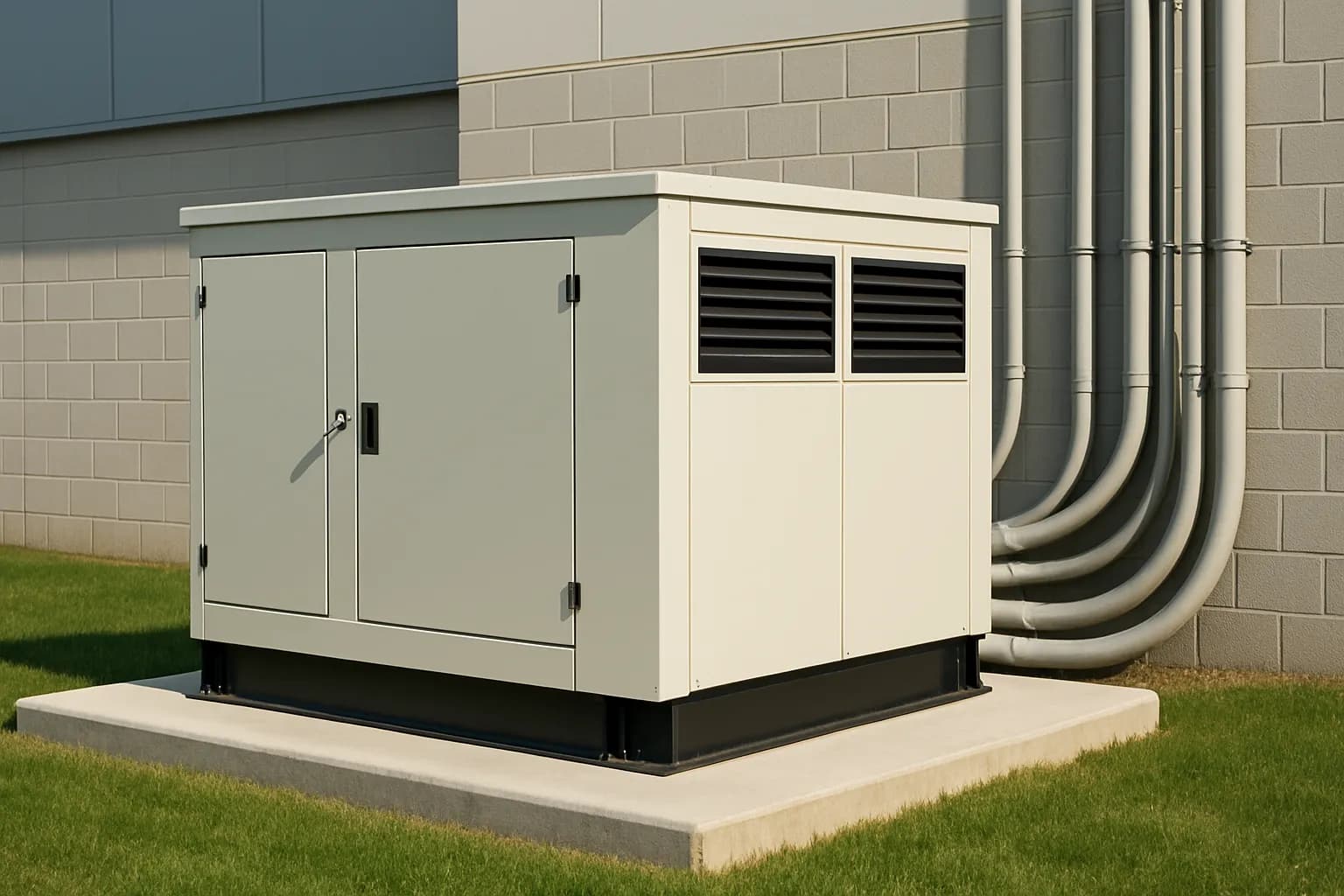
Medium voltage switchgear is commonly installed where a facility receives utility power at a medium-voltage service level or distributes power across a large site. Typical applications include office campuses, hospitals, retail centers, warehouses, manufacturing plants, data-intensive buildings, universities, and multifamily properties with substantial electrical infrastructure. The equipment may control incoming utility feeders, transformer primaries, generator connections, large motors, and multiple downstream buildings.
IEEE C37.20.2 covers metal-clad medium-voltage switchgear with drawout electrically operated circuit breakers and addresses equipment ratings, construction, insulation, and testing. The standard describes equipment within voltage ranges extending from 4.76 kV to 48.3 kV, although the correct rating must be established through the utility service, design engineer, and equipment study.
For facility managers and property owners, the practical issue is continuity of operations. A switchgear failure can interrupt elevators, tenant operations, refrigeration, life-safety systems, data rooms, production lines, lighting, EV charging, and building automation. A documented asset strategy reduces unplanned outages and supports defensible capital planning.
How to Evaluate Medium Voltage Switchgear Ratings and Configuration
Begin with a single-line diagram, utility service information, equipment nameplates, previous test reports, and the building’s actual load profile. Do not assume that a replacement with the same nominal voltage is electrically interchangeable.
- Verify nominal voltage, maximum design voltage, basic impulse level, continuous current, short-circuit withstand, and interrupting ratings.
- Confirm incoming and feeder arrangements, bus configuration, transformer connections, grounding method, and available alternate sources.
- Review breaker type, drawout dimensions, control voltage, trip and close mechanisms, interlocks, current transformers, voltage transformers, and protective relays.
- Confirm whether the equipment is metal-enclosed, metal-clad, arc-resistant, indoor, outdoor, or installed in a specialized electrical room.
- Coordinate the switchgear with transformers, low-voltage switchboards, panelboards, generators, UPS systems, EVSE, and large motor loads.
- Check spare capacity for tenant improvements, electrification, HVAC expansion, data loads, and future EV charging.
A licensed electrical engineer should validate short-circuit, coordination, grounding, and arc-flash studies before a major modification. Protective-device settings must match the study and the installed equipment, not merely the previous lineup.
Medium Voltage Switchgear Inspection and Maintenance Checklist
Use qualified electrical personnel and an approved outage plan. Medium-voltage equipment should not be opened, tested, or operated by unqualified occupants, tenants, or general maintenance staff. NFPA 70E work practices address shock and arc-flash hazards, while NFPA 70B provides a framework for an electrical preventive maintenance program.
- Review operating history, fault records, relay targets, nuisance trips, moisture exposure, and prior deficiencies.
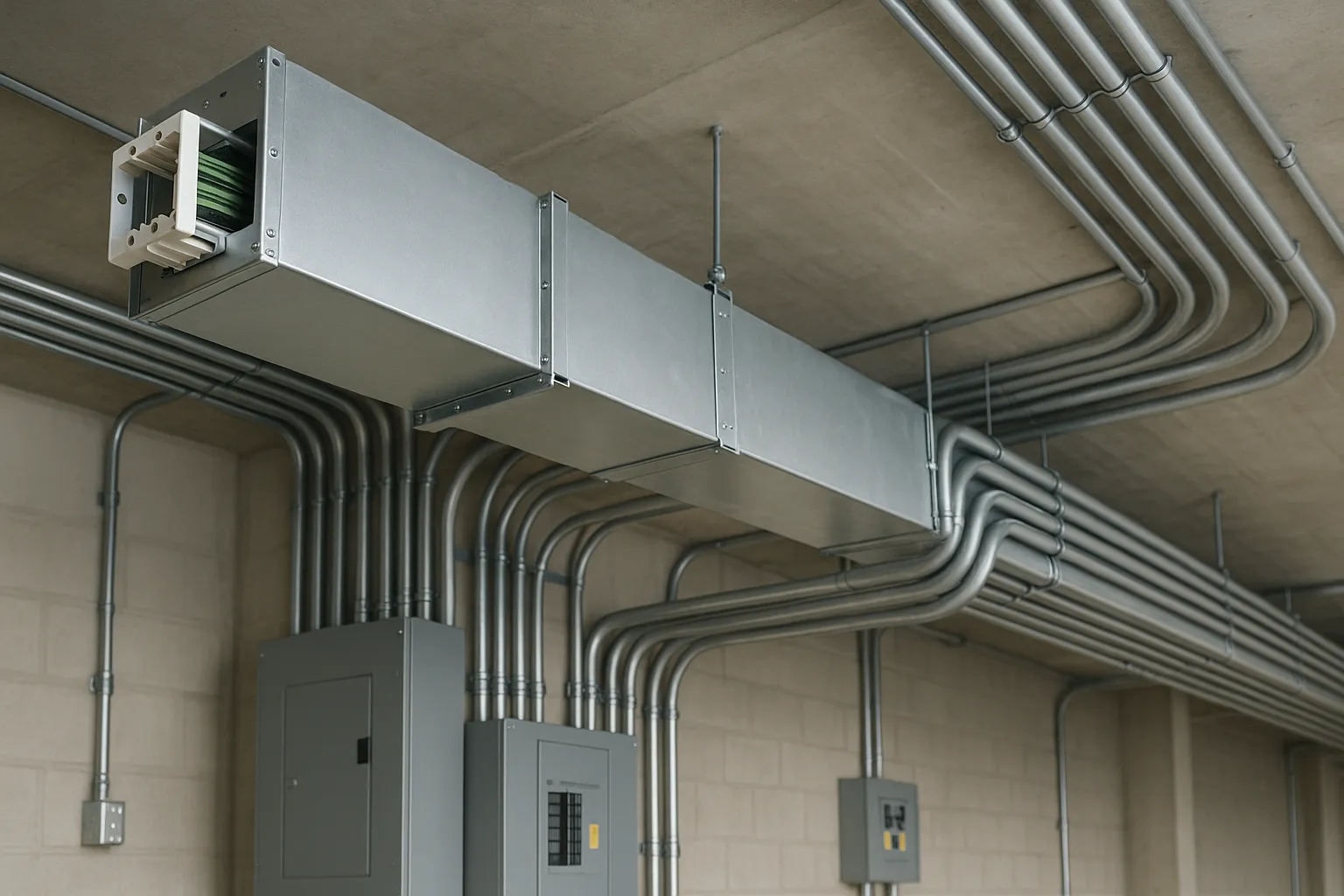
- Inspect the enclosure, doors, barriers, heaters, ventilation, cable terminations, grounds, labels, and signs of tracking, corrosion, contamination, or overheating.
- Verify breaker racking, mechanical interlocks, shutters, stored-energy mechanisms, trip-free operation, anti-pump functions, and position indication.
- Inspect and test protective relays, trip circuits, control power, current transformers, voltage transformers, and battery or DC systems.
- Perform thermographic inspection under suitable load and investigate abnormal temperature differences.
- Use calibrated test equipment and compare results with manufacturer limits, applicable testing specifications, and prior baseline data.
- Document deficiencies with photographs, risk ranking, recommended corrective action, and estimated outage requirements.
Maintenance should be condition-based rather than driven only by a calendar. A hospital, data center, warehouse with refrigerated inventory, or industrial plant may require more rigorous monitoring and contingency planning than a lightly loaded office building.
Step-by-Step Medium Voltage Switchgear Project Process
A reliable project begins before a contractor issues a quotation. Facility representatives should define operating constraints and decision criteria in writing.
- Inventory the electrical system, including service voltage, switchgear sections, transformers, feeders, generators, UPS equipment, panelboards, and critical loads.
- Collect as-built drawings, utility requirements, equipment schedules, relay settings, commissioning reports, maintenance history, and incident records.
- Engage a qualified engineer or testing provider to inspect the equipment and identify immediate safety, reliability, and code concerns.
- Update or verify short-circuit, coordination, grounding, and arc-flash studies where system changes, new generation, EVSE, or capacity increases affect fault current.
- Compare repair, preventive maintenance, retrofit, and complete replacement options using total installed cost and outage consequences.
- Develop a switching plan, temporary power plan, tenant communication schedule, permit package, procurement schedule, and commissioning sequence.
- Require factory documentation, field acceptance testing, relay configuration records, updated one-lines, labels, spare-parts recommendations, and operator training.
- Close the project by recording test results, warranty terms, deficiencies, settings, photographs, and the next maintenance milestone in the facility asset system.
For occupied commercial buildings, phasing may be more valuable than the lowest bid. Temporary generators, sectionalizing, weekend outages, bypass arrangements, or staged feeder work can reduce business disruption, but each method requires engineering review and safe operating procedures.
Coordinating Switchgear With Lighting, EVSE, Generators, and UPS Systems
Medium voltage switchgear does not operate in isolation. Commercial lighting retrofits, new HVAC equipment, EV charging stations, backup generators, and UPS systems can materially change load flow and fault behavior.
LED lighting projects typically reduce connected lighting load, but controls, emergency lighting, dimming equipment, and tenant schedules still require commissioning. EVSE adds concentrated, often simultaneous demand and may require transformer, feeder, switchboard, demand-management, or service upgrades. The design team should evaluate charging diversity, managed charging, spare capacity, harmonics, grounding, and utility requirements.
Generator interconnection requires correct transfer equipment, source isolation, grounding, protection, and selective coordination. A generator can increase available fault current or alter relay behavior. UPS systems and data-center loads may introduce nonlinear current and power-quality concerns. Review these impacts before adding equipment downstream of existing switchgear.
- Ask whether the existing transformer and switchgear have capacity for planned electrification.
- Confirm whether new generation changes short-circuit current or protection settings.
- Review power-quality data before specifying filters, capacitors, or corrective equipment.
- Coordinate emergency, legally required standby, and optional standby loads.
- Verify that lighting controls, EVSE controls, and building automation do not defeat required emergency operation.
Repair, Maintenance, Retrofit, or Replacement: Cost and ROI Decisions
There is no universal price for medium voltage switchgear work. Cost varies with voltage and current ratings, number of sections, breaker technology, site access, cable work, transformer modifications, testing, engineering, permits, temporary power, and outage duration. Published project examples report equipment-only pricing for some 15 kV, 1200 A, five-breaker metal-enclosed lineups beginning around $90,000, while complete replacement projects may range from approximately $150,000 to $400,000 or more. These figures are planning references, not bids.
A repair or maintenance project may be appropriate when the defect is localized and the equipment retains adequate ratings and support. A retrofit can replace obsolete breakers, trip units, relays, controls, or accessories while retaining serviceable enclosures and buses. Full replacement is more appropriate when insulation is deteriorated, fault ratings are inadequate, parts are unavailable, the equipment has recurring failures, or capacity and safety requirements cannot be met.
- Maintenance: Lowest immediate capital cost; reduces deterioration but does not correct inadequate capacity or obsolete design.
- Repair: Suitable for defined failures; verify root cause so recurring faults are not simply reset.
- Retrofit: Can reduce outage scope and preserve usable infrastructure; confirm compatibility and testing requirements.
- Replacement: Highest capital cost and often longest outage or lead time; provides a broader opportunity to improve capacity, protection, maintainability, and documentation.
Calculate ROI using avoided outage exposure, reduced emergency service, improved tenant reliability, insurance and compliance considerations, energy or demand impacts, expected maintenance, and remaining equipment life. Include the business cost of downtime, not only contractor labor and material.
Commercial Buyer Checklist for Medium Voltage Switchgear Contractors
Before selecting a contractor or electrical testing provider, require evidence that the team can manage the voltage class, facility type, documentation, and outage risk.
- Request relevant commercial or industrial medium-voltage experience, references, licensing, insurance, and safety qualifications.
- Require a written scope identifying inspection, engineering, testing, relay work, cable work, commissioning, and exclusions.
- Ask how the provider will coordinate with the utility, engineer of record, fire/life-safety team, generator vendor, and building operations staff.
- Require a detailed outage and switching plan, including restoration criteria and contingency actions.
- Specify test reports, calibrated instruments, acceptance criteria, updated settings, labels, drawings, and operator training as deliverables.
- Compare lead times for breakers, relays, instrument transformers, control components, and replacement lineups.
- Confirm warranty terms, emergency response, spare-parts recommendations, and long-term maintenance support.
The best proposal is not necessarily the lowest price. For facility managers, property managers, and commercial real estate professionals, the strongest value combines safe execution, dependable power, transparent documentation, manageable outages, and a lifecycle plan that supports the building’s next phase.
Frequently Asked Questions
What voltage is considered medium voltage for commercial switchgear?
Medium voltage generally refers to distribution voltages above 1 kV and below the high-voltage range used for transmission, but exact classifications vary by standard, utility, and jurisdiction. Common commercial and industrial systems include 4.16 kV, 4.8 kV, 13.2 kV, and 13.8 kV. The equipment must be selected using the utility’s service requirements, maximum system voltage, insulation level, current rating, fault duty, grounding method, and applicable engineering standards.
What testing is required for medium voltage switchgear?
Testing should be based on manufacturer instructions, project specifications, NFPA 70B, applicable ANSI/NETA practices, and the equipment’s condition. Depending on scope, testing can include visual and mechanical inspection, insulation resistance, contact resistance, breaker timing, trip and close operation, relay injection, current-transformer testing, control-circuit verification, and protective-device coordination. Results should be compared with acceptance criteria and historical baselines, then retained with updated settings and drawings.
How long does medium voltage switchgear replacement take?
The schedule depends on design approval, utility coordination, equipment availability, factory testing, site conditions, outage windows, cable termination work, permitting, and commissioning. A replacement can require many months of planning and procurement even when field installation is relatively short. Facility owners should identify long-lead components early, verify temporary power requirements, sequence demolition and energization, and build contingency time around testing and utility acceptance.
What are the main failure risks in medium voltage switchgear?
Common risks include moisture, contamination, corrosion, loose or overheated connections, insulation degradation, cable termination defects, breaker mechanism failure, control-power loss, incorrect relay settings, inadequate maintenance, and fault duty beyond the equipment rating. Aging or obsolete components can also make emergency repair difficult. Trend inspection and test results, investigate abnormal relay events, control environmental conditions, and correct deficiencies before they become forced outages.
Can existing medium voltage switchgear support EV charging and backup generators?
Possibly, but capacity and protection must be verified rather than assumed. EV charging can add substantial coincident demand, while generators can change fault current, grounding, load flow, and coordination. An engineer should evaluate transformer and bus capacity, feeder loading, voltage drop, harmonics, transfer equipment, emergency-load priorities, short-circuit current, and protective settings. Managed charging, phased installation, or a service upgrade may be required.
Related Reading on My Electrical Tech
- Sonepar’s $560 Million AI Investment: What Facility Managers Need to Know
- Commercial EV Charging Station Planning, Installation, and Maintenance Guide
Find a Qualified Commercial Electrical Contractor
Need help acting on this? Browse commercial electricians in your area, or explore commercial electrical services like preventative maintenance, inspections, and emergency response. Are you a contractor? List your business on My Electrical Tech to reach property and facility managers actively searching for help.