 My Electrical Tech
Commercial Generator Guide: Selection, Maintenance, Compliance, and ROI
Quick Answers for Property & Facility Managers
What size commercial generator does a commercial building need?
A commercial generator must be sized from a documented load analysis, not square footage alone. Account for three-phase voltage, continuous loads, motor starting current, HVAC, elevators, fire and life-safety systems, lighting, data equipment, EV charging, future expansion, and required load-shedding sequences. A licensed commercial electrician or electrical engineer should verify the generator, transfer switch, conductors, and overcurrent protection as a coordinated system.
How often should a commercial generator be tested and maintained?
Inspect the emergency power supply system according to the adopted code, NFPA requirements, manufacturer instructions, and the authority having jurisdiction. NFPA 110 generally calls for regular inspection and monthly exercise under load for applicable emergency systems, with additional periodic testing for Level 1 systems. Maintain written records for the generator, automatic transfer switch, batteries, fuel system, breakers, alarms, and corrective work.
Is it better to repair or replace a commercial generator?
Repair is usually appropriate when the generator has a documented failure with otherwise healthy engine, alternator, controls, fuel system, and transfer equipment. Replacement becomes more defensible when failures are recurring, parts are obsolete, capacity is inadequate, emissions requirements are difficult to satisfy, or testing exposes poor performance. Compare repair cost, outage risk, remaining service life, warranty, fuel efficiency, and code upgrades—not purchase price alone.
How to Plan a Commercial Generator for a Commercial Building
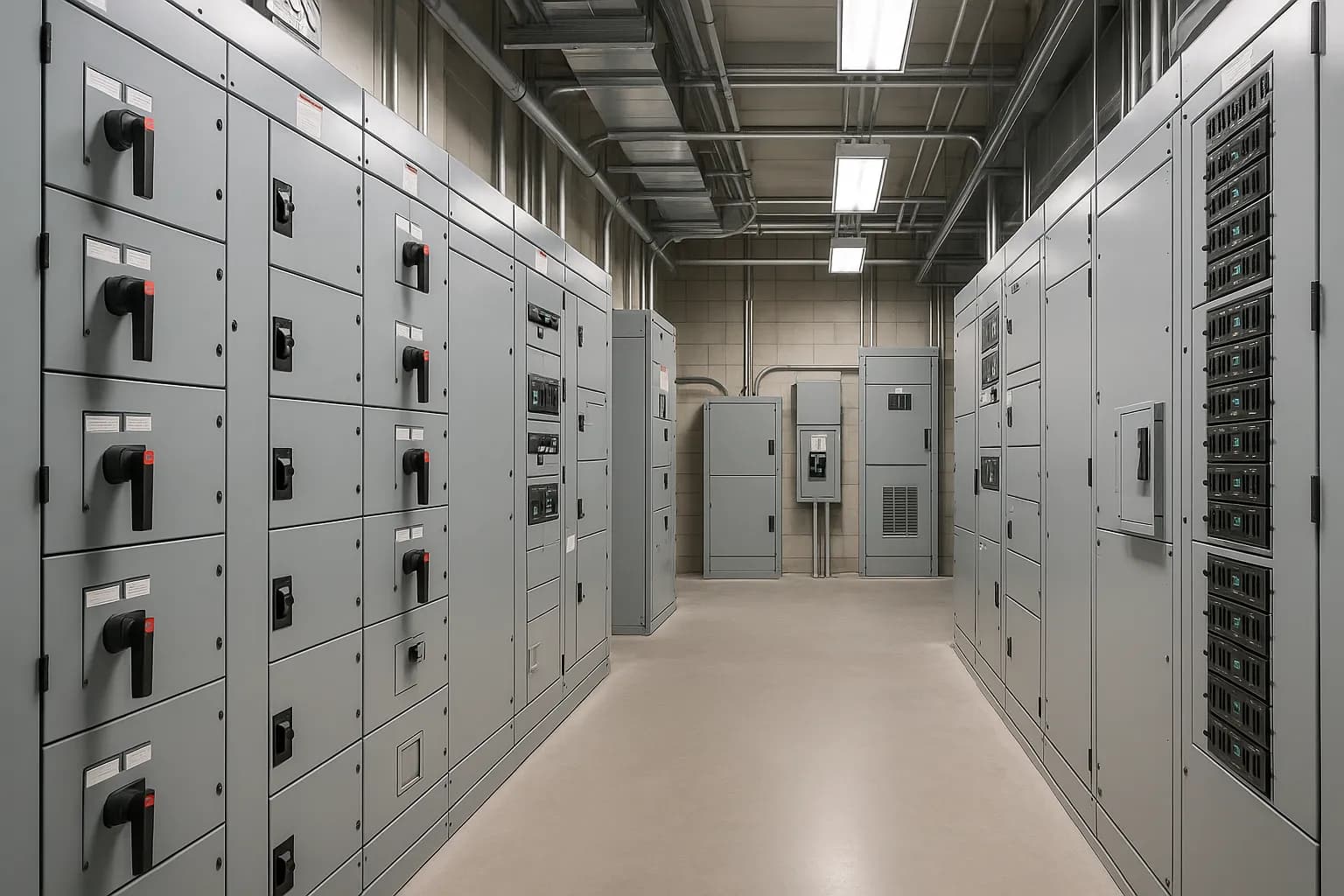
A commercial generator is part of an emergency power supply system, not a standalone piece of equipment. For an office, retail center, warehouse, healthcare facility, multifamily property, or institutional building, the project scope may include the generator set, automatic transfer switch (ATS), distribution switchgear, feeder conductors, panelboards, breakers, grounding and bonding, fuel system, ventilation, exhaust, controls, alarms, and load-shedding equipment.
Start with the business and life-safety objectives. Identify which loads must operate during an outage and which loads can be delayed or disconnected. Emergency lighting, fire alarm, smoke control, egress systems, security, communications, medical equipment, elevators, refrigeration, IT rooms, pumps, heating, cooling, and selected tenant or process loads may have different classifications and transfer requirements. NFPA 110 covers performance requirements for emergency and standby power systems, including power sources, transfer equipment, controls, supervisory equipment, and related auxiliary equipment.
- Define the required runtime, fuel type, installation location, noise limits, emissions constraints, and service access.
- Confirm whether the system is legally required emergency, optional standby, or a combination of separately served loads.
- Review utility service voltage, phase configuration, available fault current, service entrance equipment, and future load growth.
- Engage the electrical engineer, generator manufacturer, licensed electrical contractor, fire-protection professionals, utility, and AHJ early.
Size the Generator Using Loads, Motor Starting, and Future Capacity
Generator sizing should be based on measured or calculated demand and the sequence in which loads transfer. A three-phase generator may need to start large air-handling units, pumps, compressors, elevators, or fire pumps without unacceptable voltage or frequency dip. Review both running kW and starting kVA, power factor, harmonic-producing loads, phase balance, and nonlinear loads such as variable-frequency drives, UPS systems, LED drivers, and data-center equipment.
Do not automatically connect every building load. A staged transfer or automatic load-shedding scheme can prioritize life-safety and mission-critical circuits while limiting generator size. EV charging (EVSE), large electric heating, commercial kitchen equipment, and nonessential tenant loads may require dedicated controls or delayed restart. For a warehouse, refrigeration and material-handling equipment may dominate the calculation; for healthcare, legally required loads and essential electrical systems may control the design.
- Obtain utility bills, interval data, panel schedules, one-line diagrams, equipment nameplates, and service records.
- Measure demand where practical and model transient loads and motor-starting conditions.
- Separate emergency, legally required standby, optional standby, and shed-able circuits.
- Specify generator kW and kVA, voltage, phase, frequency, rated power factor, altitude, ambient temperature, and derating.
- Reserve physical and electrical capacity for planned tenant improvements, electrification, and EVSE expansion.
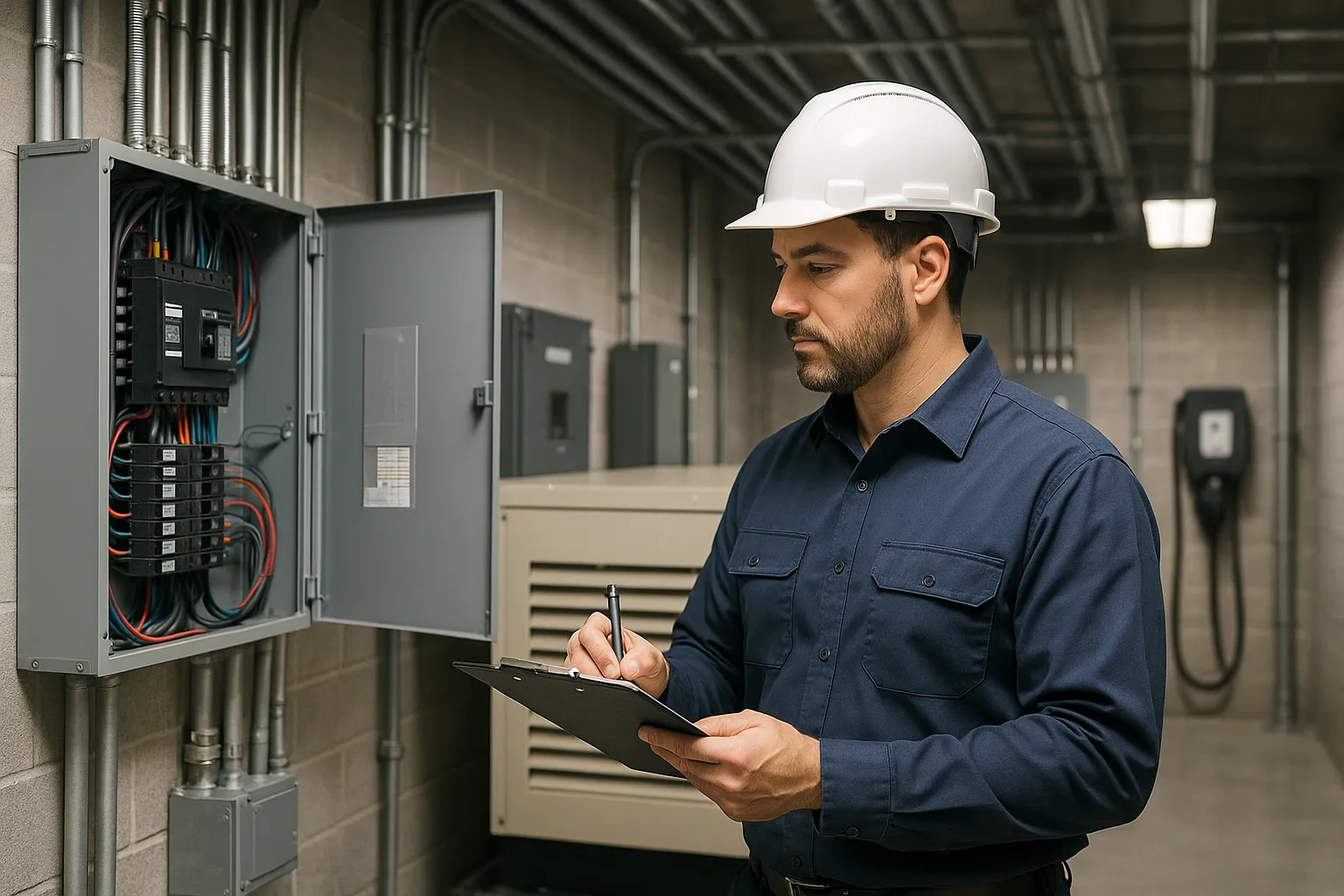
Coordinate Power Distribution, Switchgear, Panelboards, and Transfer Equipment
The ATS must transfer the intended loads safely and return them to normal power without paralleling sources unless the design specifically supports it. Confirm whether the project needs service-entrance-rated transfer equipment, bypass-isolation capability, multiple ATS units, closed-transition operation, or separate transfer schemes for emergency branches and optional standby loads.
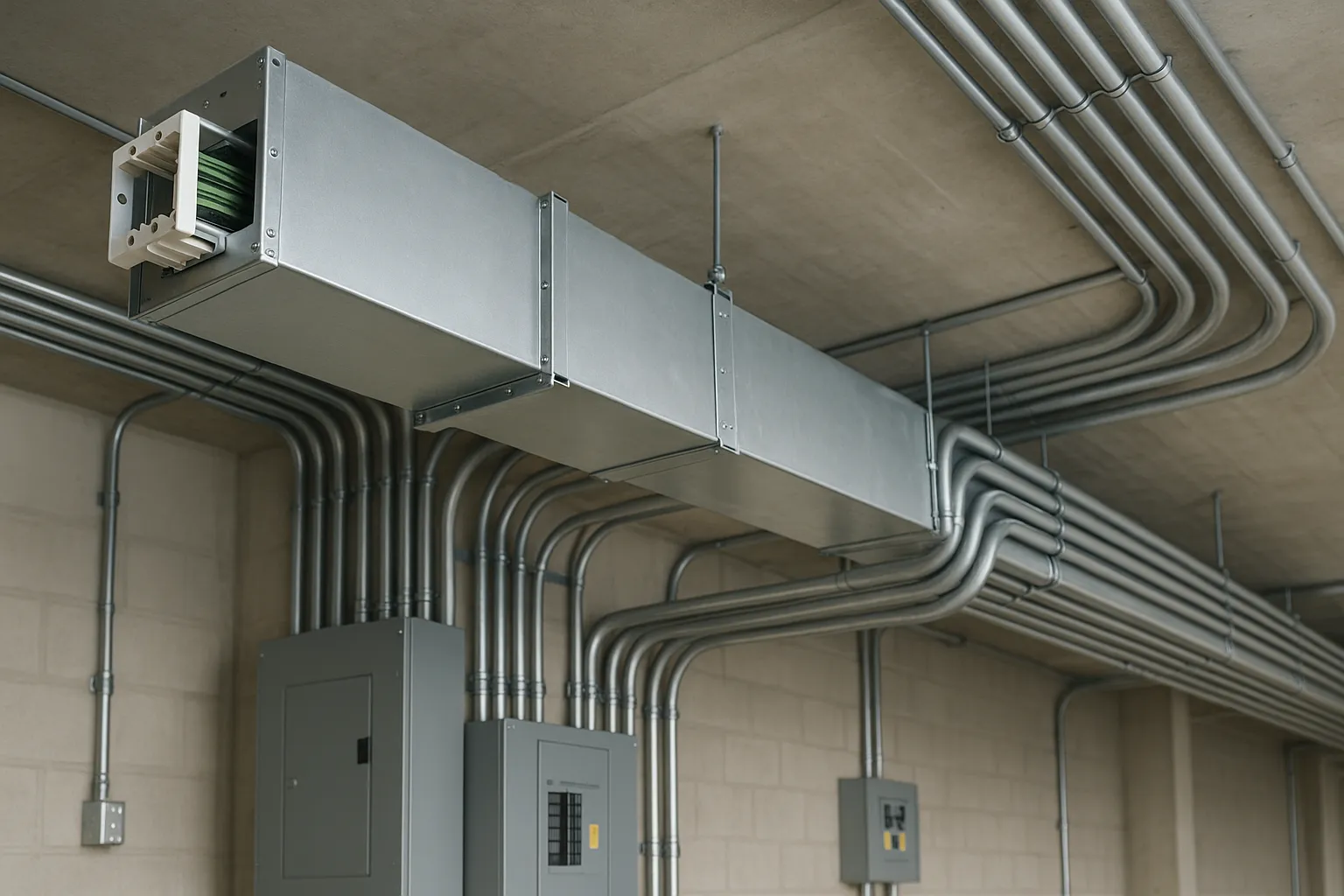
Review the complete distribution path: generator terminals, feeder conductors, overcurrent protective devices, switchboard or switchgear sections, panelboards, branch breakers, grounding electrode connections, neutral switching, and selective coordination. A generator may have substantially different fault-current characteristics from the utility. Protection settings, short-circuit ratings, arc-flash labels, and coordination studies must reflect the actual system configuration.
Facility managers should request an updated one-line diagram and clear identification of generator-backed panelboards. Confirm that emergency lighting, fire alarm, life-safety controls, low-voltage and data equipment, security, and building automation systems receive power from the correct source. UPS systems may bridge the transfer interval for servers, controls, and communications, but they do not replace generator capacity or ATS testing.
Integrate Commercial Lighting, EVSE, UPS, and Life-Safety Loads
Commercial lighting retrofits can change emergency power behavior. LED fixtures generally reduce running wattage, but drivers can create inrush and harmonic effects that influence generator and breaker performance. Verify emergency lighting transfer time, battery or central-inverter systems, lighting-control operation, and compatibility with occupancy sensors, dimming, and building automation.
EV charging requires deliberate load management. Level 2 and DC fast-charging equipment can add significant continuous three-phase demand and may exceed the available generator capacity. Establish whether EVSE is emergency-backed, intentionally excluded, or automatically curtailed during an outage. Coordinate charger disconnects, energy-management controls, feeder capacity, panelboard ratings, and fire or parking-garage requirements with the electrical design.
For UPS-backed data rooms, confirm bypass operation, generator frequency and voltage tolerance, battery autonomy, harmonic mitigation, and restart sequencing. Fire alarm, smoke control, fire pumps, emergency communications, and other life-safety systems should be reviewed with the AHJ and qualified specialists rather than treated as ordinary tenant loads.
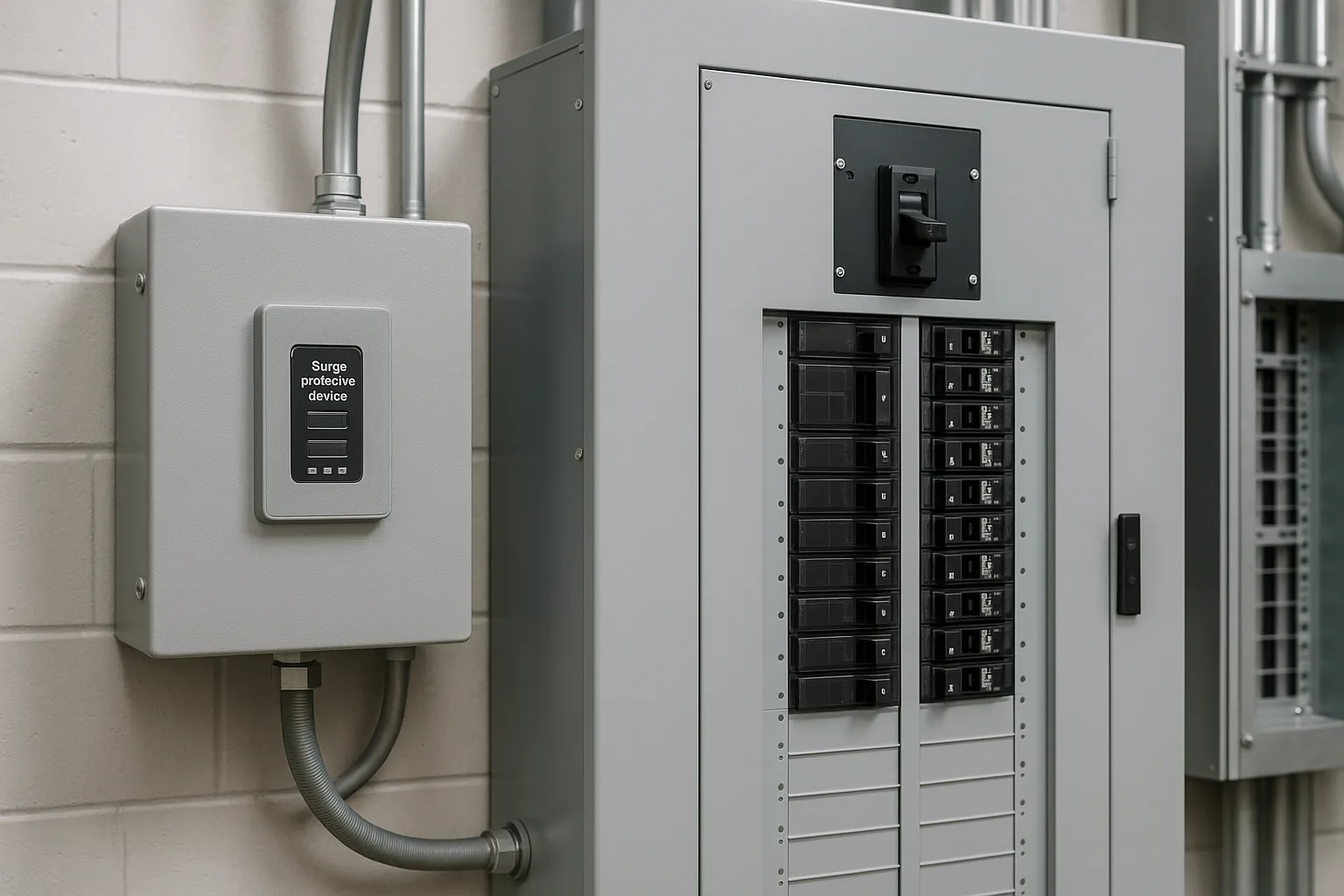
Build a Commercial Generator Maintenance and Testing Program
Preventive maintenance protects reliability and provides evidence that the system is ready for an outage. NFPA 110 is the primary reference for many emergency and standby power system performance, inspection, testing, and maintenance requirements, while the adopted edition, local code, healthcare rules, manufacturer instructions, and insurer requirements also apply. The current NFPA 110 edition is 2025, but the AHJ determines which edition governs a project.
- Weekly or scheduled inspection: Check alarms, controller status, battery charger, fuel level, oil and coolant, leaks, ventilation, exhaust, enclosure condition, and visible damage.
- Monthly exercise: Exercise the applicable EPSS under load as required by the governing standard and document transfer, voltage, frequency, return-to-normal, alarms, and abnormal conditions.
- Periodic service: Perform oil and filter service, coolant checks, battery testing, fuel-system inspection, air and exhaust inspection, belt and hose replacement, and controller review according to the manufacturer and applicable requirements.
- Load-bank testing: Use a qualified provider when building load is insufficient or when the governing requirements call for supplemental loading or extended testing.
- Transfer-equipment testing: Exercise and inspect ATS mechanisms, contacts, controls, interlocks, bypass equipment, and associated breakers—not merely the engine.
- Documentation: Retain test results, maintenance invoices, deficiencies, corrective actions, fuel records, alarm history, and technician qualifications.
EPA rules for stationary engines can limit how emergency engines are operated for maintenance, testing, demand response, or other purposes. Requirements vary by engine type, installation date, source classification, fuel, horsepower, and state or local air rules. Verify the applicable permit and operating limits before scheduling extended testing.
Choose Repair, Maintenance, or Full Commercial Generator Replacement
Maintenance is the lowest-cost intervention when inspections identify wear before failure: weak batteries, clogged filters, degraded belts, fuel contamination, loose terminations, corroded connections, or overdue ATS service. Repairs are appropriate when the root cause is isolated and the generator passes loaded testing after correction.
Replacement deserves a formal lifecycle analysis when the unit has recurring failures, obsolete controls, unavailable parts, excessive oil or coolant consumption, inadequate capacity, poor load acceptance, unreliable transfer equipment, fuel-system deterioration, or emissions and permitting challenges. Include removal, temporary power, engineering, permits, switchgear modifications, feeder work, fuel and exhaust upgrades, commissioning, load-bank testing, training, and warranty—not only the generator price.
ROI is risk-adjusted. Compare avoided outage losses, tenant disruption, product or data loss, compliance exposure, emergency rental-generator costs, maintenance spending, fuel consumption, service availability, and the value of improved capacity for electrification or EVSE. A replacement may also be phased with switchgear modernization, lighting controls, UPS upgrades, or building renovations to reduce repeated shutdowns.
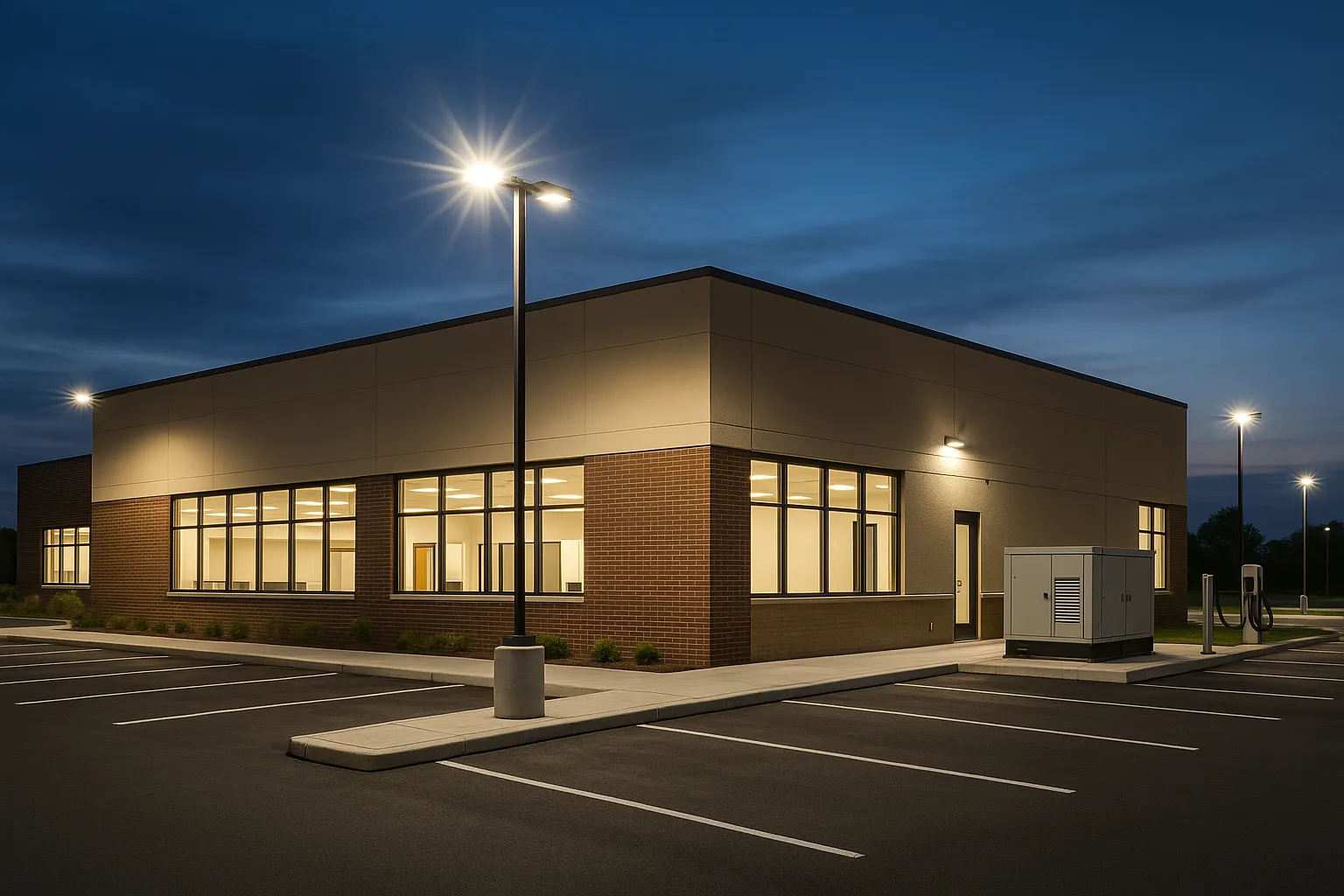
Commercial Generator Project Checklist for Facility Managers
- Collect current drawings, panel schedules, equipment lists, utility data, maintenance records, test reports, and failure history.
- Identify critical loads, transfer priorities, required runtime, fuel storage, environmental constraints, and outage procedures.
- Verify generator sizing, motor-starting performance, phase balance, harmonics, derating, and future capacity.
- Review ATS configuration, switchgear ratings, breaker settings, selective coordination, grounding, neutral treatment, and arc-flash documentation.
- Confirm commercial lighting, fire alarm, life-safety, low-voltage, UPS, security, HVAC, refrigeration, elevator, and EVSE interfaces.
- Confirm permits, emissions requirements, noise requirements, fuel rules, fire-code clearances, accessibility, and AHJ acceptance testing.
- Require commissioning that demonstrates automatic start, transfer, load acceptance, alarms, load shedding, return to utility, and manual bypass procedures.
- Obtain a written maintenance schedule, spare-parts plan, emergency service response terms, operator training, and complete closeout documentation.
Frequently Asked Questions
What does a commercial generator cost to install?
Commercial generator pricing cannot be responsibly reduced to a single national figure. Capacity, fuel type, voltage, transfer equipment, switchgear modifications, site work, exhaust, fuel storage, sound attenuation, permits, controls, testing, and temporary power can materially change the project total. Request a site-specific proposal with a load study, one-line review, installation scope, commissioning, maintenance, and warranty clearly separated.
Should a commercial generator run the whole building?
Not necessarily. Many facilities use a critical-load strategy that prioritizes emergency lighting, fire and life-safety systems, communications, security, controls, selected HVAC, pumps, refrigeration, IT, and essential operations. Noncritical loads—including some EVSE, electric heat, tenant equipment, and process loads—may be shed or delayed. The decision should follow a documented load analysis, business-continuity plan, and code review.
What is the difference between a standby generator and an emergency generator?
The terms are not interchangeable in every code or project context. Emergency systems generally support legally required life-safety functions and have specific performance and transfer expectations. Optional standby systems support selected business or operational loads. A building can have both, with separate priorities and transfer arrangements. The electrical engineer and AHJ should classify loads and document the applicable requirements.
What commercial generator maintenance records should a property manager keep?
Keep the generator model and serial information, fuel and emissions records, weekly or scheduled inspection logs, monthly exercise results, load-bank and acceptance tests, ATS inspections, battery and coolant tests, oil and filter service, alarm history, deficiencies, corrective actions, technician reports, permits, and training records. Organized documentation supports compliance, warranty claims, insurance reviews, capital planning, and faster troubleshooting after an outage.
Can a commercial generator support EV charging stations?
It can, but only after evaluating generator capacity, charger demand, starting behavior, feeder and panelboard ratings, voltage drop, harmonics, and the required priority of EVSE during an outage. Most facilities need automatic load management or charger curtailment to protect emergency and business-critical loads. The design must also address disconnects, controls, fire protection, and applicable electrical and local requirements.
When should a facility manager use a load bank for a commercial generator?
Use a load bank when the building cannot provide sufficient stable load for required testing, when commissioning a new generator, after major repairs, when investigating poor load acceptance, or when long periods of light loading create concern. A qualified provider should select the test method, account for voltage and power factor, coordinate switching, monitor temperatures and exhaust, and document results without interrupting critical operations.
Related Reading on My Electrical Tech
- Diall 16A Blue Site Connector Recall: What Facility Managers Need to Know
- Blue Site Connector Recall: What Facility Managers Need to Know
Find a Qualified Commercial Electrical Contractor
Need help acting on this? Browse commercial electricians in your area, or explore commercial electrical services like preventative maintenance, inspections, and emergency response. Are you a contractor? List your business on My Electrical Tech to reach property and facility managers actively searching for help.