 My Electrical Tech
LED Retrofit Guide for Commercial Buildings: Planning, Electrical Safety, and ROI
Quick Answers for Property & Facility Managers
What is an LED retrofit for a commercial building?
An LED retrofit upgrades existing commercial lighting by installing LED lamps, retrofit kits, or complete LED luminaires in place of fluorescent, HID, or other fixtures. The project may also add occupancy, daylight, scheduling, dimming, or building-management controls. A qualified electrical contractor should verify voltage, wiring, grounding, emergency circuits, compatibility, and applicable electrical and energy codes before installation.
How do facility managers plan a commercial LED retrofit?
Start with a fixture inventory, operating-hour review, utility-bill baseline, light-level assessment, and electrical inspection. Classify each area by use, ceiling height, occupancy, emergency function, and environmental conditions. Obtain a design and itemized proposal that separates lamps, retrofit kits, new luminaires, controls, panel work, lift access, disposal, commissioning, rebates, and ongoing maintenance.
Is an LED retrofit better than replacing the entire lighting fixture?
A retrofit kit can preserve the existing housing while improving light output and controls, often reducing demolition and installation time. Full luminaire replacement may be better when housings, ballasts, sockets, wiring, reflectors, or controls are obsolete, damaged, contaminated, or difficult to maintain. Compare installed cost, warranty, safety listing, expected service life, controls capability, and future maintenance—not lamp price alone.
What a Commercial LED Retrofit Means for Facility Managers
A commercial LED retrofit replaces or modifies existing lighting so a building uses LED technology instead of fluorescent, high-intensity discharge, halogen, or other legacy sources. Options include direct LED lamps, ballast-compatible lamps, ballast-bypass lamps, retrofit kits, and complete LED luminaires. The right choice depends on the existing fixture, branch-circuit voltage, ballast condition, light distribution, ceiling system, controls, emergency operation, and environmental conditions.
For an office, retail site, healthcare facility, warehouse, multifamily property, or institutional building, the objective is not simply to install lower-wattage lamps. The objective is to deliver suitable illumination, reliable controls, safe serviceability, code compliance, and measurable operating value. A commercial electrical contractor should document the existing system before materials are selected.
- Identify fixture type, quantity, mounting height, lamps, ballast, voltage, circuit, and control method.
- Record operating schedules, occupancy patterns, maintenance history, outage complaints, and areas with poor visibility.
- Flag wet, damp, dusty, corrosive, hazardous, refrigerated, or high-temperature locations.
- Separate normal lighting from emergency and legally required egress lighting.
LED Retrofit Options: Lamps, Kits, and Complete Luminaires
Direct replacement lamps may be appropriate where the fixture housing is sound and the lamp is approved for the application. Ballast-compatible products require verified compatibility and a functioning ballast. Ballast-bypass installations remove the ballast and connect the LED product directly to the supply conductors; that work changes the wiring and requires clear labeling, proper splicing, grounding, and inspection.
Retrofit kits replace internal components such as reflectors, sockets, drivers, and LED boards while retaining part of the existing housing. DOE guidance identifies retrofit kits as capable of supporting more control strategies than many TLED installations, including sensors integrated into the fixture. Complete LED luminaires are generally preferable where the existing housing is damaged, the light distribution is poor, the ballast is obsolete, or the facility needs a new optical and control platform.[2]
- Use a lamp-only approach for limited-scope areas with compatible, listed fixtures and acceptable light distribution.
- Use retrofit kits when existing housings are reusable but ballast, optics, or controls need modernization.
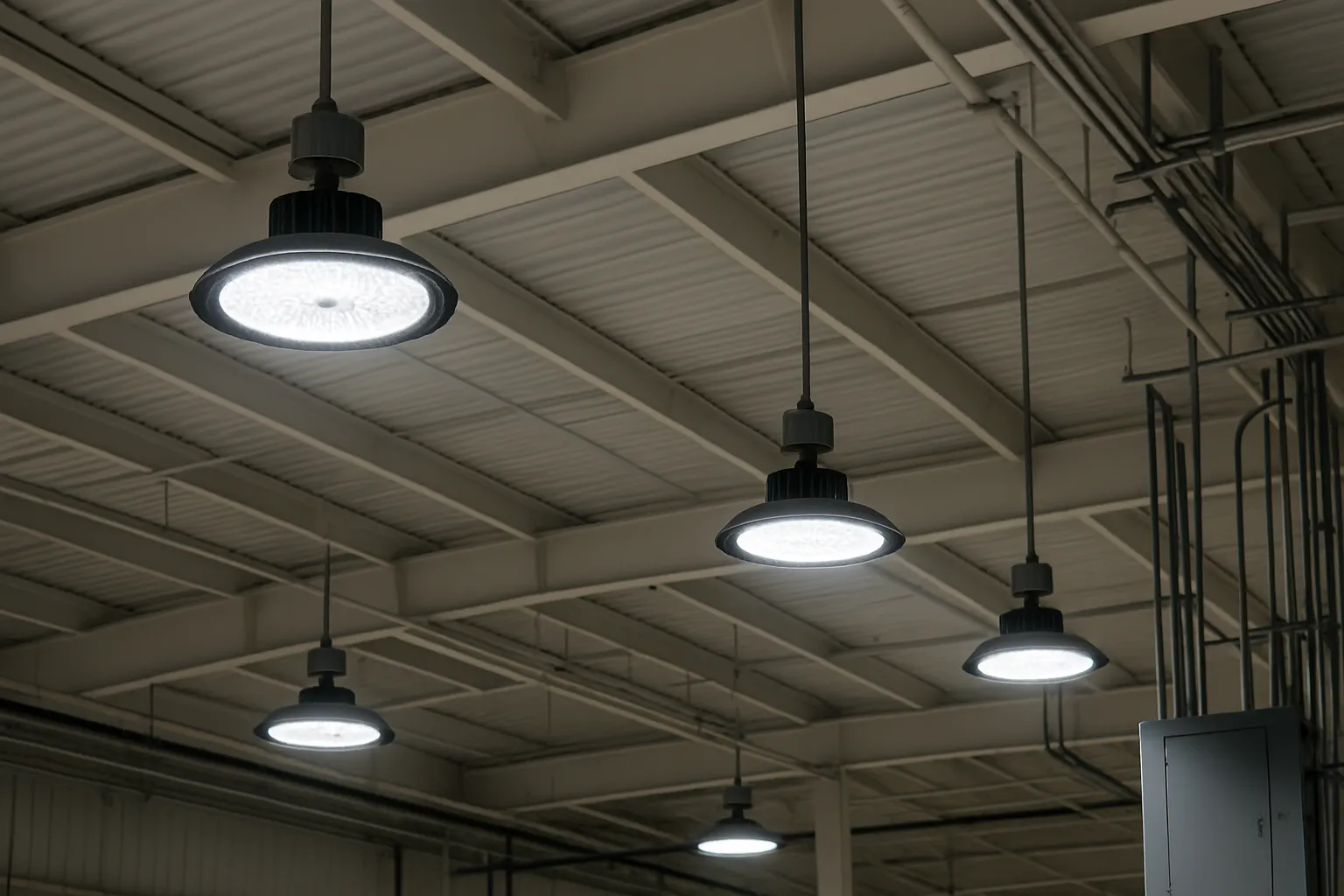
- Use new luminaires for large warehouse high bays, severely degraded fixtures, hazardous environments, or major ceiling renovations.
- Confirm product listing, driver compatibility, dimming method, color temperature, lumen output, warranty, and replacement availability.
Electrical System Checks: Power Distribution, Panelboards, and Switchgear
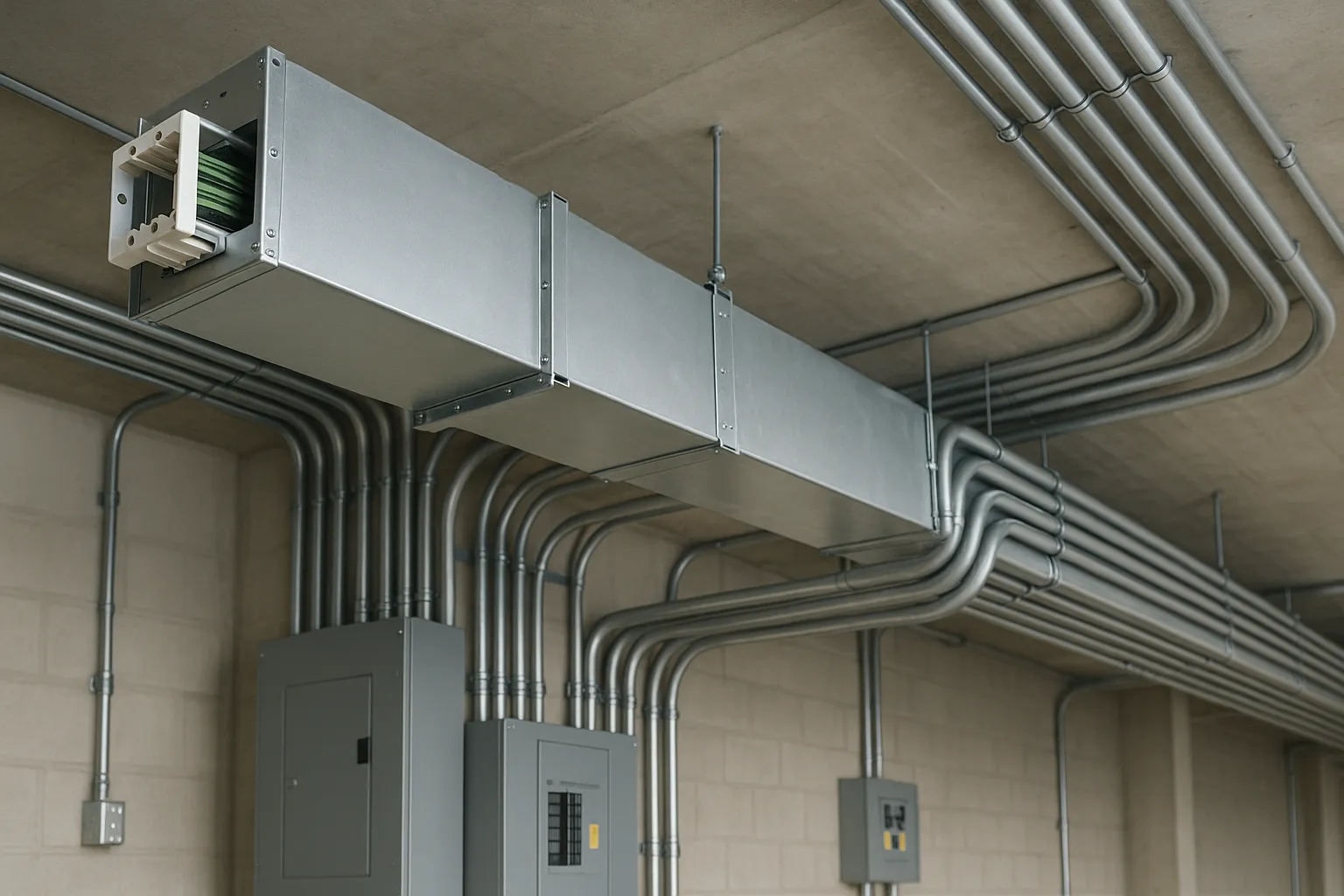
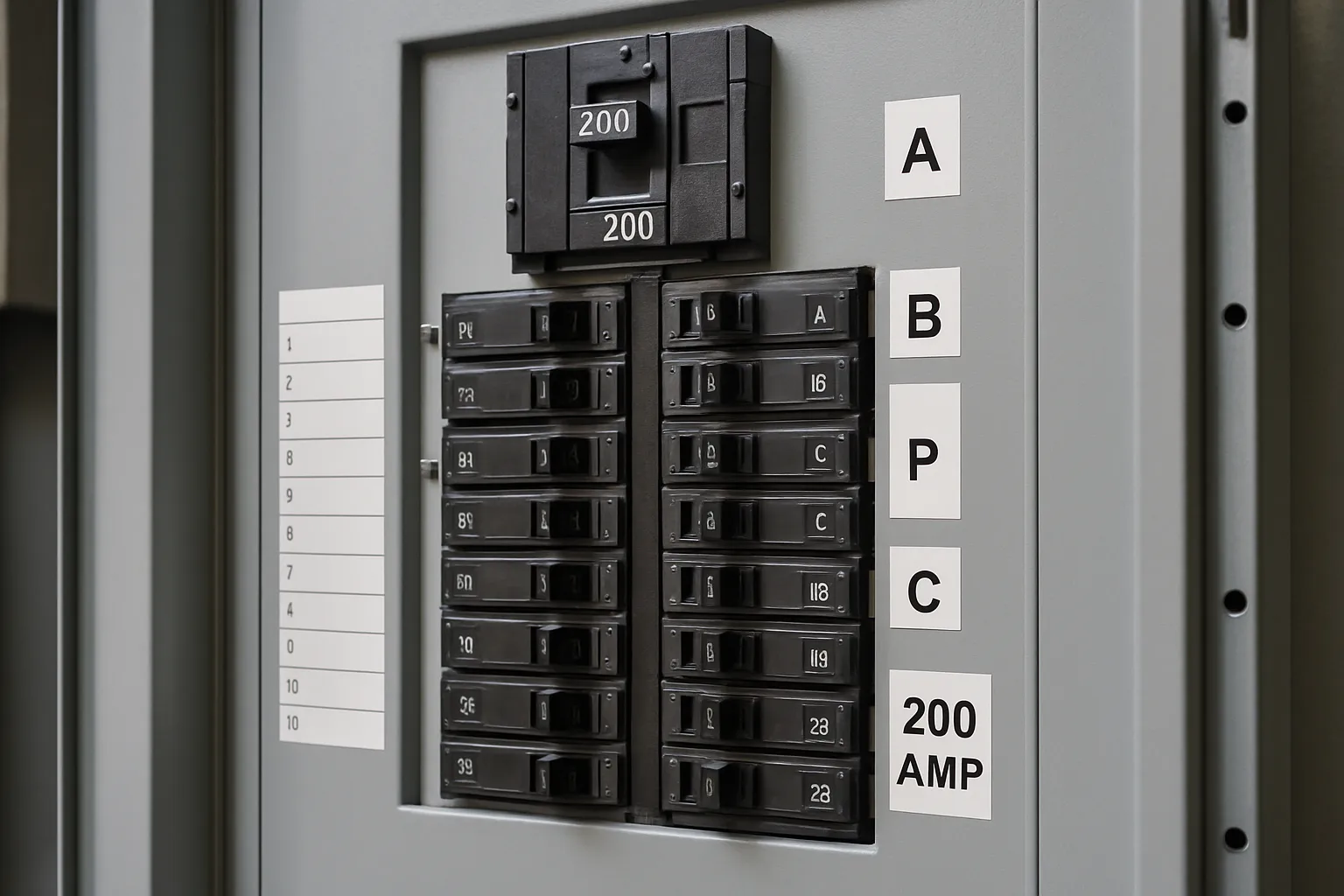
Most lighting retrofits do not require a new service or switchgear, but the project still interacts with the building’s power distribution. Review panel schedules, circuit identification, voltage, phase, neutral loading, overcurrent protection, grounding, disconnecting means, and available working space. Three-phase facilities may distribute single-phase lighting loads across phases; a retrofit can change current balance and demand, particularly when lighting circuits are consolidated or controls add equipment.
Inspect panelboards and breakers for overheating, corrosion, loose terminations, damaged labels, obsolete equipment, and circuits that do not match the documentation. Do not treat an LED retrofit as a reason to bypass an unsafe panel condition. If a panel is at end of life or has known reliability concerns, price panelboard or switchgear work separately as a corrective electrical project.
- Verify line-to-neutral and line-to-line voltage before selecting drivers or luminaires.
- Confirm breaker ratings, conductor ampacity, grounding, neutral integrity, and circuit identification.
- Check inrush current and driver loading where many LED fixtures share a circuit.
- Evaluate power factor, total harmonic distortion, flicker, and compatibility with generators or UPS systems.
- Maintain required separation and labeling for emergency, life-safety, and normal lighting circuits.
Lighting Controls, Emergency Lighting, and Building-System Integration
Controls can create substantial additional value, but only when they match how the space is used. Common strategies include occupancy or vacancy sensing, daylight harvesting, time scheduling, dimming, scene control, demand response, and building-management-system integration. DOE guidance recommends developing an owner project requirement, basis of design, control narrative, commissioning plan, and operating sequence before installation.[2]
Review emergency lighting separately. Emergency fixtures, exit signs, central battery systems, inverter systems, and emergency circuits must continue to operate as required by the adopted codes and the project’s life-safety design. Test normal and emergency modes, transfer behavior, battery charging, remote heads, illumination, and signage after installation. Healthcare and institutional facilities may also have additional infection-control, generator, critical-branch, or documentation requirements.
- Map occupancy zones and daylight zones before placing sensors.
- Specify manual-on, automatic-off, dimming, timeout, and override settings by space type.
- Confirm whether controls use 0-10 V, DALI, wireless, relay, or proprietary communications.
- Coordinate lighting controls with HVAC schedules, access control, security, and the BMS.
- Commission every zone and provide facility staff with as-built sequences and training.
Coordinating LED Retrofit Work With EVSE, Generators, and UPS Equipment
An LED retrofit can reduce connected lighting load, but facility managers should use the project as an opportunity to review future electrical capacity. EV charging equipment may add substantial continuous loads to parking areas or fleet facilities. Before adding EVSE, evaluate service capacity, transformer loading, switchgear space, feeder routing, demand management, overcurrent protection, and load calculations. Lighting savings may help operating demand, but they do not automatically create spare capacity for chargers.
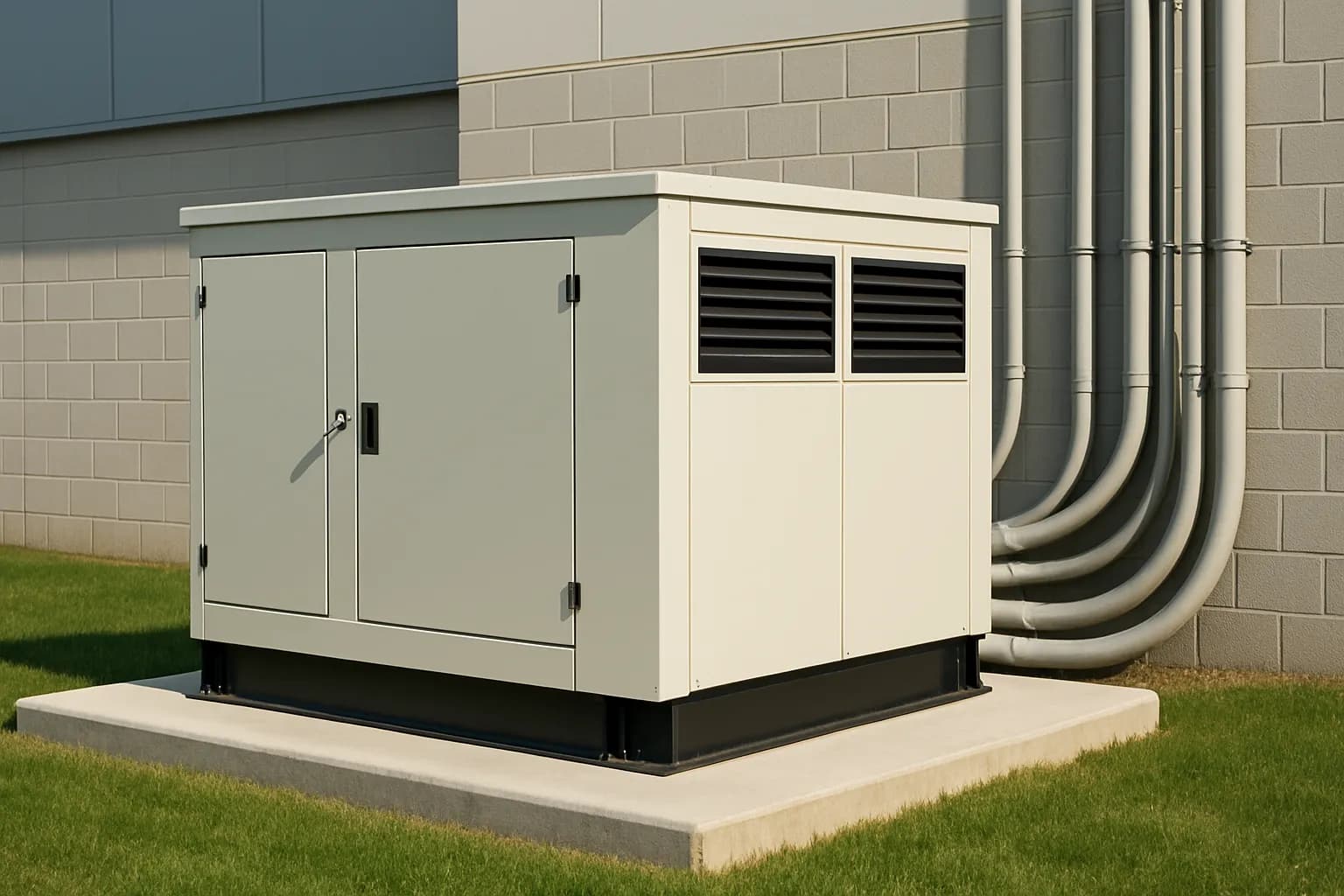
Backup generators and UPS systems require special attention because LED drivers can produce inrush current or power-quality behavior that differs from legacy fluorescent ballasts. Confirm generator compatibility, voltage and frequency tolerance, transfer-switch operation, emergency lighting circuits, UPS output limits, and any manufacturer requirements. Where lighting is supplied by a generator, test the retrofit under normal, transfer, and retransfer conditions.
- Coordinate LED, EVSE, generator, and UPS projects through one electrical load study.
- Verify emergency lighting priorities and automatic transfer sequences.
- Review harmonic performance and power factor for large LED populations.
- Reserve panel and switchgear capacity for planned tenant improvements or electrification.
LED Retrofit Project Process and Facility Checklist
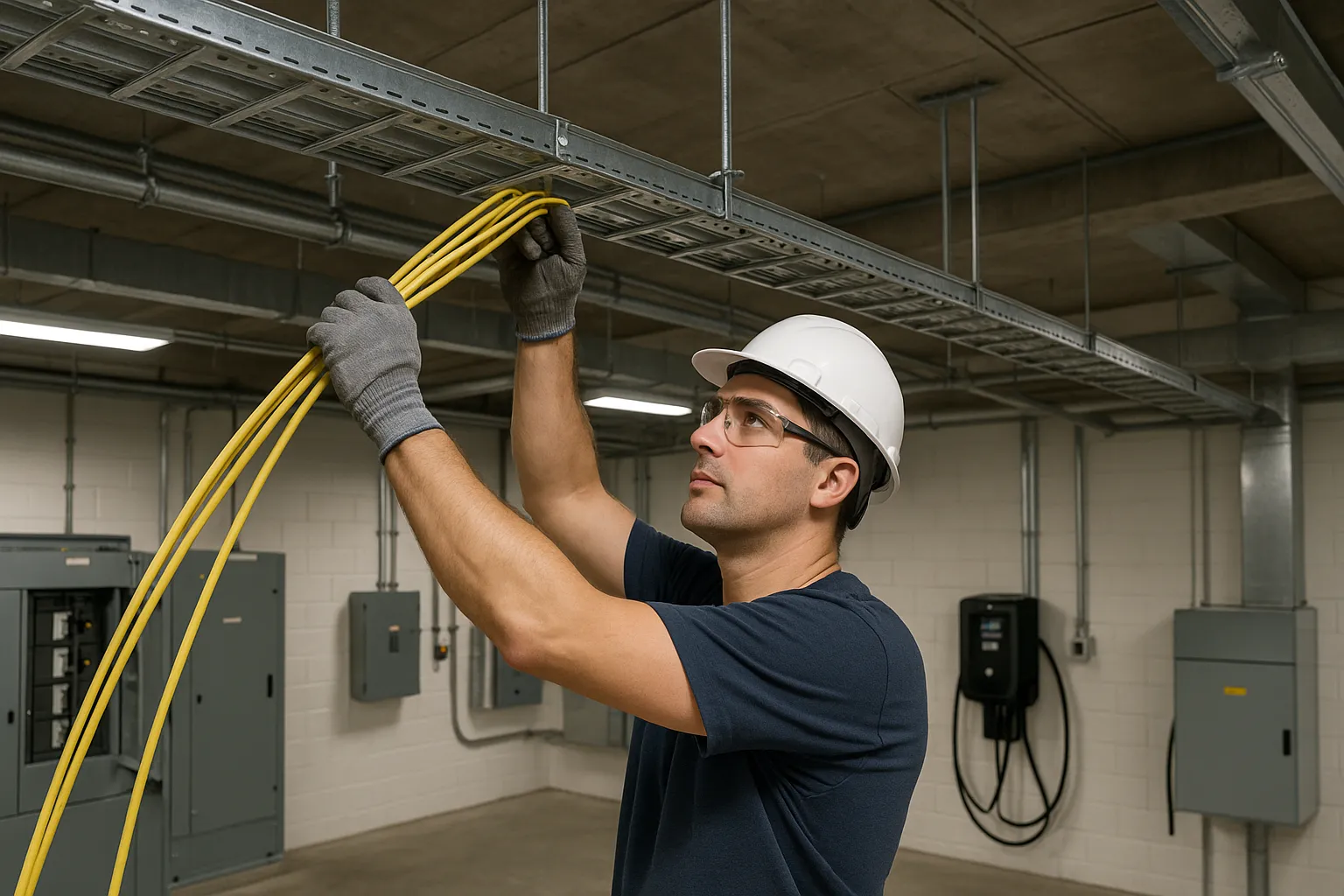
A disciplined process reduces change orders and tenant disruption. For a small office floor, the work may be completed by zone during off-hours. A warehouse or distribution center may require lifts, aisle closures, fixture spacing studies, and staged shutdowns. A healthcare or occupied multifamily property requires infection-control, resident-safety, temporary lighting, and detailed scheduling plans.
- Define goals: energy reduction, light quality, maintenance reduction, controls, tenant experience, or code correction.
- Survey every fixture and circuit, including emergency and exterior lighting.
- Measure existing illumination and identify glare, flicker, dark spots, and overlit areas.
- Develop a design with photometric verification, controls zoning, fixture schedule, and electrical details.
- Obtain proposals that identify labor, lifts, permits, disposal, testing, commissioning, warranty, and exclusions.
- Confirm product listings, certifications, environmental ratings, driver warranties, and replacement strategy.
- Sequence work around tenants, production, retail hours, patient care, loading operations, and security.
- Install, label, test, clean, and commission each zone.
- Update panel schedules, fixture maps, controls documentation, and preventive-maintenance records.
- Compare post-installation consumption, runtime, complaints, and maintenance events with the baseline.
LED Retrofit Cost, ROI, and Repair Versus Replacement Decisions
There is no universal LED retrofit price or payback period. Cost depends on fixture count, access, ceiling height, labor conditions, controls, electrical corrections, permitting, lift requirements, disposal, utility incentives, and whether the building remains occupied. A credible business case should use measured operating hours, utility rates, demand charges where applicable, maintenance history, rebates, financing, and expected replacement costs.
Repair is usually appropriate when a limited number of fixtures have failed and the existing system remains safe, supportable, and efficient enough for the building’s needs. Maintenance may include group relamping, cleaning, driver replacement, control calibration, and correcting loose or damaged connections. A full replacement is more defensible when fixtures are failing across the building, parts are unavailable, light levels are inadequate, ballasts are obsolete, housings are unsafe, or a renovation already requires ceiling and electrical work.
- Calculate annual energy savings from baseline and proposed watts multiplied by operating hours and utility rates.
- Value avoided lamp, ballast, lift, disposal, and service-call costs separately from energy savings.
- Subtract maintenance, controls, commissioning, financing, and planned electrical-repair costs.
- Review simple payback, lifecycle cost, net present value, and tenant or operational benefits.
- Apply for utility incentives before ordering equipment; eligibility and documentation rules vary by program.[4]
DOE case material shows that project results vary widely by technology and application; retrofit kits and new luminaires can produce different savings than lamp-only replacements, while controls can materially affect results.[7] Treat published examples as benchmarks, not guarantees. Require the contractor to document assumptions and provide a post-installation verification plan.
Frequently Asked Questions
How much does a commercial LED retrofit cost?
Commercial LED retrofit cost varies by fixture type, quantity, mounting height, access, controls, electrical corrections, emergency requirements, permitting, disposal, and operating schedule. Obtain an itemized proposal that separates lamp or fixture materials, installation labor, lifts, controls, panel work, commissioning, and rebates. Compare total lifecycle cost rather than fixture price, because reduced relamping, ballast replacement, lift use, and service calls can materially affect ROI.
Does a commercial LED retrofit require an electrical permit?
Permit requirements depend on the jurisdiction, scope, and whether the work changes branch-circuit wiring, disconnects ballasts, adds controls, modifies emergency lighting, or alters panels. A lamp replacement may receive different treatment from a ballast-bypass retrofit or new circuit installation. The property owner or manager should require the electrical contractor to identify permits, inspections, required drawings, and adopted NEC and energy-code provisions before work starts.
Can LED lighting work with a commercial generator or UPS?
Often, but compatibility must be verified rather than assumed. LED drivers can have inrush current, power-factor behavior, dimming characteristics, and control interactions that affect generators, transfer switches, and UPS equipment. Test normal power, transfer, emergency operation, and retransfer. Confirm manufacturer requirements, emergency-circuit separation, available capacity, voltage and frequency performance, and the facility’s life-safety testing obligations.
What should a facility manager require from an LED retrofit contractor?
Require a documented site survey, fixture and circuit inventory, photometric design, product data, safety listings, controls sequence, electrical load review, emergency-lighting plan, schedule, warranty, and commissioning procedure. The proposal should identify assumptions and exclusions for panel work, lifts, permits, ceiling repairs, disposal, after-hours labor, and utility rebates. Request updated as-builts and staff training at closeout.
Are LED retrofits suitable for warehouses and industrial buildings?
Yes, but warehouse and industrial applications require more than a lamp swap. Evaluate mounting height, aisle geometry, forklift visibility, temperature, dust, moisture, impact exposure, controls, emergency egress, and lift access. High-bay luminaires may provide better optics and maintenance access than retrofit lamps. Coordinate lighting with production schedules, fire protection systems, hazardous-area classifications where applicable, and planned EV charging or equipment loads.
Related Reading on My Electrical Tech
- Kalmar Ottawa T2 Recall: Commercial Facility Safety Actions for Terminal Tractors
- Commercial Generator Guide: Selection, Maintenance, Compliance, and ROI
Find a Qualified Commercial Electrical Contractor
Need help acting on this? Browse commercial electricians in your area, or explore commercial electrical services like preventative maintenance, inspections, and emergency response. Are you a contractor? List your business on My Electrical Tech to reach property and facility managers actively searching for help.