 My Electrical Tech
Commercial EV Charging Station Planning, Installation, and Maintenance Guide
Quick Answers for Property & Facility Managers
How do you install a commercial EV charging station?
Start with a load and site assessment, confirm utility capacity, define charger power and parking requirements, and select listed EVSE for the application. The electrical contractor should design feeders, overcurrent protection, disconnects, grounding, communications, and load management under NEC Article 625 and local amendments. Obtain permits, coordinate utility work, commission the system, and establish preventive maintenance.
How much electrical capacity does a commercial EV charging station require?
Capacity depends on the number, voltage, and maximum output of the chargers. Level 2 equipment commonly uses 208 or 240 volts, while DC fast charging may use three-phase 208 or 480 volts and substantially larger feeders. EV charging is generally treated as a continuous load, so the service, switchgear, panelboards, breakers, conductors, and transformers must be evaluated before equipment is ordered.
Should a commercial property install Level 2 or DC fast chargers?
Choose Level 2 for workplaces, multifamily properties, offices, retail, and locations where vehicles remain parked for several hours. Consider DC fast charging for fleet turnover, logistics, highway-adjacent retail, and operations requiring rapid charging. Compare dwell time, utility demand charges, fleet schedules, available three-phase capacity, construction cost, and expected utilization rather than selecting equipment by charging speed alone.
Define the Commercial EV Charging Station Business Case Before Designing Power
For facility managers, property managers, and commercial real estate professionals, an EV project begins with an operating requirement—not a charger model. Document who will use the stations, how long vehicles typically remain parked, whether access is restricted, and whether charging supports tenants, employees, visitors, delivery vehicles, or an owned fleet.
- Inventory parking areas, operating hours, traffic flow, accessible spaces, snow removal, bollards, lighting, drainage, and future expansion areas.
- Estimate present and future ports, expected simultaneous charging, vehicle dwell time, and required energy per day.
- Decide whether charging will be complimentary, tenant-billed, publicly priced, or managed through a fleet platform.
- Identify ownership responsibilities for equipment, networking, payment processing, repairs, signage, and pavement restoration.
Level 2 EVSE is often appropriate where vehicles remain parked for extended periods. DC fast charging can serve fleet and high-turnover applications but typically creates greater service, switchgear, transformer, demand, and construction requirements. Treat the first phase as part of a long-term site plan so conduit, spare capacity, and equipment locations can support later ports without reopening finished pavement.
Assess Power Distribution, Service Capacity, and Utility Requirements
A commercial EV charging station can become a significant new electrical load. Review utility bills, interval demand data, service voltage, transformer capacity, available fault current, service entrance conductors, switchgear ratings, and emergency-power arrangements. The U.S. Department of Energy recommends coordinating with the utility to confirm charging requirements, rates, installation needs, and possible service upgrades before procurement.[6]
- Trace the existing distribution path from utility service to main switchgear, transformers, distribution panels, and the proposed EVSE location.
- Verify spare breaker positions, bus ratings, feeder capacity, short-circuit ratings, grounding, and physical clearances.
- Evaluate whether a 208/120-volt system can support Level 2 charging or whether a new transformer and three-phase service are needed.
- For DC fast charging, evaluate 480-volt three-phase availability, transformer capacity, medium-voltage service implications, and utility lead times.
- Model coincident building loads, including HVAC, elevators, lighting, refrigeration, process equipment, and backup systems.
When capacity is constrained, an energy-management system can sequence or throttle chargers to remain within a service or feeder limit. Load management may reduce the need for immediate infrastructure replacement, but it must be engineered around actual equipment ratings and charging commitments. Confirm utility tariffs and demand-response or time-of-use programs; ENERGY STAR notes that utilities may offer incentives and off-peak pricing for charging hosts.[1]
Apply NEC, Permitting, and Life-Safety Requirements
EVSE design must comply with the adopted electrical code, building and fire codes, accessibility requirements, utility standards, and equipment listing instructions. NEC Article 625 addresses conductors and equipment used for EV charging, power export, and bidirectional current flow.[2] Because EV charging loads are treated as continuous loads, feeders and branch circuits generally require sizing and overcurrent protection appropriate to continuous operation.[2]
- Require a stamped design or permit drawings when jurisdictional rules, project scale, or service modifications demand professional engineering.
- Confirm conductor ampacity, terminal temperature ratings, voltage drop, raceway fill, derating, grounding, bonding, and overcurrent protection.
- Provide required disconnecting means; EV equipment over 60 amperes or over 150 volts to ground may require a readily accessible, lockable disconnect under NEC provisions.[2]
- Use weatherproof enclosures and listed outdoor equipment for wet locations, and verify mounting heights, cord reach, impact protection, and accessibility.
- Coordinate fire alarm, emergency power-off, ventilation, battery-storage, and hazardous-location requirements where applicable.
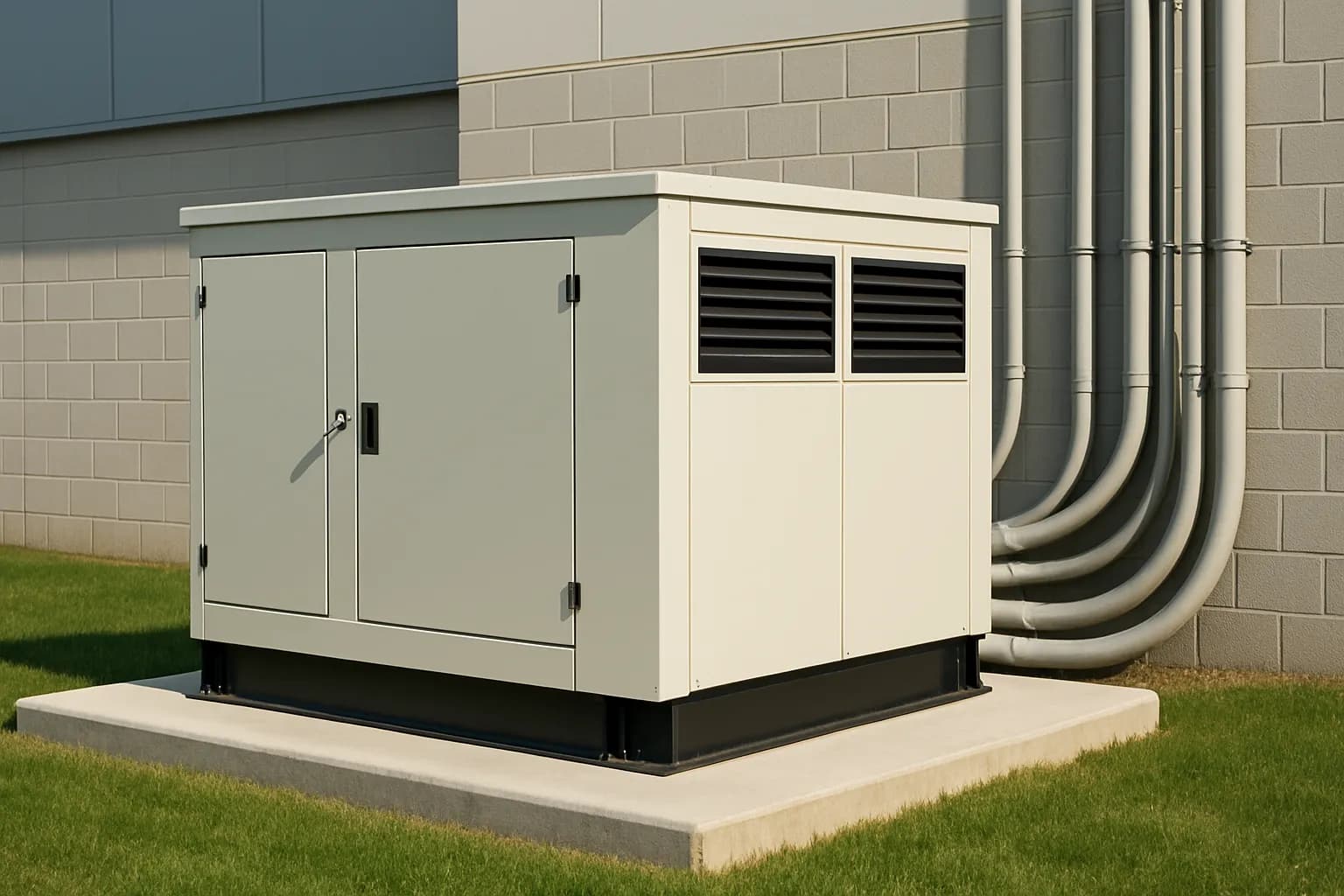
Do not assume a generator can support EV charging during an outage. The emergency distribution system must be evaluated for transfer-switch capacity, generator fuel duration, selective coordination, and legally required or critical loads. If EVSE is placed on standby power, document whether charging is essential, optional standby, or intentionally shed during transfer.
Coordinate Switchgear, Panelboards, Breakers, and Site Construction
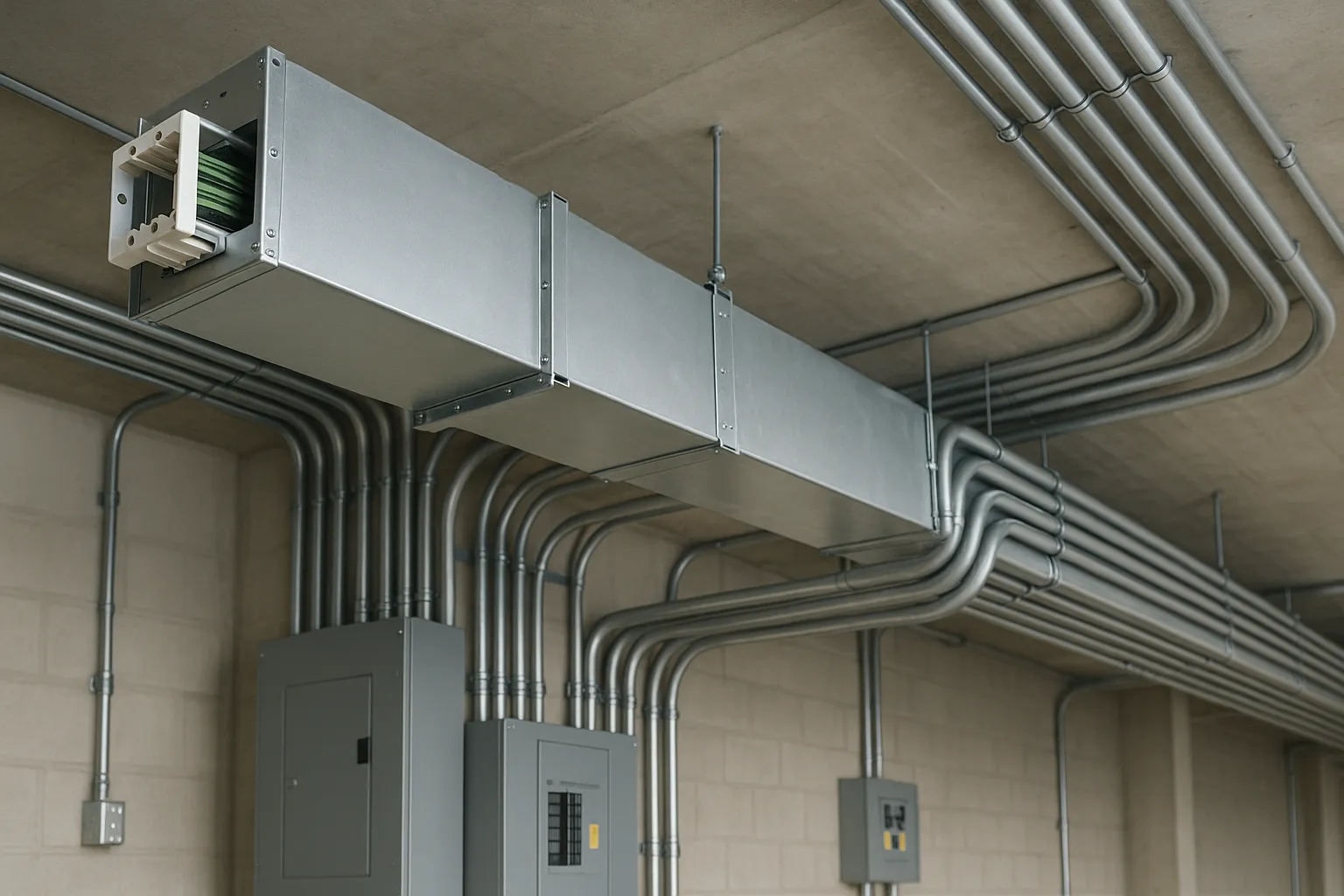
Small workplace installations may use spare capacity in an existing panelboard, while large warehouse, healthcare, fleet, or mixed-use projects may require new distribution sections, transformers, switchboards, or utility service equipment. The installation path often determines cost as much as charger hardware.
- Use equipment with adequate voltage, phase, continuous-duty, environmental, and interrupting ratings.
- Check panelboard and switchgear bus loading, breaker compatibility, arc-flash labeling, working space, and available fault current.
- Route feeders through practical pathways and reserve oversized conduit or spare raceways for expansion where justified.
- Coordinate trenching with paving, stormwater, site lighting, security, data, fire alarm, and landscaping plans.
- Protect pedestal-mounted equipment from vehicles with bollards and preserve accessible routes, drainage, snow clearance, and service access.
Include commissioning tests for insulation, torque, grounding, communications, network connectivity, emergency shutdown functions, breaker operation, charging authorization, payment workflows, and load-management response. Update one-line diagrams, panel schedules, asset records, and arc-flash documentation after energization.
Integrate EVSE With Lighting, Low-Voltage Systems, and Building Operations
A commercial EV charging station is both an electrical asset and a connected facility system. Networked chargers may require Ethernet, cellular service, Wi-Fi, access control, payment processing, owner dashboards, and cybersecurity procedures. Coordinate communications pathways with low-voltage contractors rather than treating networking as an afterthought.
- Provide adequate site lighting for safe nighttime use, glare control, security-camera coverage, and accessible pedestrian routes.
- Use lighting controls, occupancy sensors, or scheduling to reduce unnecessary parking-area energy consumption without compromising safety.
- Confirm network ownership, data retention, remote diagnostics, software subscriptions, firmware responsibilities, and service-level agreements.
- Coordinate charger access with tenant credentials, visitor management, fleet dispatch, and property billing systems.
- Record equipment serial numbers, warranties, configuration files, credentials, and replacement-part information in the facility management system.
For healthcare, institutional, and high-availability properties, separate EV communications and charging loads from critical life-safety systems unless the design specifically supports the required reliability. For warehouses and industrial facilities, coordinate charging with material-handling equipment, dock operations, process loads, and fleet-depot controls.
Compare Installation Cost, Maintenance, Repair, and Replacement
Project budgets should include more than EVSE purchase price. Cost categories can include engineering, utility studies, service upgrades, transformers, switchgear, panelboards, breakers, conductors, trenching, concrete, bollards, signage, networking, permits, commissioning, software, taxes, and ongoing maintenance. Utility, state, local, and federal incentives may offset eligible equipment and installation costs; the AFDC recommends checking available programs and using its incentive resources before final budgeting.[6]
- Repair: Use component-level repair when the enclosure, feeder, communications platform, and core equipment remain serviceable and replacement parts are available.
- Maintenance: Schedule inspections, cleaning, connector checks, firmware updates, network verification, protective-device testing, and review of alarms and energy data.
- Replacement: Consider full replacement when equipment is obsolete, unsafe, unsupported, repeatedly unavailable, incompatible with required vehicles, or unable to meet utilization and cybersecurity needs.
Measure ROI using utilization, delivered kilowatt-hours, avoided fuel, tenant retention, parking revenue, fleet productivity, demand charges, maintenance costs, incentives, and capital recovery—not charger count alone. ENERGY STAR reports that certified chargers use less standby energy than standard chargers and identifies utility incentives as a potential cost-reduction source.[3] Require vendors to disclose demand-management capabilities, warranty exclusions, networking fees, uptime definitions, and ownership of operational data.
Use a Commercial EV Charging Station Implementation Checklist
- Define users, dwell times, ports, charging speeds, access rules, billing, and expansion phases.
- Complete a facility electrical survey and utility capacity review.
- Model peak building demand, EV demand, load management, and demand-charge exposure.
- Select listed EVSE suited to indoor, outdoor, fleet, workplace, retail, healthcare, or warehouse conditions.
- Develop one-lines, equipment schedules, site plans, communications diagrams, and civil details.
- Obtain utility approval, permits, accessibility review, fire review, and required inspections.
- Coordinate switchgear, panelboards, generators, lighting, low-voltage systems, paving, and security.
- Commission charging, networking, payment, alarms, load controls, and emergency procedures.
- Train property staff and publish a preventive-maintenance and outage-response plan.
- Review utilization, energy cost, demand, uptime, tenant feedback, and expansion triggers quarterly.
The best commercial EV charging station is sized for the property’s operating profile and electrical infrastructure—not simply the highest advertised output. Engage a qualified commercial electrical contractor early, before equipment selection locks in a service configuration or construction scope that cannot support the building’s long-term needs.
Frequently Asked Questions
What does a commercial EV charging station cost to install?
There is no reliable single national price because costs vary by charger type, port count, electrical capacity, utility service, trenching, switchgear, transformer work, networking, and permitting. Level 2 installations may use existing distribution, while DC fast charging can require major three-phase infrastructure. Request a site-specific estimate separating EVSE, electrical construction, utility charges, civil work, software, maintenance, and contingencies. Check utility, state, local, and federal incentives before approving the capital budget.
Can an existing commercial electrical panel support EV chargers?
Possibly, but a spare breaker position alone does not prove capacity. An electrician or engineer must verify panel bus rating, feeder and service loading, breaker compatibility, short-circuit rating, conductor ampacity, voltage, phase, grounding, and continuous-load requirements. The review should include simultaneous HVAC, lighting, process, elevator, refrigeration, and emergency loads. If capacity is limited, engineered load management or a distribution upgrade may be required.
Do commercial EV charging stations need a dedicated circuit?
Commercial EVSE generally requires a properly sized branch circuit or feeder designed for the equipment’s listed rating and continuous operation. The exact arrangement depends on the EVSE, voltage, output, installation method, local code, and manufacturer instructions. Shared circuits or managed charging may be possible only when specifically engineered and permitted. The design should also address disconnecting means, grounding, bonding, overcurrent protection, and accessibility.
How should facility managers maintain commercial EV charging stations?
Use a preventive-maintenance program covering visual condition, connector and cable damage, enclosure integrity, bollards, signage, drainage, lighting, communications, alarms, firmware, payment functions, and charging performance. Review network uptime and error logs, inspect terminations and protective equipment under an appropriate electrical safety program, and document repairs. Keep spare connectors or critical parts when outages would affect fleet operations, tenants, or public-service commitments.
Can commercial EV chargers operate during a generator outage?
Only if the electrical design intentionally places them on an appropriately sized standby system and the transfer equipment supports the load. Many facilities should shed EV charging during an outage to preserve generator capacity for life-safety, legally required, critical, or business-continuity loads. A generator-backed EVSE design requires coordination of transfer switches, load sequencing, selective coordination, fuel planning, controls, and emergency procedures. It should be reviewed under the adopted electrical and fire codes.
Related Reading on My Electrical Tech
- LED Retrofit Guide for Commercial Buildings: Planning, Electrical Safety, and ROI
- Kalmar Ottawa T2 Recall: Commercial Facility Safety Actions for Terminal Tractors
Find a Qualified Commercial Electrical Contractor
Need help acting on this? Browse commercial electricians in your area, or explore commercial electrical services like preventative maintenance, inspections, and emergency response. Are you a contractor? List your business on My Electrical Tech to reach property and facility managers actively searching for help.