 My Electrical Tech
Electrical Maintenance Tips for Commercial Buildings: A Practical Guide
Quick Answers for Property & Facility Managers
What is electrical maintenance in a commercial building?
Electrical maintenance is the scheduled inspection, testing, cleaning, and repair of commercial electrical systems to reduce failures, downtime, and safety risks. For facility managers and property managers, it covers distribution equipment, panels, lighting, generators, UPS, and EV charging assets, with work prioritized by load criticality and occupancy risk.
How often should commercial electrical maintenance be performed?
At minimum, commercial electrical maintenance should include routine visual checks monthly, more detailed preventive tasks quarterly or semiannually, and a comprehensive annual inspection for distribution equipment, safety systems, and critical loads. High-demand facilities such as healthcare, warehouses, and data-heavy offices often need shorter intervals based on usage and risk.
Electrical maintenance for commercial buildings: what facility managers need to know
Electrical maintenance is not just a repair budget line. For facility managers, property managers, and commercial real estate teams, it is a risk-control program that protects uptime, tenant operations, safety systems, and asset value. Commercial electrical maintenance programs typically include scheduled inspections, cleaning, torque checks, thermal imaging, testing, recordkeeping, and corrective repairs for distribution equipment, lighting, backup power, and charging infrastructure.[1][2][4][9]
The most effective programs are preventive and risk-based. That means critical systems such as switchgear, panelboards, life-safety circuits, generators, UPS, and EV charging should be checked more often than low-risk loads, with frequency based on age, environment, occupancy, and operating intensity.[1][4][8][9]
Build a commercial electrical maintenance schedule by risk and building type
A useful maintenance plan starts with a simple rule: the higher the operational impact of failure, the shorter the inspection interval. Industry guidance commonly recommends monthly visual checks, quarterly or semiannual detailed inspections, and annual comprehensive testing for commercial properties, with heavier-use facilities needing more frequent service.[1][2][4][5][9]
- Monthly: visual walkthroughs of panels, breakers, lighting controls, visible wiring, emergency lighting, and signs of overheating, moisture, dust, or abnormal noise.
- Quarterly: tighter attention to high-load areas such as electrical rooms, server spaces, kitchens, loading docks, and mechanical rooms; verify load balance and inspect frequently used breakers and disconnects.
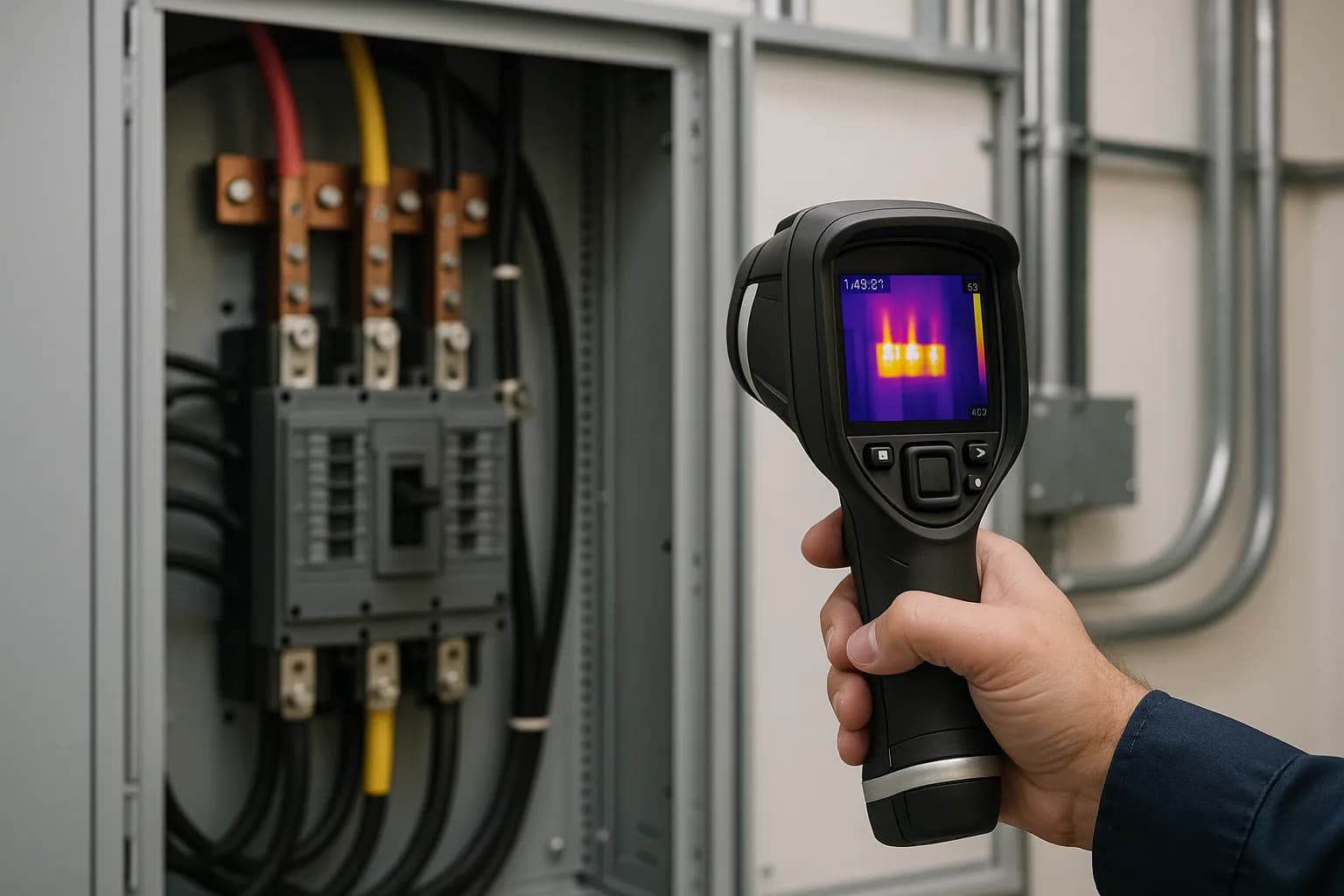
- Annually: thermographic scanning, torque verification, grounding and bonding review, generator and UPS testing, and a full review of labels, directories, and protective-device settings.
- As needed: after nuisance trips, tenant buildouts, equipment additions, storm events, water intrusion, or any sign of overheating or repeated breaker operation.
For offices and retail centers, the schedule often centers on tenant comfort, lighting, and common-area reliability. For warehouses and industrial properties, motor loads, high-bay lighting, and panel capacity deserve more frequent review. In healthcare and mission-critical properties, maintenance must align with redundancy requirements and life-safety priorities.[2][4][8]
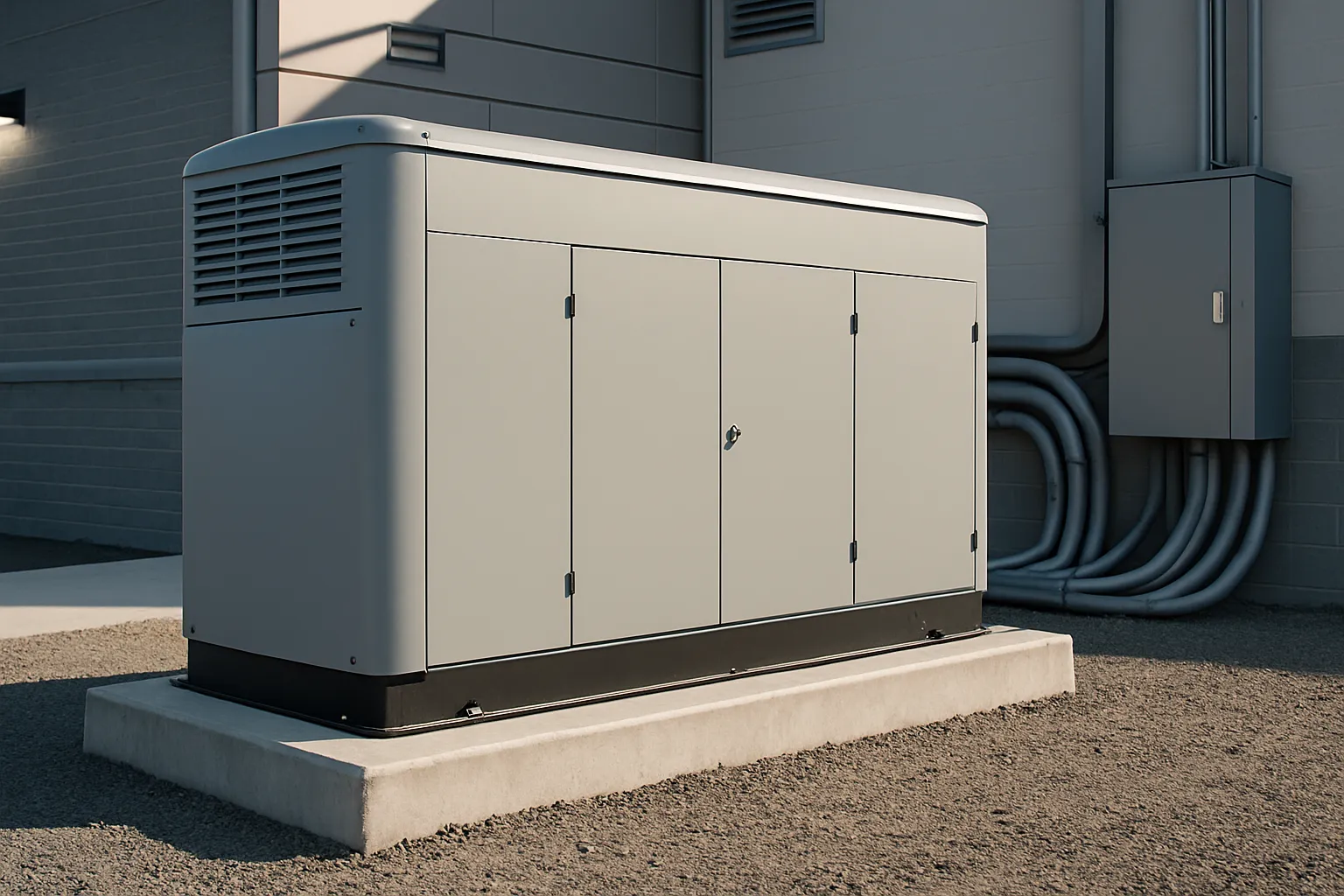
Inspect power distribution, switchgear, and panelboards before they fail
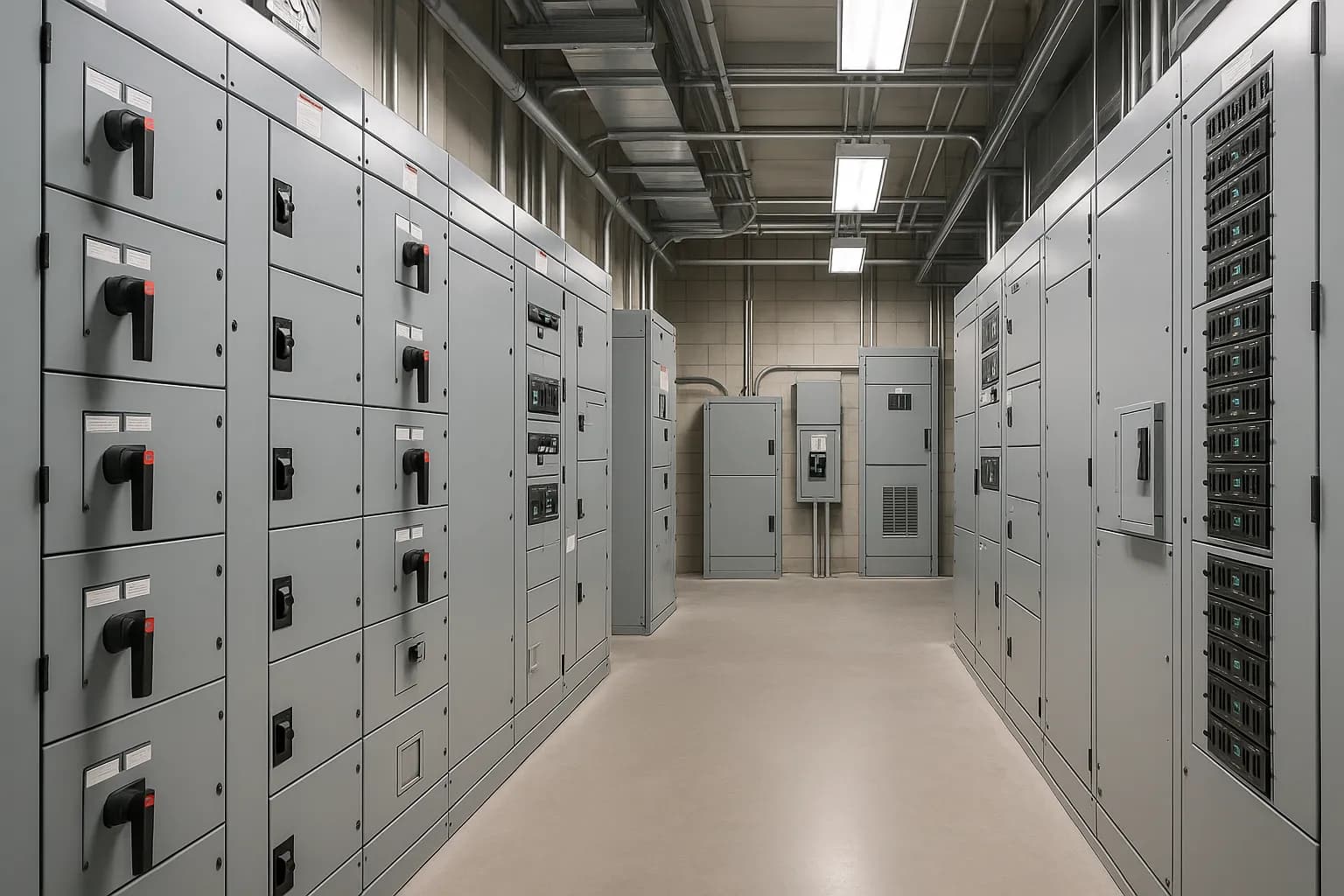
Power distribution equipment is where many costly failures begin. Maintenance should focus on cleanliness, secure terminations, proper clearances, and evidence of heat, arcing, or corrosion. Guidance for commercial preventive maintenance programs emphasizes keeping enclosures clean and dry, avoiding storage in electrical rooms, checking for water intrusion, and inspecting insulation for cracking, flaking, or overheating.[3][1][9]
- Switchgear: inspect breaker status, indicators, contamination, and unusual heat; verify relay settings and operating condition during planned outages.
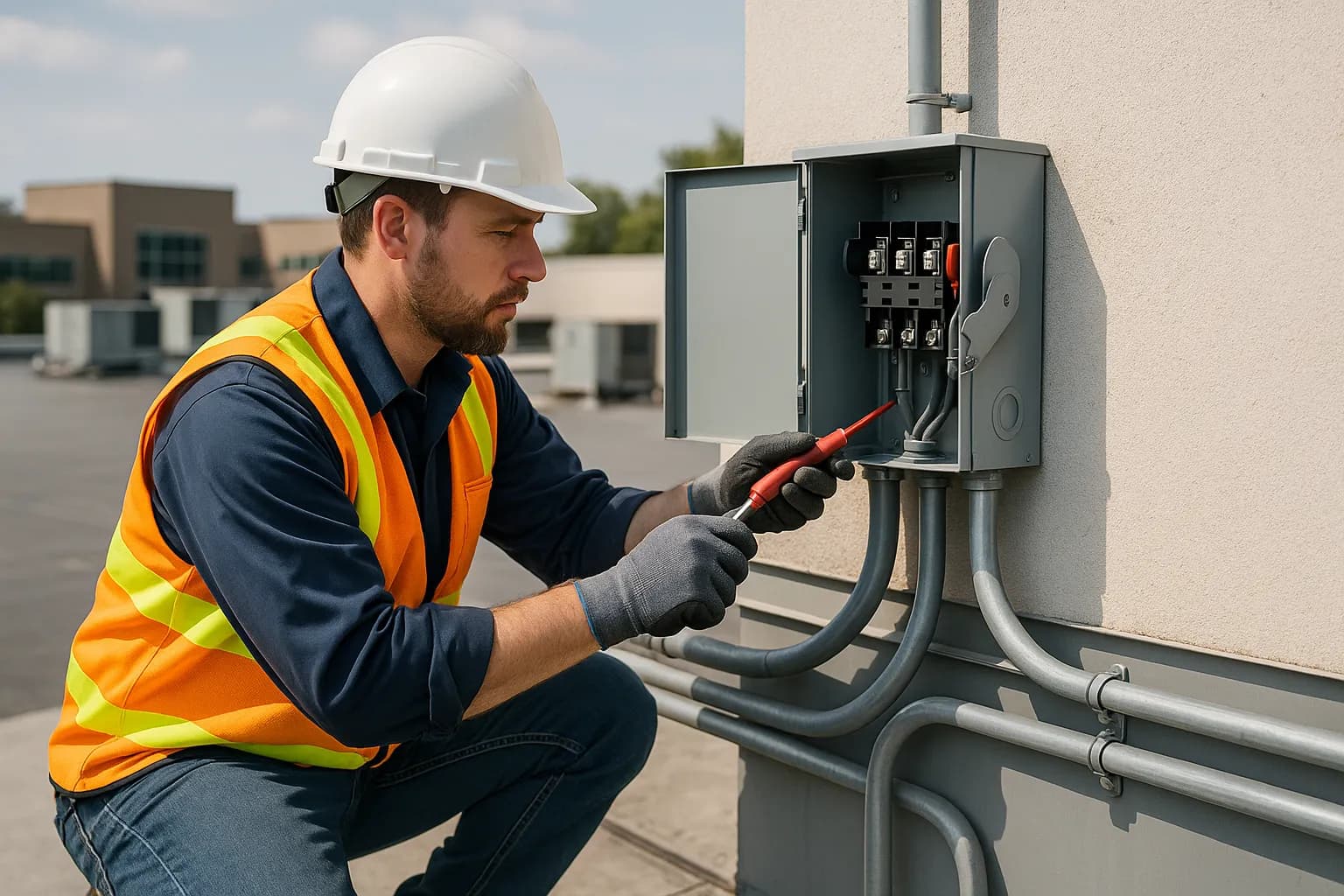
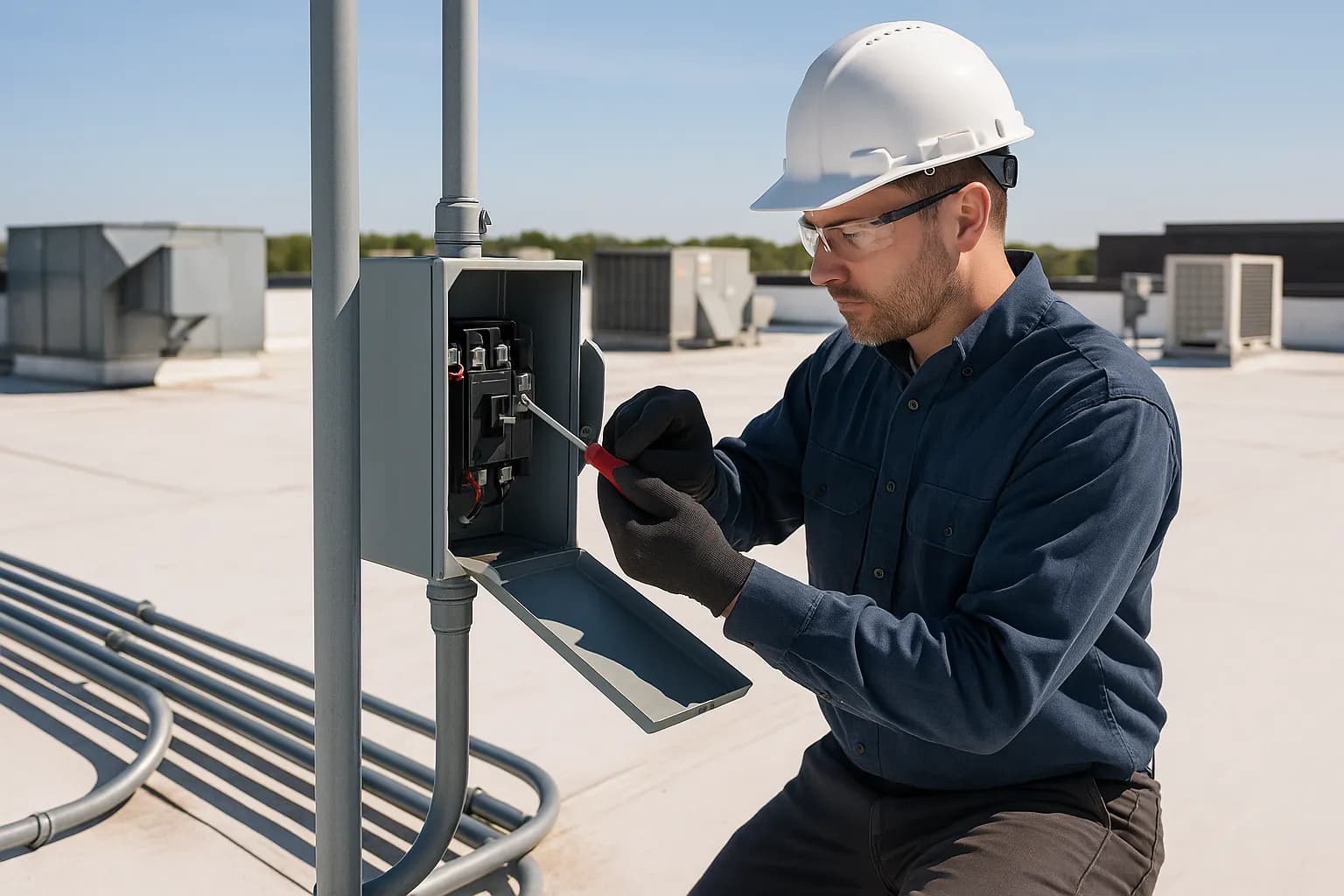
- Panelboards and breakers: confirm correct labeling, breaker sizing, and tight terminations; check for discoloration, loose lugs, and signs of thermal stress.
- Transformers: look for leaks, noise, overheating, and ventilation issues; keep access clear and record any load or temperature changes.
- Bus and connections: schedule thermographic scans and torque checks on critical gear, especially where load has increased or nuisance tripping has occurred.
For facility managers, the key question is whether the system can safely support current tenant demand. If load growth, repeated breaker trips, or heat damage is present, the issue may no longer be maintenance-only and may require capacity upgrades or equipment replacement.[1][4][8][9]
Keep lighting systems, emergency circuits, and controls reliable
Lighting maintenance affects safety, code compliance, and tenant experience. Commercial properties should inspect fixtures, drivers, controls, emergency lights, and exit signs on a regular schedule, with prompt replacement of failed lamps, ballasts, drivers, photocells, relays, and control components. Industry checklists consistently include testing emergency and exit lighting, verifying proper operation of safety devices, and cleaning electrical equipment to reduce heat and contamination.[1][2][5][6]
- LED retrofits: verify compatibility of drivers and controls before replacing components across a whole property.
- Lighting controls: confirm occupancy sensors, timeclocks, dimming systems, and contactors respond correctly after tenant changes.
- Emergency lighting: test monthly or per site policy and document runtimes, failures, and battery replacements.
- Exterior lighting: inspect photocells, dusk-to-dawn controls, and weather-exposed connections for corrosion or water entry.
For property managers, lighting maintenance is often one of the fastest ways to reduce service calls. A planned replacement strategy usually costs less than repeated emergency dispatches, occupant complaints, and lost productivity from failed common-area lighting.[2][5][6]
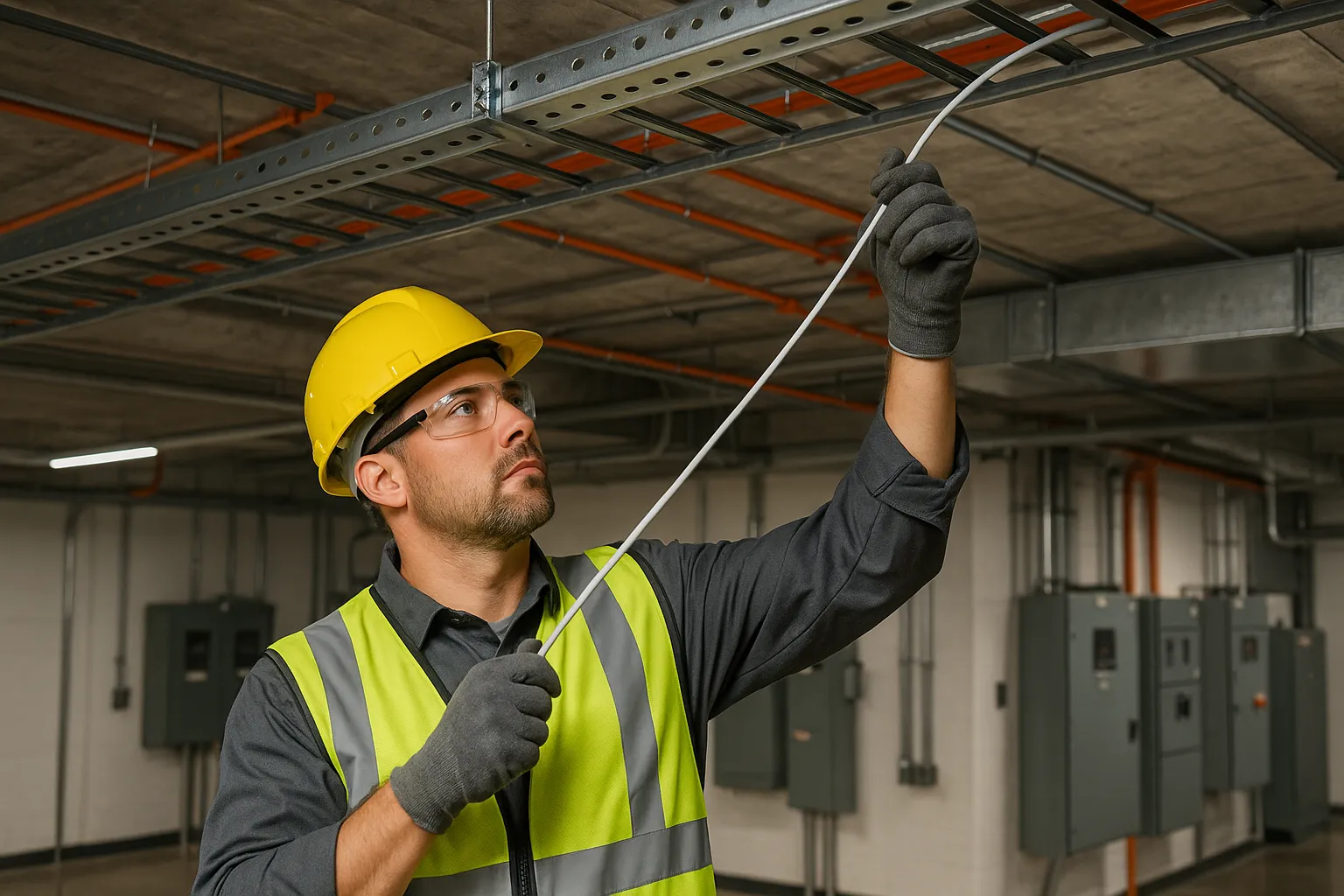
Maintain EV charging, backup generators, and UPS systems as critical assets
EV charging stations, generators, and UPS systems are no longer optional add-ons in many commercial properties. They should be treated as critical infrastructure with documented preventive maintenance, because failures can affect operations, tenant retention, and safety-critical loads.[8][9]
- EV charging (EVSE): inspect connectors, cables, mounting hardware, network status, and signs of damage; verify load management and labeling at the panel and charger.
- Backup generators: test starting, fuel system condition, automatic transfer switch operation, load transfer, and run logs on a defined schedule.
- UPS systems: check alarms, battery health, runtime, ventilation, and bypass function; replace weak batteries before they become a reliability risk.
- Automatic transfer switches: confirm operation during planned testing and include them in the same asset record as the generator and critical panels.
In offices, healthcare, and mixed-use buildings, these systems often protect IT loads, access control, life-safety equipment, and critical tenant operations. Maintenance records should show not only what was tested, but whether the asset performed under load and whether any part of the system is nearing end of life.[8][9]
Use a checklist and document every finding for compliance and budgeting
Commercial electrical maintenance becomes more effective when it is documented in a living asset register or CMMS. Sources on preventive maintenance emphasize keeping records of inspections, tests, repairs, component replacements, and technician qualifications so building teams can track trends and justify future upgrades.[2][4][5][9]
- Record the date, equipment ID, location, and work order number for every inspection.
- Note visible defects such as corrosion, discoloration, water intrusion, loose covers, or damaged labels.
- Capture load readings, breaker trips, thermal anomalies, and battery or generator test results.
- Prioritize issues by safety risk, operational impact, and likely failure progression.
- Keep manufacturer instructions, one-line diagrams, and panel schedules current after any retrofit or tenant improvement.
A simple action plan for facility teams is to inspect, document, triage, and close the loop. If a finding affects life safety, redundancy, or a primary tenant operation, it should move ahead of cosmetic or convenience work.
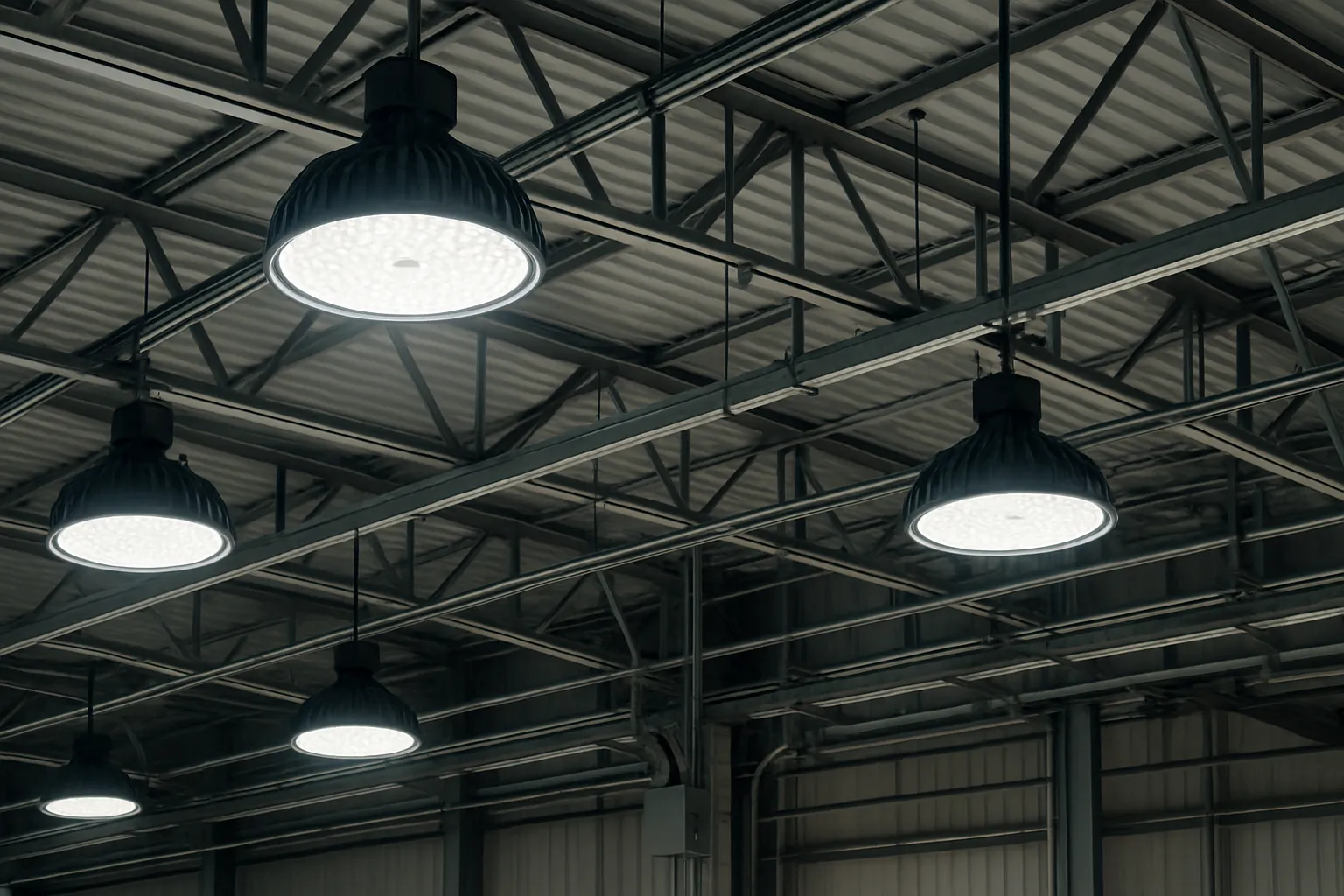
Repair, preventive maintenance, or full replacement: how to decide
For commercial owners and managers, the real question is not just what failed, but what makes the most financial and operational sense over the next several years. Routine maintenance is usually the lowest-cost option when equipment is serviceable and the issue is contamination, loose connections, or worn components. Repair is appropriate when the asset has isolated damage but still has remaining useful life. Full replacement becomes more economical when failures are recurring, parts are obsolete, capacity is inadequate, or the equipment no longer supports the building’s load profile.[1][2][4][9]
- Choose maintenance when the system is operating safely but needs cleaning, tightening, testing, or calibration.
- Choose repair when a component has failed but the underlying equipment remains viable and code-compliant.
- Choose replacement when overheating, nuisance trips, corrosion, missing parts, or capacity limits keep returning.
From a budgeting standpoint, preventive maintenance often delivers value by reducing emergency callouts, tenant disruption, and unplanned shutdowns. The strongest ROI usually appears in high-consequence spaces such as healthcare, industrial production, data-heavy offices, cold storage, and properties with aging switchgear or overloaded panels.[2][4][8]
What to ask when hiring an electrical maintenance provider
Commercial buyers should not select a provider only on price. The right partner should understand power distribution, switchgear, life-safety systems, load growth, and documentation standards for occupied properties.[2][3][8][9]
- Can you support our building type, load profile, and after-hours maintenance windows?
- Do you provide thermal imaging, torque verification, test reports, and updated labels?
- Will you identify replacement timing before equipment becomes a failure risk?
- Can you coordinate electrical maintenance with tenants, HVAC downtime, and other building systems?
- Do you track recurring issues so we can separate maintenance, repair, and capital replacement needs?
For facility and property teams, the best electrical maintenance vendors help extend equipment life, reduce downtime, and create a defensible plan for capital planning, compliance, and tenant communication.
Frequently Asked Questions
How much does commercial electrical maintenance cost compared with emergency repair?
Preventive electrical maintenance usually costs far less than an emergency response because planned work avoids after-hours labor, tenant disruption, and secondary damage. The right comparison for facility managers is not just service price, but total cost of downtime, safety risk, and premature replacement. Asset condition, access, and equipment type drive the final budget.
What electrical systems should be prioritized first in a commercial maintenance program?
Prioritize systems that affect safety and uptime first: switchgear, main distribution, panelboards, breakers, emergency lighting, generators, UPS, and any EV charging tied to tenant operations. After that, address lighting controls, transformers, and less critical branch circuits. The highest-value programs start with the assets whose failure would interrupt operations or create code and life-safety exposure.
How do I know if electrical maintenance should become a capital replacement project?
Move from maintenance to replacement when a system shows repeated overheating, nuisance trips, corrosion, obsolete parts, limited capacity, or frequent corrective work. For commercial properties, the decision should also consider age, code changes, tenant load growth, and downtime risk. If the same issue keeps returning, replacement is usually more economical than repeated repair.
What records should a facility manager keep for electrical maintenance?
Keep inspection dates, work orders, thermal scans, breaker test results, generator run logs, UPS battery results, deficiency lists, corrective actions, and updated one-line diagrams. Strong records make it easier to prove compliance, plan capital projects, and identify trends before a failure occurs. They also help when negotiating service scope and reserve budgets.
Related Reading on My Electrical Tech
- NFPA 79 Electrical Standard Changes Explained for Facility Managers
- Electrical Panel Installation Guide for Commercial Facilities
Find a Qualified Commercial Electrical Contractor
Need help acting on this? Browse commercial electricians in your area, or explore commercial electrical services like preventative maintenance, inspections, and emergency response. Are you a contractor? List your business on My Electrical Tech to reach property and facility managers actively searching for help.