 My Electrical Tech
Electrical Panel Replacement Cost: Commercial-Level Guide for Facility Managers
Quick Answers for Property & Facility Managers
What is the typical electrical panel replacement cost for a commercial building?
For commercial facilities, electrical panel replacement cost can range from roughly $10,000–$50,000 for typical multifamily switchgear and house panels, and $15,000–$30,000 for a 400A low‑voltage commercial panel, with complex medium‑voltage switchgear replacements reaching $250,000–$750,000+ depending on design, utility work, and phasing.[5][11][13]
What factors drive electrical panel replacement cost in commercial properties?
Key commercial cost drivers include panel amperage and voltage class, whether gear is single‑section or multi‑section, three‑phase service upgrades, utility coordination and temporary power, code‑required surge protection, and integration with downstream loads like lighting, EVSE, UPS, and generators. Scope creep from reworking feeders, metering, and life‑safety circuits often adds substantial cost.[5][9][11]
When should a facility manager consider full panel replacement instead of repair?
Full replacement is typically justified when panels or switchgear are beyond their 30–50‑year useful life, show recurring failures, lack capacity for new loads (EV charging, HVAC, data), or cannot economically meet current NEC safety requirements such as surge protection at service equipment and updated protective device ratings. At that point, repair-only strategies tend to increase risk and lifecycle cost.[5][10][11][15]
Understanding Electrical Panel Replacement Cost in Commercial Buildings
For commercial and multifamily properties, electrical panel replacement cost sits in a very different range than residential work. Industry guides for multifamily and light commercial report typical replacement costs of about $10,000–$50,000 per building for main distribution equipment, meter banks, and house panels, assuming low‑voltage gear and standard layouts.[5]
Dedicated switchgear cost studies show that low‑voltage 400A commercial panels are commonly in the $15,000–$30,000 installed range, with multi‑section and medium‑voltage switchgear projects reaching $250,000–$750,000+.[11][13] Regional contractors also cite 200A commercial panel replacements at approximately $4,000–$9,000, and three‑phase 400–800A upgrades at $18,000–$60,000 depending on utility work and temporary power requirements.[9]
For facility managers, this means panel and switchgear replacement quickly becomes a capital project, not a simple maintenance item. The rest of this guide focuses on how to scope, budget, and justify that investment effectively across offices, retail, healthcare, and industrial/warehouse sites.
Key Cost Drivers for Commercial Electrical Panel Replacement
Several technical and project conditions drive electrical panel replacement cost in commercial properties:
- Amperage and voltage class: Cost rises sharply with panel amperage. Published switchgear guides cite installed ranges of $15,000–$30,000 for 400A, $25,000–$45,000 for 600A, $40,000–$70,000 for 800A, and $70,000–$120,000+ for 1,200A low‑voltage gear, with 2,000A+ and medium‑voltage systems often exceeding $200,000.[11]
- Three‑phase distribution complexity: Most commercial buildings use three‑phase service. Reworking bus, mains, feeders, and protective devices in multi‑section gear adds engineering and installation hours compared to single‑panel changes.
- Utility coordination and temporary power: Projects that require service changes, utility cutovers, or extended outages often need generator rental or temporary feeds, which regional contractors flag as major cost drivers for 400–800A upgrades.[9]
- Code compliance upgrades: The 2023 NEC requires surge‑protective devices at service equipment when service gear is replaced.[1][10][15] Integrating listed SPDs with sufficient nominal discharge rating, and updating protective device selection, adds material and labor.
- Downstream scope: If panel replacement triggers reworking branch circuits for lighting, EV charging (EVSE), UPS, or data loads, scope and cost expand. Large projects may also involve metering changes, new panelboards for future tenants, or separate critical‑load panels.
- Site conditions and phasing: Working in occupied healthcare, office, or 24/7 industrial environments often requires night or weekend work, detailed outage planning, and phasing, which increases labor costs.
For budgeting, facility managers should treat contractor rough‑order‑of‑magnitude (ROM) numbers as starting points and refine estimates once amperage, section count, and utility involvement are clear.
When Replacement Beats Repair: Lifecycle and Risk Considerations
Typical useful life for commercial panels and switchgear is cited at roughly 30–50 years, assuming normal loading and environmental conditions.[5] Beyond that window, component obsolescence, insulation degradation, and fault risk increase.
Replacement tends to be more cost‑effective than ongoing repair in scenarios such as:
- Frequent breaker or bus failures: Repeated breaker trips, nuisance outages, or evidence of overheating suggest systemic issues. Older gear may lack available replacement parts or compatible breakers.
- Capacity constraints for new loads: EVSE, data centers, upgraded HVAC, and LED lighting controls often increase or redistribute load. If the main gear cannot safely support new loads or future expansion, replacement enables right‑sizing.
- Inability to meet current NEC requirements: Surge protection at service equipment is now required when service gear is replaced, with minimum discharge current rating thresholds.[1][10][15] Older gear may not accommodate SPDs or modern fault‑current ratings without substantial rework.
- Deferred maintenance and safety incidents: Evidence of arcing, corrosion, or past incidents in gear often supports moving from patch repairs to full replacement for risk mitigation.
From an ROI perspective, projects that combine panel/switchgear replacement with strategic lighting retrofits, EVSE infrastructure, or power quality improvements can capture efficiency gains and tenant value alongside safety and reliability.
Scoping a Panel Replacement Project: Step-by-Step for Facility Managers
To control electrical panel replacement cost, facility and property managers should follow a structured scoping process:
Step 1: Document existing electrical infrastructure
Compile a concise one‑page summary for each building:
- Main service voltage (e.g., 480Y/277V or 208Y/120V, three‑phase).
- Age and manufacturer of existing gear, plus any known recalls or obsolete product lines.
- Downstream panels (distribution, lighting, mechanical, house loads).
- Major loads: chillers, air handlers, elevators, data rooms, EVSE, emergency generators, UPS systems.
Step 2: Define project drivers and constraints
Clarify why you are considering replacement:
- Code compliance (e.g., adding surge protection, addressing fault‑current ratings).[1][10][15]
- Capacity for planned loads (EV charging, tenant fit‑outs, equipment upgrades).
- Reliability issues or failures.
- Lease commitments or future tenant demands.
- Operational constraints: hours of operation, outage windows, critical loads.
Step 3: Engage engineering and utility stakeholders early
For projects above roughly 400A or involving service changes, involve:
- A licensed electrical engineer to validate short‑circuit ratings, load calculations, and protective device coordination.
- The serving utility to confirm available fault current, metering requirements, and any necessary service upgrades or shutdowns.
Engineering input is essential to ensure that new panelboards and switchgear align with NEC requirements and utility standards, which directly affects cost and schedule.
Step 4: Develop a phased implementation and outage plan
Work with your contractor on:
- Sequencing: which panels, feeders, and loads are cut over first.
- Outage planning: identifying acceptable shutdown windows and backup supply for critical loads via generators or UPS.
- Temporary power: determining whether rental generators or temporary services are needed, a major cost driver noted in service upgrade studies.[9]
Step 5: Solicit detailed proposals and value‑engineering options
Request that bidders break pricing down into:
- Switchgear/panelboard material, including surge protective devices and protective devices.
- Labor for demolition, installation, cutovers, and testing.
- Temporary power, utility coordination, and permits.
- Optional alternates: future spare capacity, dedicated EVSE panels, separate critical‑load distribution.
This breakdown helps compare proposals and identify value‑engineering opportunities that reduce cost while maintaining compliance.
Cost Implications Across Electrical Systems: Power, Lighting, EVSE, and Backup
Electrical panel replacement rarely happens in isolation. Decisions about main and distribution panels affect multiple systems:
Power distribution and switchgear
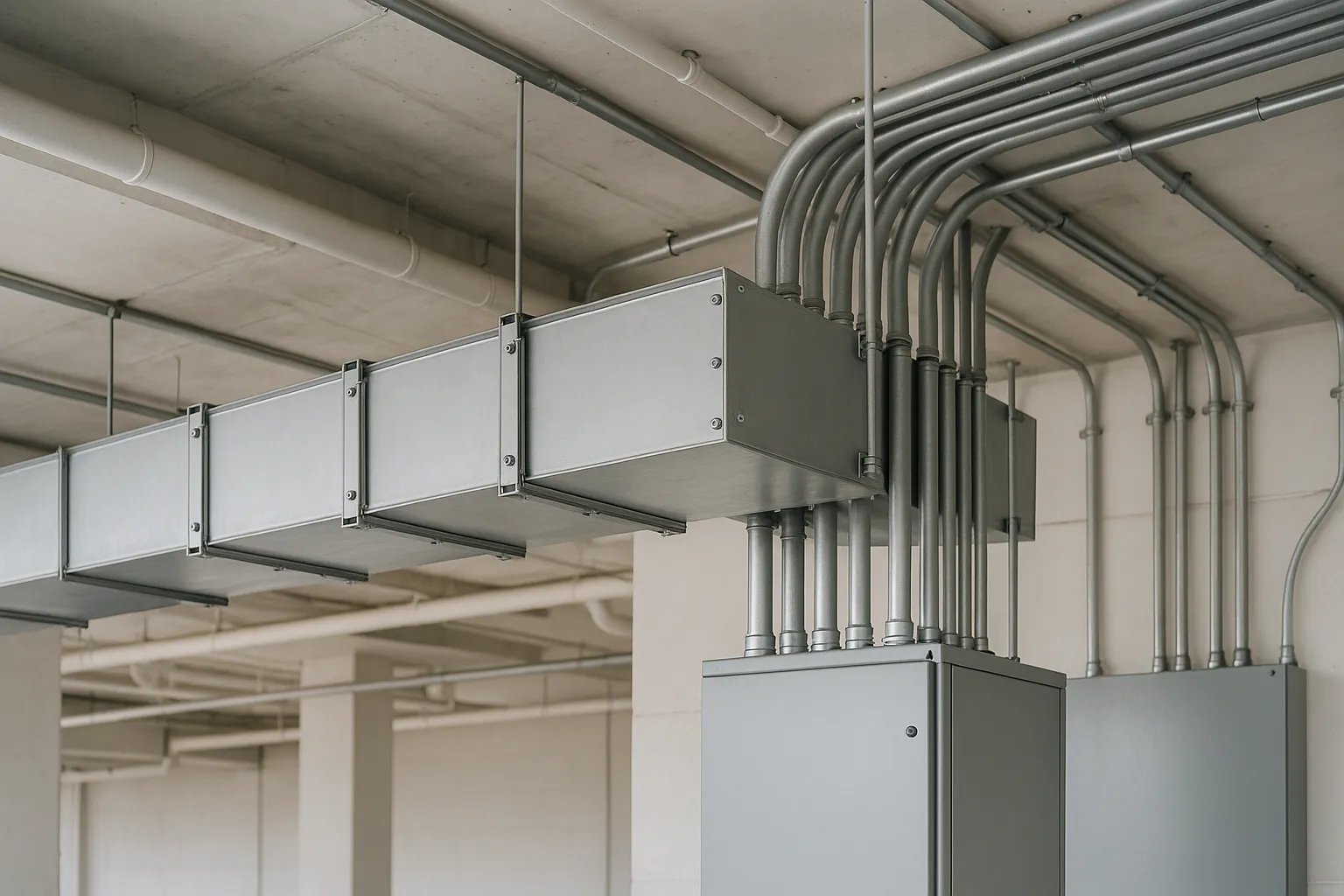
Replacing main switchgear or service entrance panels is the most expensive portion of many projects. As noted earlier, 400A commercial panels may run $15,000–$30,000, with larger or medium‑voltage gear well above that range.[11][13] Adding spare sections or bus capacity can modestly increase upfront cost but greatly reduce future project expense.
Panelboards and branch circuit breakers
New distribution and lighting panelboards often accompany main gear upgrades. While individual panelboards are modest compared to main switchgear, cumulative cost across multiple panels and breakers can be significant, especially in large campuses or multifamily sites.[5]
Lighting systems and controls
Panel upgrades are an ideal moment to rationalize lighting circuits and controls. Rebalancing phases, dedicating panels for lighting control systems, and integrating occupancy or daylight sensors can improve power quality and reduce operational costs. The incremental cost is usually driven by branch wiring and control hardware rather than the panel itself.
EV charging (EVSE) infrastructure
EVSE loads can be substantial and often necessitate service or panel upgrades. Guides that distinguish residential from industrial installations highlight a major cost jump for 400A industrial panels versus residential gear.[13] Facility managers planning EVSE should consider dedicated EV panels or sections with metering provisions to manage load and bill tenants.
Backup generators and UPS
Where backup generators and UPS systems are present, panel replacement must include transfer switch coordination, critical‑load panel separation, and testing. Surge protection requirements for industrial control panels and safety circuits also apply, especially where UPS and sensitive electronic loads are involved.[15] These integrations add design and commissioning cost but significantly improve resilience.
NEC 2023 Compliance and Its Impact on Project Budgets
The 2023 NEC introduces and clarifies several requirements that directly influence electrical panel replacement cost in commercial and institutional settings:
- Surge protective devices at service equipment: NEC 230.67 requires SPDs at services in specified occupancies and for replacements of service equipment, with a minimum nominal discharge current rating of 10kA.[1][10][15] For multifamily, hotels, dormitories, and nursing facilities, this is mandatory for new and replacement service gear.
- Surge protection for industrial control panels: NEC 409.70 calls for surge protection in safety circuits within or adjacent to industrial control panels where they are subject to surge events.[15] This affects switchgear associated with process equipment and industrial facilities.
- Expanded arc‑fault and ground‑fault requirements: The 2023 NEC and related guidance expand AFCI and GFCI coverage in many occupancies, including certain sleeping rooms in institutional facilities.[2][3][10][15] While much of the AFCI detail is residential, commercial and institutional spaces must still address updated protective device and ground‑fault requirements.
For facility managers, the practical impact is that any significant service or panel replacement project should anticipate the inclusion of SPDs, updated protective devices, and potentially additional control wiring. These requirements add material and labor, but they also improve equipment survivability and safety, reducing long‑term risk.
Practical Checklists for Facility and Property Managers
Pre‑project checklist: assessing readiness
- Confirm building use (office, retail, healthcare, warehouse, multifamily) and any occupancy‑specific NEC requirements.[10][15]
- Verify existing main service amperage, voltage, and short‑circuit ratings from nameplates.
- List known problems: overheating, nuisance trips, power quality complaints, tenant outages.
- Identify planned new loads over the next 5–10 years: EVSE, data/IT, HVAC upgrades, tenant build‑outs.
- Confirm available outage windows and critical loads needing temporary support.
Bid and design checklist
- Require contractors to state the assumed NEC edition and surge protection approach (Type 1 or Type 2 SPDs, nominal discharge rating) for service equipment.[1][10][15]
- Ask for separate pricing lines for panels/switchgear, SPDs, transfer switches, and temporary power.
- Ensure proposals include testing, commissioning, and updated one‑line diagrams.
- Check that protective device coordination and short‑circuit ratings are addressed by an engineer, especially above 400A.
Post‑installation checklist
- Obtain updated as‑built drawings and panel schedules.
- Confirm SPD installation locations at service equipment and any critical industrial control panels.[1][10][15]
- Verify labeling, arc‑flash warnings, and directory accuracy.
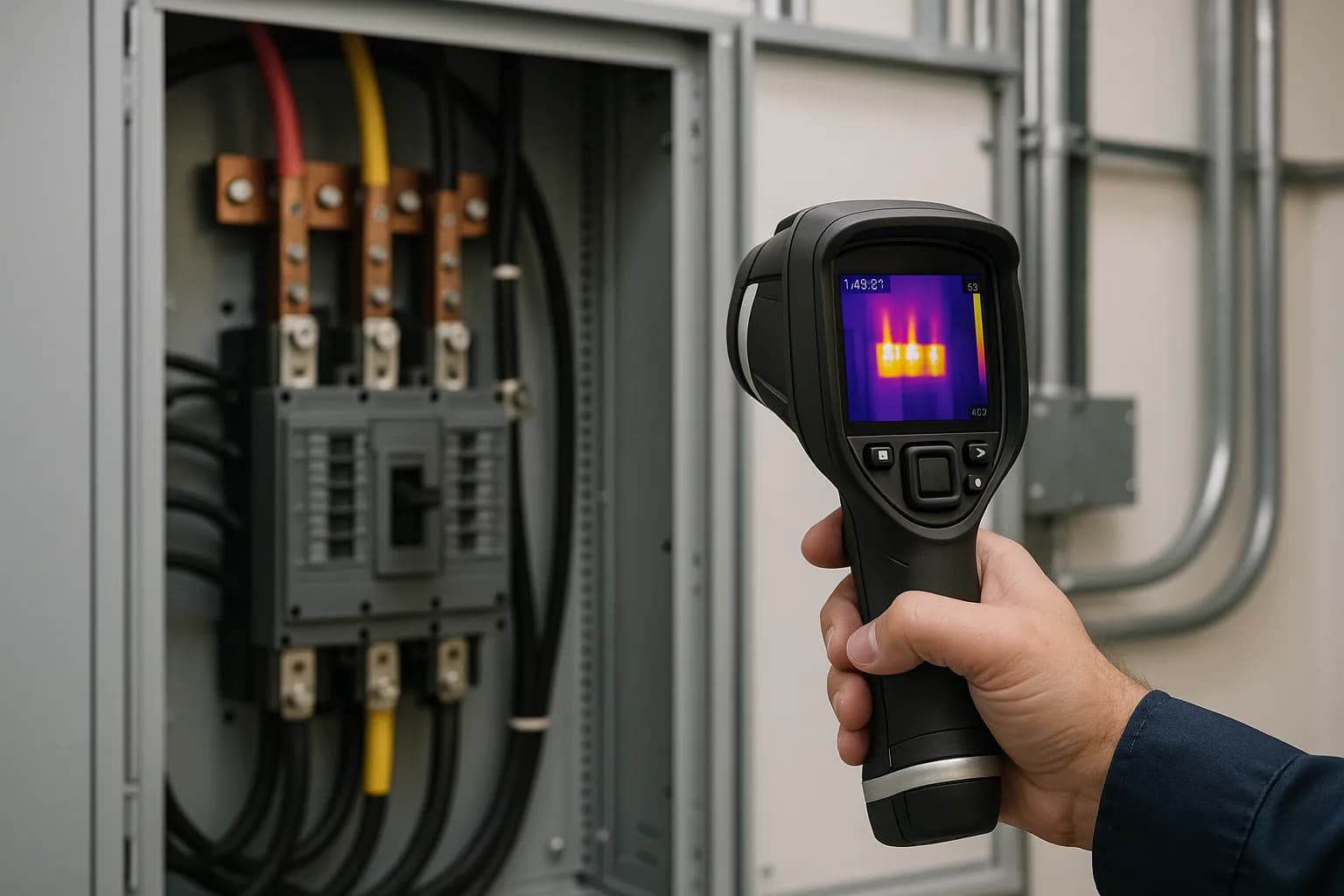
- Plan periodic infrared scanning and maintenance for new gear as part of your asset management program.
Following these checklists helps facility managers manage risk, control electrical panel replacement cost, and ensure that upgraded systems support both current operations and future growth.
Frequently Asked Questions
How should facility managers budget for electrical panel replacement cost in a typical commercial property?
For a typical low‑voltage commercial building, planning allowances in the $10,000–$50,000 range for main panels and house gear is common, with 400A switchgear often landing near $15,000–$30,000.[5][11] Larger or multi‑section gear, utility work, surge protection, and temporary power can push projects above $100,000, so early scoping and engineering review are critical.
What is the ROI of replacing aging electrical panels versus continuing repairs?
Panels and switchgear often have a 30–50‑year useful life.[5] Beyond that, reliability declines and code compliance gaps (especially surge protection at service equipment) become more likely.[1][10][15] Replacement improves uptime, tenant satisfaction, and safety, and enables capacity for EVSE and modernization. While capital costs are significant, avoided outages and risk reduction provide ongoing ROI.
How do NEC 2023 surge protection rules affect commercial panel replacement projects?
NEC 230.67 requires surge‑protective devices at service equipment for certain occupancies and whenever service equipment is replaced, with SPDs rated at not less than 10kA nominal discharge current.[1][10][15] This means SPDs must be included in most modern panel and switchgear replacements, adding hardware cost but protecting sensitive loads and reducing failure risk.
What should property managers ask contractors about electrical panel replacement cost proposals?
Request detailed breakdowns for gear, labor, temporary power, and utility coordination, plus clarification on the NEC edition used and surge protection strategy.[1][10][15] Ask how amperage, three‑phase configuration, and future capacity needs influence design. Require updated one‑lines and coordination studies to verify that the proposal balances cost with safety and expandability.[11]
Are there risks in only repairing breakers or bus in old panels instead of full replacement?
Yes. While targeted repairs can temporarily restore operation, aging panels nearing or past their 30–50‑year life may have obsolete components and degraded insulation.[5] They may not meet current fault‑current or surge protection requirements.[1][10][15] Continuing repairs can increase outage risk and liability; full replacement provides a safer, more predictable platform.
How do EV charging, UPS, and generators influence electrical panel replacement cost?
EVSE, UPS, and generators add significant load and complexity. Cost guides show large differences between residential and industrial 400A gear, with commercial/industrial panels requiring higher budgets.[11][13] Integrating transfer switches, critical‑load panels, and surge protection for sensitive equipment adds design effort and hardware, but improves resilience and supports modern tenant demands.
Related Reading on My Electrical Tech
- Prysmian’s Atkore Acquisition: What Commercial Property Managers Need to Know
- Commercial Lighting Tips for Facility Managers: Design, Upgrade, and Maintain Smarter Systems
Find a Qualified Commercial Electrical Contractor
Need help acting on this? Browse commercial electricians in your area, or explore commercial electrical services like preventative maintenance, inspections, and emergency response. Are you a contractor? List your business on My Electrical Tech to reach property and facility managers actively searching for help.