 My Electrical Tech
Electrical Maintenance Services for Commercial Buildings: A Practical Guide
Quick Answers for Property & Facility Managers
What do electrical maintenance services include for commercial buildings?
Electrical maintenance services for commercial buildings typically include inspection, testing, cleaning, tightening, thermography, troubleshooting, and corrective repairs for power distribution, switchgear, panelboards, lighting, generators, UPS, EVSE, and related systems. In current NFPA 70B practice, owners are expected to implement and document an electrical maintenance program for safety and reliability.
How often should commercial electrical maintenance be performed?
The right interval depends on equipment type, condition, criticality, and operating environment. NFPA 70B uses equipment-specific maintenance intervals and condition assessment rather than a one-size-fits-all schedule, so high-criticality assets such as switchgear, emergency power, and heavily loaded panels often need more frequent review.
Is maintenance cheaper than replacement for commercial electrical systems?
In most facilities, yes—routine maintenance is usually far less expensive than emergency repair or full replacement after a failure. The real value of electrical maintenance services is avoiding downtime, reducing safety risk, preserving equipment life, and identifying when repair is no longer economical and replacement is the better capital decision.
Why electrical maintenance services matter for commercial facilities
For facility managers, property managers, and commercial real estate professionals, electrical maintenance services are a reliability strategy as much as a safety program. NFPA 70B now treats electrical equipment maintenance as a formal standard for commercial, institutional, industrial, and large multifamily properties, with an emphasis on documenting an electrical maintenance program, assigning responsibility, and maintaining equipment based on condition and criticality.
That matters because electrical failures rarely stay isolated. A loose termination, overloaded breaker, contaminated switchgear compartment, failed lighting driver, or neglected generator battery can trigger tenant complaints, business interruption, safety hazards, and unplanned capital expense. In practical terms, electrical maintenance services help protect operations, extend asset life, and reduce the chance of emergency shutdowns.
Start with an electrical asset inventory and risk ranking
The first step in an effective maintenance program is to know exactly what is in the building. Create a complete equipment inventory covering transformers, switchgear, panelboards, feeders, disconnects, lighting controls, emergency systems, generators, UPS units, EV charging equipment, and life-safety-related components.
Then rank assets by criticality. A main service switchboard feeding tenant floors is not managed the same way as a low-priority panel in a back-of-house area. Focus attention on systems that affect safety, uptime, code compliance, or revenue operations. For commercial buildings, that usually means power distribution, emergency power, fire alarm interfaces, egress lighting, data rooms, and any equipment serving mission-critical loads.
- Build a room-by-room asset list with nameplate data, breaker sizes, and circuit directories.
- Record age, condition, manufacturer recommendations, and recent failures.
- Flag equipment with heat, corrosion, nuisance tripping, or overload history.
- Classify critical loads: life safety, tenant operations, IT/server rooms, refrigeration, healthcare support, or production.
Build a maintenance plan for power distribution, switchgear, and panelboards
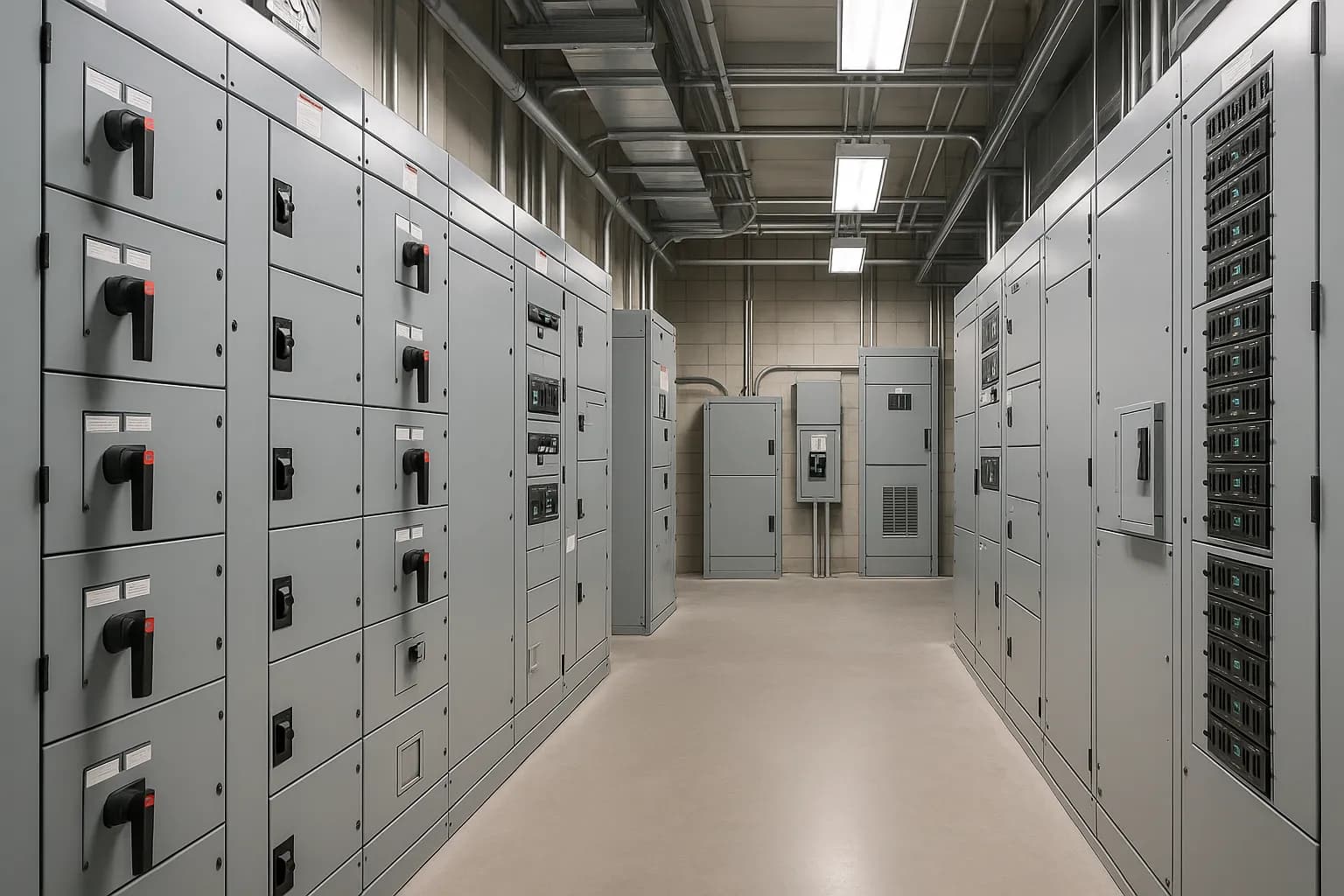
Power distribution equipment is the backbone of the facility, and it deserves the most disciplined maintenance. That includes switchgear, switchboards, panelboards, breakers, bus connections, protective devices, and feeder terminations. NFPA 70B emphasizes a documented program with maintenance tasks matched to equipment type and condition, and manufacturer instructions should be used when available.
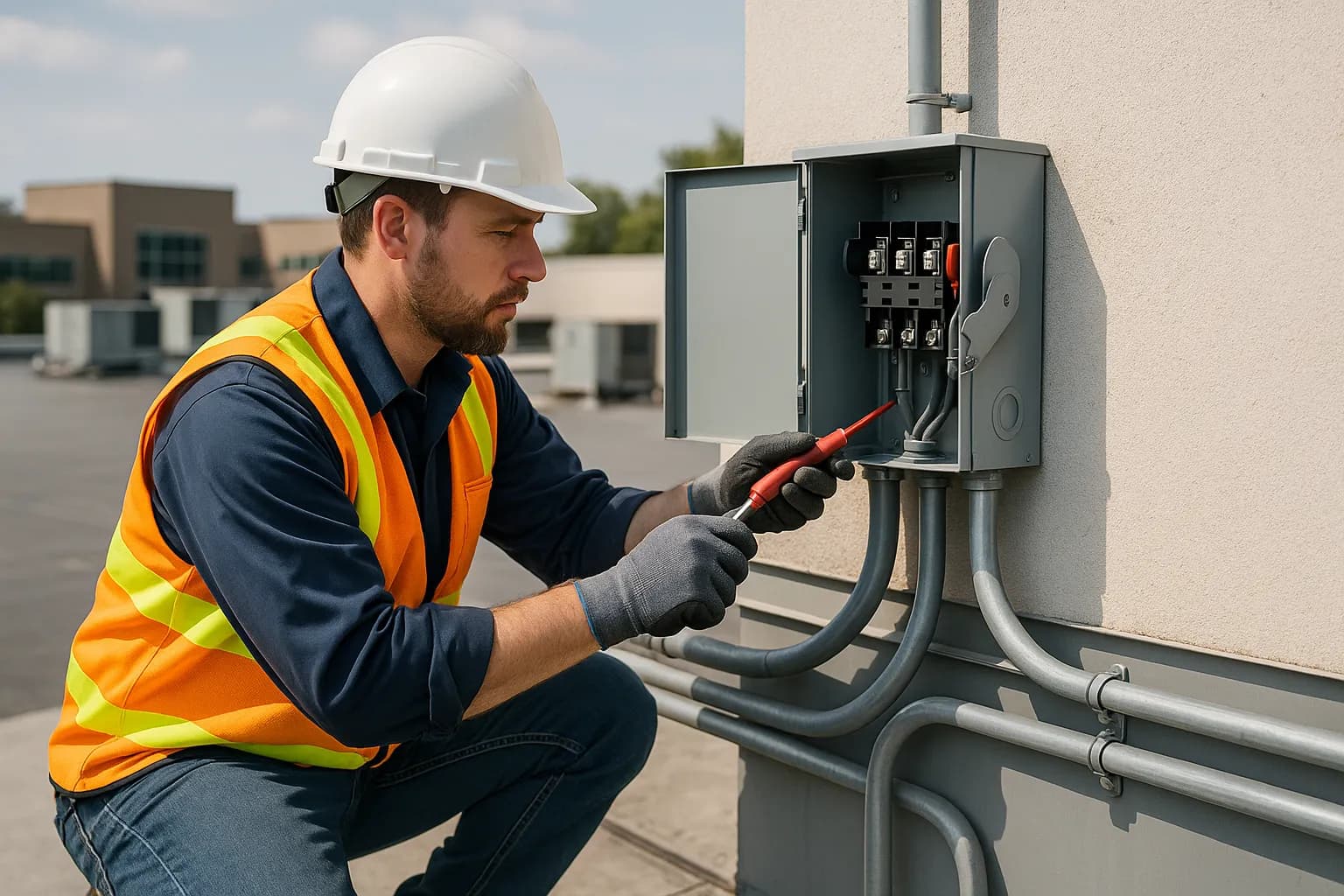
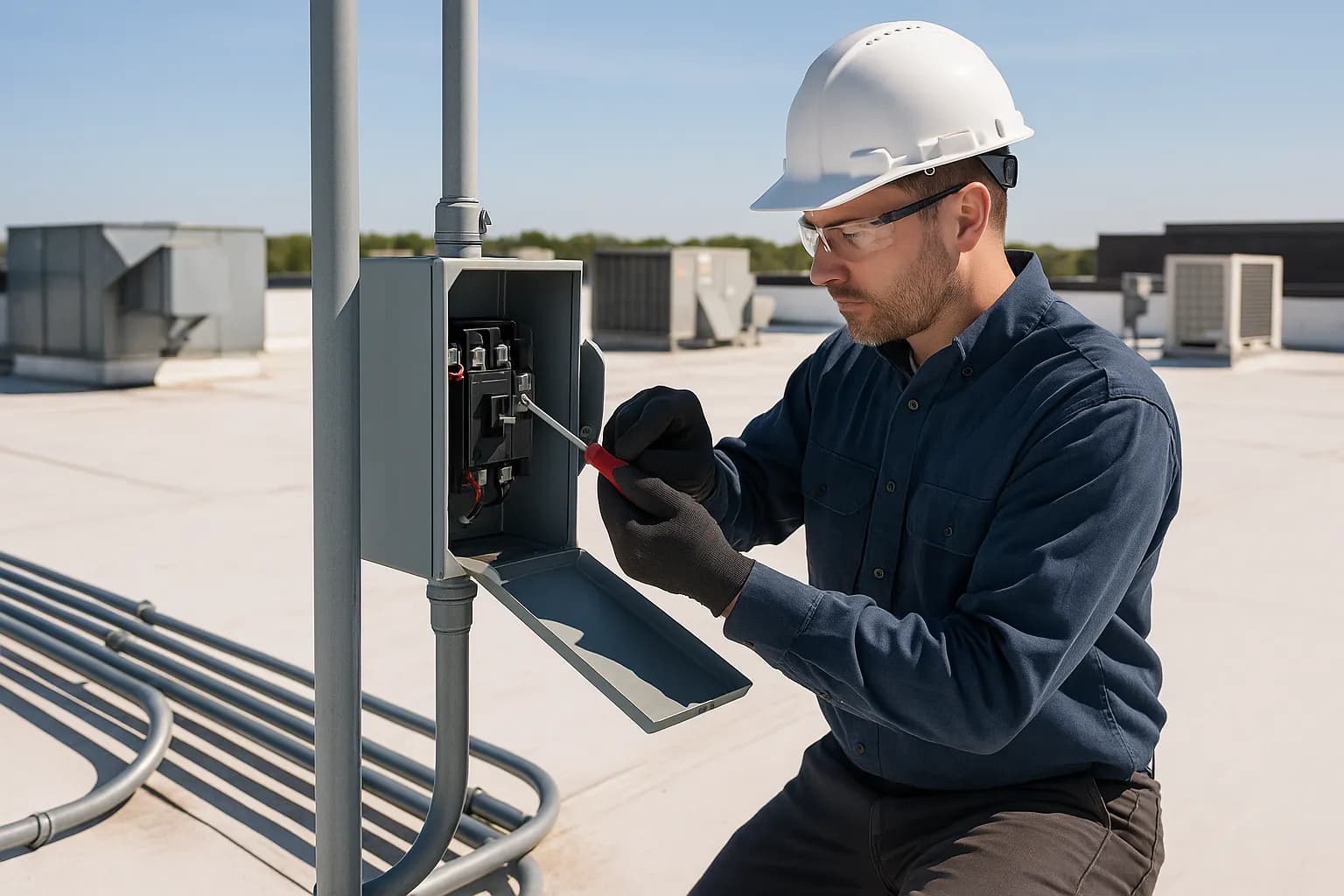
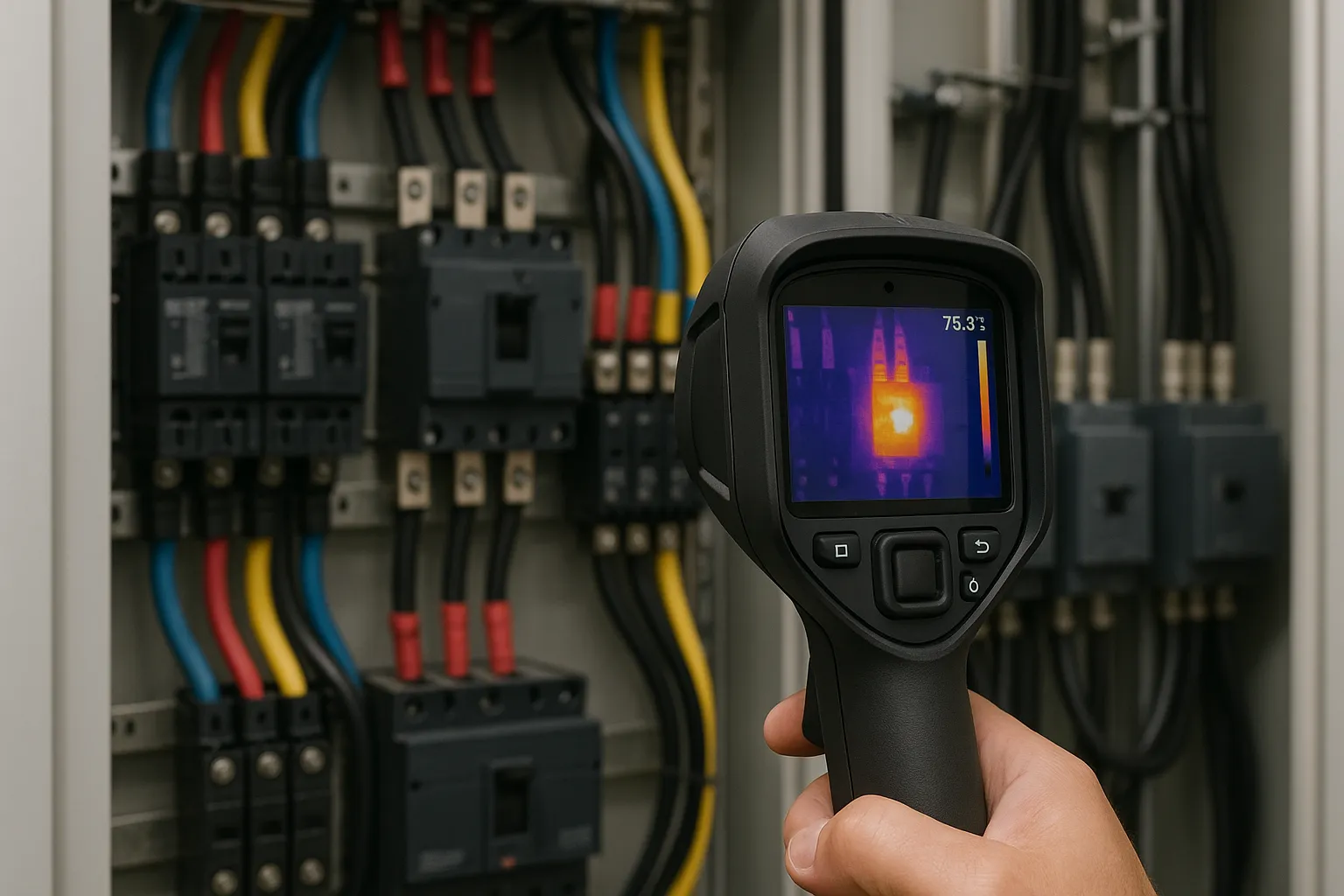
For commercial electrical maintenance services, the core work should include visual inspection, cleaning, torque verification where appropriate, infrared scanning, insulation testing when needed, breaker functional checks, and review of signs of overheating or contamination. In large buildings, these activities are often scheduled around tenant occupancy windows or outage coordination requirements.
- Inspect for discoloration, odor, dust buildup, moisture intrusion, and damaged insulation.
- Verify labeling, panel schedules, and circuit directories are accurate.
- Check breaker condition, signs of wear, and evidence of repeated tripping.
- Test critical transfer and protective functions on a planned basis.
- Document all findings and track follow-up corrective work.
Maintain lighting systems, controls, EV charging, and backup power as operational assets
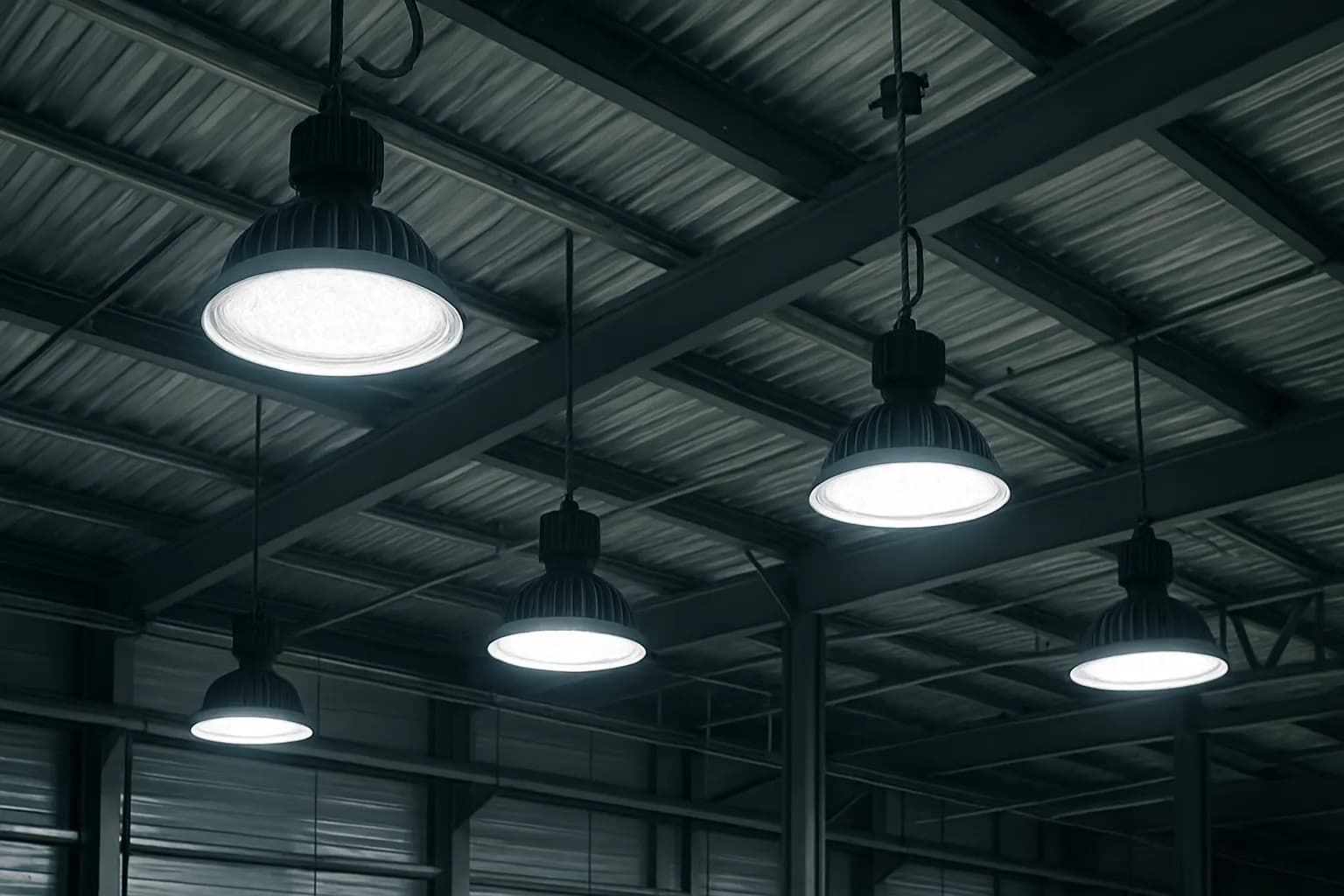
Lighting systems are often treated as a simple replacement item, but in commercial properties they directly affect safety, tenant satisfaction, energy use, and compliance. Electrical maintenance services should cover fixtures, drivers, emergency egress lighting, occupancy sensors, relays, dimming controls, and time clocks. In retrofit-heavy properties, failed controls or mismatched drivers can create repeat callbacks if the system is not verified end to end.
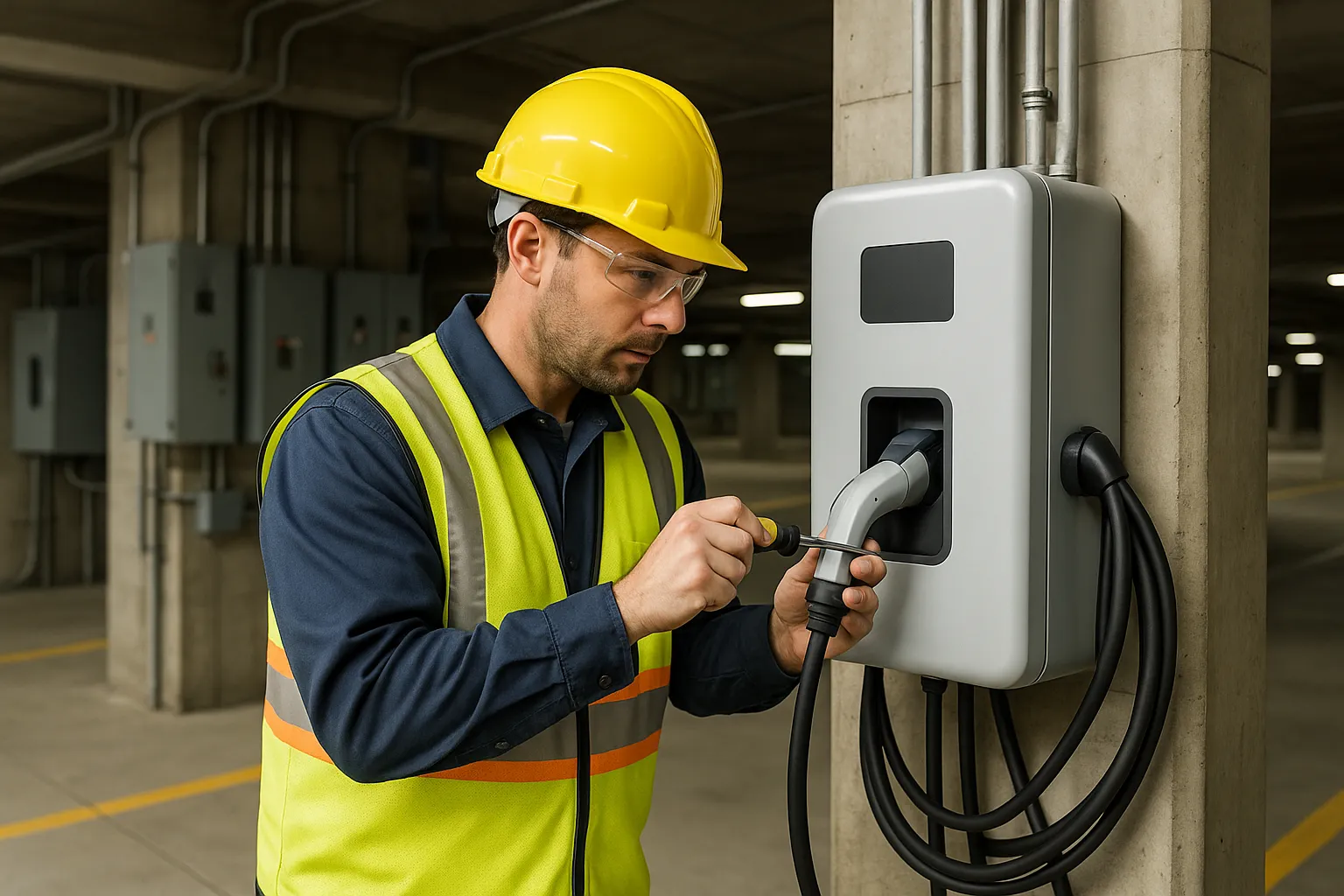
EV charging infrastructure should also be included in routine inspection and testing. Check pedestals, receptacles, cord condition, communication status, breaker loading, signage, and housekeeping around the equipment. As fleets, tenants, and visitors add EV demand, unmanaged loads can create nuisance trips or capacity problems that affect the broader distribution system.
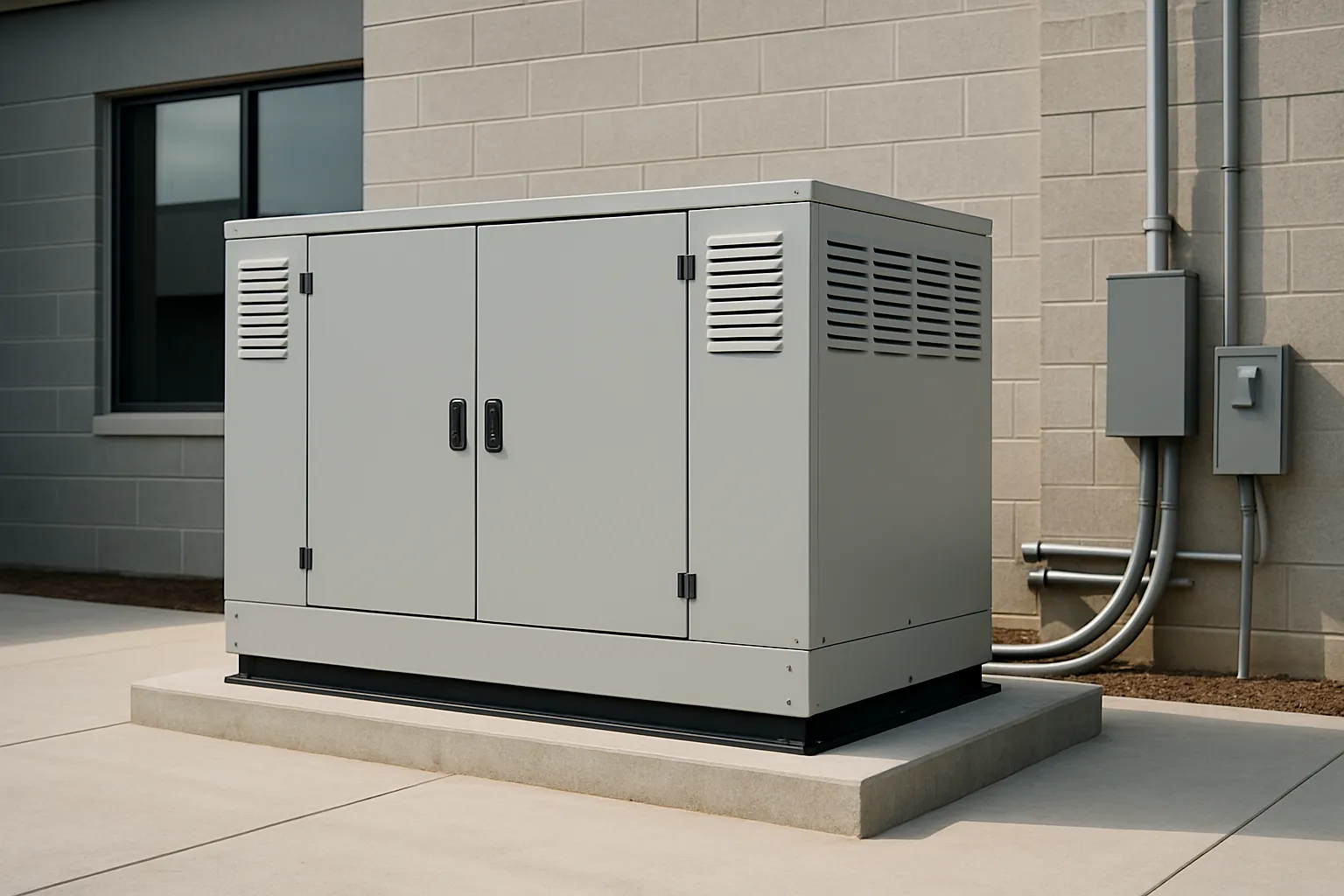
Backup generators and UPS systems require special attention because they protect operations when utility power fails. A proper maintenance plan should include fuel, batteries, coolant, transfer equipment, alarms, periodic exercising, load-related verification, and remote monitoring where installed. For facility managers, the key question is not only whether the unit starts, but whether it can carry the actual emergency load under real conditions.
- Confirm lighting controls match occupancy patterns and cleaning schedules.
- Test emergency and egress lighting on a documented interval.
- Inspect EVSE for physical damage, tripping history, and power-quality issues.
- Verify generator readiness, transfer operation, and battery health.
- Review UPS alarms, battery condition, and runtime assumptions.
Use a step-by-step process for inspections, repairs, and documentation
Effective electrical maintenance services follow a repeatable workflow. First, plan the scope around operating needs and outage constraints. Second, inspect and test the equipment. Third, correct deficiencies by priority. Fourth, document findings, completed work, and open items for future tracking. Fifth, review trends to decide whether the asset should be repaired, refurbished, or replaced.
For commercial real estate professionals, documentation is not a formality. It is what turns maintenance from a reactive cost center into a defensible asset-management program. Good records support budgeting, insurance discussions, code compliance, tenant communication, and capital planning.
- Schedule planned maintenance during low-occupancy periods.
- Use qualified personnel familiar with the equipment and hazards involved.
- Record all test results, deficiencies, corrective actions, and dates.
- Track repeat problems by asset to identify failure patterns.
- Update the maintenance plan after equipment changes or tenant buildouts.
Repair, maintain, or replace: how to make the right capital decision
One of the most important parts of electrical maintenance services is knowing when maintenance is enough and when it is time to replace the asset. Routine maintenance is usually the lowest-cost option and is designed to keep equipment operating safely and efficiently. Repair makes sense when the issue is isolated and the equipment still has useful life left. Full replacement becomes the better choice when failures are recurring, parts are obsolete, safety risk is rising, or the cost of downtime outweighs the repair budget.
For example, a single failed lighting driver may justify a targeted repair. A panelboard with widespread overheating, repeated breaker issues, and outdated parts may require a larger corrective project. Switchgear, generators, and UPS systems often require a lifecycle view: if maintenance findings show rising risk, replacement planning should start before a failure forces an emergency decision.
- Choose maintenance when the asset is generally healthy and the goal is reliability.
- Choose repair when a specific component has failed but the system is otherwise sound.
- Choose replacement when safety, uptime, code alignment, or parts availability become unacceptable.
- Compare the cost of planned downtime to emergency outage risk before approving the fix.
What to ask when buying electrical maintenance services
Not all service providers deliver the same value. Facility teams should ask for a scope that matches the building’s systems, tenant risk, and operating hours. The right provider should understand commercial power distribution, emergency systems, coordination with tenants, and the documentation required for ongoing asset management.
Ask whether the provider can support preventive maintenance, emergency response, testing, infrared scanning, generator service, UPS maintenance, EVSE troubleshooting, and corrective repairs. Also ask how work is documented, how deficiencies are prioritized, and how the contractor helps you decide whether to repair or replace a failing asset.
- Can you support switchgear, panelboards, lighting, EVSE, generators, and UPS systems?
- Do you provide condition-based maintenance recommendations and written reports?
- How do you coordinate outages with tenants and critical operations?
- Can you help prioritize repairs by safety, compliance, and operational risk?
Frequently Asked Questions
What is included in commercial electrical maintenance services?
Commercial electrical maintenance services typically include inspections, cleaning, infrared scanning, torque checks, testing, troubleshooting, and corrective repairs across power distribution, switchgear, panelboards, lighting, generators, UPS, and EV charging systems. For facility managers, the value is reducing downtime, extending equipment life, and keeping documentation aligned with a formal maintenance program.
How do electrical maintenance services help with code compliance?
Electrical maintenance services support compliance by keeping equipment identified, tested, and documented in a scheduled program. Current NFPA 70B practice expects an electrical maintenance program, while OSHA and NFPA 70E focus on worker safety and safe work practices. In commercial buildings, strong records also help demonstrate due diligence during audits and incidents.
When should a facility choose replacement instead of repair?
Replacement is usually the better choice when equipment is obsolete, parts are hard to source, failures repeat, safety concerns increase, or downtime risk is too high. For commercial properties, the decision should compare repair cost, outage impact, and expected remaining life. Maintenance data is what makes that decision defensible.
What electrical systems should be prioritized first?
Prioritize the systems that affect safety and business continuity: utility service equipment, switchgear, panelboards, emergency power, UPS, fire/life-safety-related loads, tenant-critical distribution, and any heavily loaded circuits. In most commercial facilities, these assets create the biggest operational and financial risk when neglected.
Why are electrical maintenance services important for property managers?
Property managers use electrical maintenance services to reduce tenant complaints, avoid emergency outages, and protect building value. A documented program also supports budgeting and capital planning, because it reveals which assets are stable, which need repair, and which should be scheduled for replacement before a failure disrupts operations.
Related Reading on My Electrical Tech
- ROMADA EV Charger Safety Alert: What Facility Managers Need to Know
- Lark Electric and American Gridwork Partners: Strategic Commercial Electrical Growth
Find a Qualified Commercial Electrical Contractor
Need help acting on this? Browse commercial electricians in your area, or explore commercial electrical services like preventative maintenance, inspections, and emergency response. Are you a contractor? List your business on My Electrical Tech to reach property and facility managers actively searching for help.